
What to Look for in a Food Dehydrator? A Clear Answer
When choosing a food dehydrator, look for models with even heat distribution and adjustable temperature controls to ensure perfectly dried foods every time. You’ll want to consider the total drying area based on how much food you plan to dehydrate. A good dehydrator makes preserving fruits, vegetables, and jerky simple and effective.
Beyond the basics, think about how easy the dehydrator is to clean and store. Many people find that models with dishwasher-safe trays are a lifesaver. Also, consider the noise level if you plan to run it for long periods. Finding the right dehydrator means enjoying homemade dried snacks with minimal fuss.
- Consider even heat and temperature control.
- Check the total drying space for your needs.
- Look for trays that are easy to clean.
- Think about how quiet the appliance is.
- Storage and overall user-friendliness matter.
Ready to find the perfect dehydrator for your kitchen? Let’s walk through exactly what to look for, step by step.
Choosing the Right Food Dehydrator for Your Kitchen
Selecting a food dehydrator might seem daunting, but understanding a few key features can make the process much simpler. You’re looking for a machine that will reliably and effectively dry your food. This means focusing on aspects that ensure good results and ease of use.
Understanding Heat Distribution and Temperature Control
The most critical factors for successful dehydration are even heat distribution and accurate temperature control. Uneven heat means some parts of your food might dry too quickly while others remain too moist. This can lead to inconsistent results and potential spoilage.
The Importance of Even Heat Distribution
Many dehydrators use a fan to circulate air and heat. The placement of this fan and the design of the unit significantly impact how evenly heat reaches all the trays. You want a model where air flows freely and consistently across the entire drying area.
Some research indicates that horizontally-fed airflow systems tend to offer more even drying than vertically-fed systems. This is because gravity doesn’t interfere with the hot air moving towards the trays. You want to avoid “hot spots” that can overcook certain pieces of food.
Adjustable Temperature Settings Explained
Different foods require different drying temperatures. For instance, fruits can often be dried at lower temperatures than jerky or vegetables. Having adjustable temperature controls allows you to tailor the drying process to the specific food you’re working with. This precision helps preserve nutrients and achieve the desired texture.
Many experts recommend having a dehydrator with a temperature range that goes from around 90°F (32°C) up to 160°F (71°C). This wider range provides flexibility for various food types. Check your dehydrator’s manual or reliable food safety guidelines for recommended temperatures (U.S. Food & Drug Administration).
Drying Area: How Much Space Do You Need?
The total drying area, often measured in square feet or by the number of trays, is a vital consideration. This tells you how much food you can dehydrate at one time. Your needs will depend on how much you plan to preserve.
Assessing Your Dehydrating Volume
If you’re primarily drying small batches of herbs or a few pieces of fruit for personal snacks, a smaller unit with fewer trays might suffice. However, if you plan to process large harvests from your garden or make jerky for a family, you’ll need a unit with a larger capacity.
Consider the dimensions of the trays themselves, not just the number of trays. Some trays are deeper than others, allowing for thicker-cut items. Also, think about the spacing between trays. Adequate spacing is necessary for good air circulation.
Understanding Tray Designs and Configurations
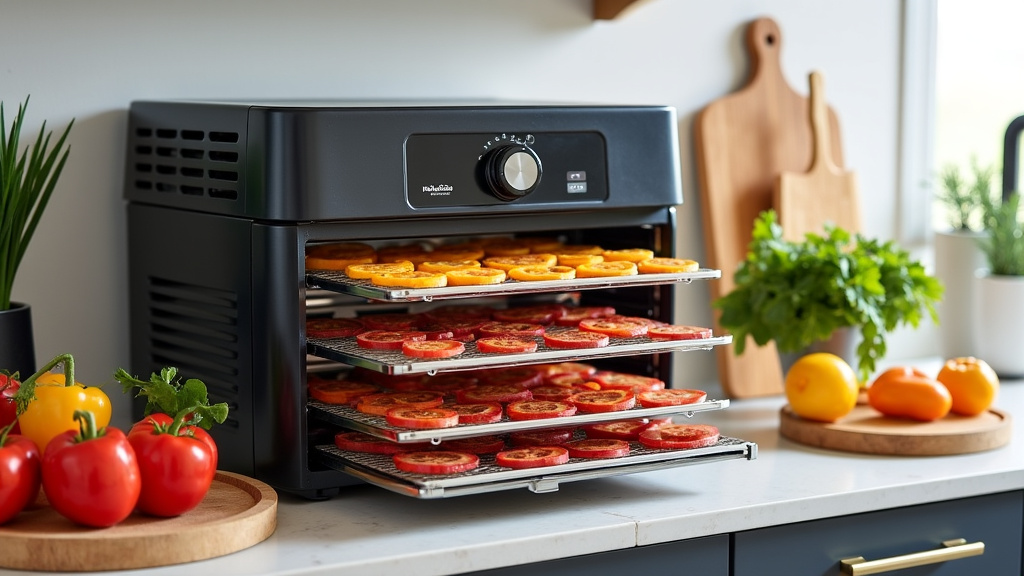
Dehydrator trays come in various materials, most commonly plastic or stainless steel. Plastic trays are generally lighter and less expensive. Stainless steel trays are more durable, easier to clean, and some believe they offer more hygienic drying. It’s a trade-off between cost, durability, and maintenance.
Some units offer stackable trays, which is great for storage. Others have fixed positions. Think about whether you want the flexibility to remove trays or if you’re happy with a fixed configuration.
Ease of Cleaning and Maintenance
No one wants a kitchen appliance that’s a nightmare to clean. For dehydrators, this means looking at the trays and the main unit.
Dishwasher-Safe Components
Dishwasher-safe trays are a huge convenience. If you plan to dehydrate sticky fruits or moist vegetables, being able to simply toss the trays into the dishwasher can save you a lot of scrubbing time. Always verify this feature when shopping.
Beyond the trays, consider how easy it is to wipe down the interior of the dehydrator and the fan housing. Some units have smooth surfaces that are simple to clean with a damp cloth. Others have nooks and crannies that can trap food particles.
Built-in Features for Easier Cleaning
Some dehydrators come with drip trays or liners designed to catch any juices or crumbs. These can make cleaning significantly easier, as they contain the mess. Look for models where these components are easily removable and washable.
We found that models with fewer intricate parts are generally easier to maintain. Simplicity often translates to better usability over time. Remember that proper cleaning prevents the buildup of bacteria and ensures food safety.
Noise Level and Other User Considerations
Food dehydrators often run for many hours, sometimes even days. The noise level can be a significant factor in your daily life, especially if you plan to run the unit in a main living area or overnight.
Evaluating the Sound of Your Dehydrator
Some dehydrators can be quite noisy, sounding like a small fan or even a hair dryer. Others are designed to operate more quietly. If you’re sensitive to noise or plan to use the dehydrator frequently, look for reviews that mention the sound level. Some manufacturers might even provide decibel ratings for their products.
Storage and Overall Footprint
Consider where you’ll store the dehydrator when it’s not in use. Some units are compact and can fit easily in a cupboard. Others are quite large and may need dedicated counter space or a larger storage area. Stackable trays can help reduce storage volume.
Think about the overall user-friendliness. Are the controls intuitive? Is it easy to set up and take down? Does it feel sturdy and well-built? These practical aspects contribute to a positive ownership experience.
Key Features Checklist for Your Food Dehydrator
Before you make your final decision, run through this quick checklist to ensure you’re getting a dehydrator that fits your needs:
- Even Heat Distribution: Does the design promote consistent airflow?
- Adjustable Temperature Control: Can you set precise temperatures for different foods?
- Sufficient Drying Area: Is the total tray space adequate for your typical batch sizes?
- Easy-to-Clean Trays: Are they dishwasher-safe or simple to wipe down?
- Noise Level: Have you considered how quiet the unit is for extended use?
- Storage Convenience: Will it fit easily in your kitchen or storage space?
Conclusion
You’re now equipped to choose a food dehydrator that perfectly suits your needs. Remember to prioritize even heat distribution and adjustable temperature controls for the best results. Assess the drying area based on how much food you plan to preserve. Don’t forget about ease of cleaning and noise levels, as these practical features enhance your user experience. Take your time, use this checklist, and you’ll soon be enjoying your own delicious, homemade dried snacks.
Frequently Asked Questions
How do I know if a dehydrator has good heat distribution?
Look for models with horizontal airflow, often indicated by a fan at the back. User reviews are also a great resource; see if others mention consistent drying without hot spots. Dehydrators with well-spaced trays generally promote better air circulation.
Is a stainless steel dehydrator better than a plastic one?
Stainless steel trays are generally considered more durable and easier to clean. Plastic trays are typically lighter and more affordable. Both can work well, but stainless steel might offer a longer lifespan and better hygiene for some users.
What temperature should I set my dehydrator to?
The ideal temperature depends on the food. Fruits and herbs can often dry at lower temperatures (around 125°F or 52°C). Meats for jerky usually require higher temperatures (155°F or 68°C) to ensure safety. Always consult reliable food safety guidelines.
How much drying space is typically enough?
This depends entirely on your needs. For occasional use with small batches, 5-10 square feet might be plenty. If you plan to process garden harvests or make large quantities of jerky, look for units with 15 square feet or more.
Are noisy dehydrators really that bad?
If you plan to run your dehydrator overnight or in a main living area, noise can be a real issue. Some units sound like a constant fan, while others are quite loud. Reading reviews that mention sound levels can help you avoid a unit that disrupts your household.