Food Dehydrator vs Air Fryer: Which Should You Choose? (October 2026)
Choose a dedicated food dehydrator for regular, larger batches of dried food; choose an air fryer if you mainly cook meals and only dry food occasionally. Air fryers with a dehydrate program can handle some drying tasks, but their cooking baskets offer less tray-style drying space.
On this page (6 sections)
A food dehydrator is the better fit for frequent or larger drying batches, while an air fryer makes sense when cooking is your main need and drying is occasional. The food dehydrator vs air fryer choice depends on batch size, drying temperature and how much counter space you can give another appliance.
A dehydrator spreads food across dedicated trays and offers controls aimed at longer drying sessions. An air fryer can add drying to its cooking programs, but its basket is built for a different kitchen task.


Food dehydrator vs air fryer: which is better for drying?
A dedicated dehydrator suits repeat batches; an air fryer suits occasional drying alongside everyday cooking. Start with how much food you want to dry at one time.
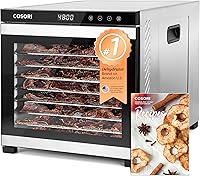
The Cosori 6-tray dehydrator provides 6.5 ft² of drying space across stainless steel trays. The 5-tray Cosori model is smaller and can expand to 7 trays with additional trays.
The Cosori TurboBlaze air fryer has a 6 qt basket and a dry program. The Ninja Foodi has 2 independent 4 qt baskets and a dehydrate program, giving it a split cooking layout rather than a set of dehydrator trays.
Those capacities describe different spaces, so don't compare quarts directly with square feet. For larger drying batches, compare large-capacity food dehydrators.
For drying, the usable area and the ability to spread slices in a suitable layer matter more than the number alone.
Which gives food more room to dry?
The tray-style dehydrators offer more defined drying levels. Their trays let you arrange batches across layers, while air fryer baskets hold food in a more compact cooking space.
That distinction is useful for fruit slices, herbs or other items you want arranged in a single layer. Air fryer baskets can work for small amounts, but you may need to make several batches if you want to avoid crowding.
If you plan to dry food weekly or preserve a harvest, tray area can save repeated loading. For larger, frequent batches, compare commercial food dehydrators.
For a small snack now and then, a basket may be enough.
How do temperature controls compare?
The dehydrators here offer narrower temperature ranges suited to drying, while the air fryers cover a broader cooking range. Compare the lowest available setting with the foods and recipes you expect to use.
The Cosori dehydrators both adjust from 95°F to 165°F. The TurboBlaze air fryer ranges from 90°F to 450°F, and the Ninja Foodi ranges from 105°F to 450°F.
A low setting can matter for slow drying, but it doesn't by itself determine whether a food is safely prepared or fully dry. Follow a tested recipe and the appliance manual, especially for meat or other foods where safe handling matters.
The TurboBlaze has a 90°F minimum, lower than the two dehydrators listed here. The Ninja's minimum is 105°F, so it offers a higher starting point for drying settings.
Does a lower minimum mean better drying?
A lower minimum gives you another setting to work with, but tray space and airflow still matter. Check the manual for the program's intended use and follow recipe directions for preparation and doneness.
Drying time can change with food thickness, water content, batch size and room conditions. Avoid treating one temperature or timer setting as a universal instruction for every food.
Which appliance makes more sense for your kitchen?
Choose the appliance that matches your most common task. A dedicated dehydrator takes up space for drying, while an air fryer can earn its counter space through frequent cooking.
An air fryer may be the simpler fit if you often crisp or roast meals and want to dry a small batch sometimes. The TurboBlaze includes air fry, roast, broil, frozen, bake, dry and proof functions.
The Ninja Foodi combines air fry, broil, roast, bake, reheat and dehydrate programs. Its 2 independent baskets let you cook separate foods at once, which may be useful for meals even when you're not drying.
A dehydrator is more purpose-built when you regularly make dried fruit, herbs, snacks or similar batches. The 6-tray model offers a larger drying area, while the 5-tray version has a more compact footprint and can expand.
If you're still weighing tray area against your available counter space, use What Size Food Dehydrator Do I Need? What It Comes Down To to estimate the capacity that fits your routine.
What are the trade-offs of each type?
A dehydrator gives you dedicated tray space, while an air fryer combines drying with cooking programs. Each choice asks you to prioritize a different kind of convenience.
The 6-tray Cosori has 6.5 ft² of drying space and a timer that runs up to 48 hours. Its rear-mounted fan and upgraded airflow are designed for even drying without manual intervention, according to Cosori's feature description.
The compact Cosori has 5 trays and a timer that also runs up to 48 hours. It weighs 4.9 lb, while the 6-tray model weighs 18.1 lb, which can matter if you plan to move the appliance in and out of storage.
Air fryers are cooking appliances first in their basic form, though both models here include a drying function. The TurboBlaze has a 6 qt basket; the Ninja has 8 qt total across two separate baskets.
What should you consider before buying a dehydrator?
Check the tray layout, available space and controls before you choose. The size of your usual batch can help narrow down which dehydrator is worth considering.
The 6-tray Cosori is 17.8 in deep, 13.4 in wide and 12.4 in high. The 5-tray model measures 12.2 in deep and wide, and 8.98 in high.
Measure the counter or shelf where the appliance will sit, including room to access controls and load trays. The guide on what to look for in a food dehydrator covers the details that matter when matching a machine to your kitchen.
Can an air fryer replace a dehydrator?
An air fryer can cover occasional small drying jobs if its controls and manual support that use. It may not replace a dehydrator for large, frequent batches that benefit from several trays.
A basket can be convenient for a few slices, but it holds less spread-out food than a stack or set of drying trays. The Ninja's two baskets let you separate foods, though they don't provide the same multiple-level layout as a dehydrator.
If you already own an air fryer, check its exact manual before buying another appliance. If you expect to dry food in larger batches, a dedicated dehydrator gives you more tray space to work with.
Which one should you choose?
Pick a food dehydrator for regular drying and an air fryer for cooking-first kitchens with occasional drying needs. The right choice follows your routine, not a single headline feature.
Choose the 6-tray Cosori if your priority is a larger dedicated drying area. Choose the 5-tray Cosori if you want a smaller tray-based appliance that can expand.
Choose the TurboBlaze when its 6 qt basket and cooking programs fit your kitchen, with drying as one extra use. Choose the Ninja Foodi if 2 independent baskets and a dehydrate program fit your meal routine.
If comparing kitchen tools has you weighing different jobs and layouts, our guide to food mill vs potato ricer shows how to choose between appliances built for separate tasks.
Which products fit each use?
Choose among these models by how often you dry food and how much tray or basket space you need. Each model has a different layout for drying and cooking.
Frequently asked questions
Is a food dehydrator better than an air fryer for drying?
A dedicated food dehydrator is usually the more practical choice for frequent drying because it has multiple trays and temperature controls centered on drying. An air fryer can handle occasional small batches when it has a dehydrate program, but its basket layout may limit how much food you can spread out at once.
Can an air fryer dehydrate food?
Some air fryers include a dehydrate program or a low temperature setting, so they can dry foods in suitable batches. Check the manual for the model's temperature range, timing guidance and food placement.
For a broader overview, read [Can an Air Fryer Dehydrate Food?
A Beginner’s Guide](/can-an-air-fryer-dehydrate-food/).
Can you dehydrate bananas in an air fryer?
You can dry banana slices in an air fryer that supports low-temperature drying, but follow the model's manual and check slices as they dry. Slice thickness and moisture affect the time.
See the practical steps in how to dehydrate bananas in an air fryer.
What should I check before choosing a dehydrator?
Compare tray area, temperature range, timer length and counter footprint with the batches you expect to make. A larger machine can suit batch prep, while a smaller one may be easier to store.
This food dehydrator buying guide walks through the main features.