How Long Does It Take to Dehydrate Most Foods? A Helpful Guide

Dehydrating most foods takes 4 to 12 hours. The exact time depends on the food’s moisture content and the dehydration method you use. Don’t worry, it’s usually not a process that drags on for days!
Understanding how long dehydration takes is key to successful food preservation. Factors like the thickness of slices and the efficiency of your dehydrator play a big role. Getting this right means you’ll have perfectly dried snacks and ingredients ready to enjoy.
- Dehydrating typically takes 4-12 hours.
- Slice thickness greatly affects drying time.
- Dehydrator wattage impacts how fast food dries.
- Some foods take longer than others.
- Proper drying ensures food safety and quality.
Let’s walk through the typical times for various foods so you know what to expect.
Understanding Dehydration Timelines for Your Foods
So, you’re curious about how long this whole dehydrating thing takes. It’s a fair question! You want to know if you’re looking at a quick snack prep or a process that requires a lot of patience. We’ve found that for most common foods, you’re generally in the 4 to 12-hour window. This is a helpful ballpark figure, but think of it more like a guideline than a strict rule. Several factors can nudge these times up or down.
The primary goal is to remove enough moisture to prevent spoilage. You’re essentially stopping the growth of bacteria and mold. This process can’t be rushed too much, or you risk food safety issues. But on the flip side, over-drying can make your food taste like leather! Let’s break down what influences these drying times.
Key Factors Affecting Dehydration Speed
Before we dive into specific foods, let’s cover the big players that influence how fast your food dries. Understanding these will help you adjust your expectations and methods.
Moisture Content: The Starting Point
Think about it: a juicy orange slice has a lot more water to lose than a mushroom. Foods with higher natural moisture content will naturally take longer to dehydrate. This is why fruits often take longer than vegetables or jerky.
We’ve seen that fruits like berries or melons can have upwards of 80-90% water. Root vegetables might be closer to 70%. This difference in initial water content is a major driver of drying time.
Slice Thickness: A Very Big Deal
This is perhaps the most user-controlled factor. Thicker slices mean more moisture locked inside. They also create a larger surface area that needs to be exposed to air. Uniformity is also key here. If some slices are thick and others are thin, the thin ones will be done (and possibly overdone) while the thick ones are still drying.
Most experts recommend slicing foods to about 1/4 inch thickness. This allows for efficient drying without compromising texture too much. Imagine trying to dry a whole apple versus an apple cut into thin rounds – the difference is huge!
Dehydrator Wattage and Airflow
Not all dehydrators are created equal. Higher wattage generally means more heat and faster drying. But it’s not just about the heat; it’s about how efficiently that heat and air move around the food. Good airflow is essential for carrying away moisture.
Some dehydrators have fans that circulate air more effectively. If your unit doesn’t have great airflow, you might need to rotate trays more often or extend drying times. We found that dehydrators with adjustable thermostats and reliable fans tend to produce more consistent results.
Ambient Humidity and Temperature
Where you dehydrate your food matters too! If you live in a very humid climate, your dehydrator has to work harder to pull moisture out of the air and the food. Likewise, if the room temperature is cool, it can slow down the process.
While a dehydrator is designed to control its internal environment, extreme external conditions can still have an impact. It’s just basic science: water evaporates faster in dry, warm air.
Typical Dehydration Times for Common Foods
Now for the specifics! These are general estimates, and your results may vary based on the factors we just discussed. It’s always best to check your food periodically.
Fruits: Sweet and Chewy
Fruits are popular for dehydrating, turning into chewy, sweet snacks. Because they are high in sugar and water, they can take a bit longer. The exact time depends heavily on the type of fruit and how thinly you slice it.
We found that things like apple slices typically take about 6 to 8 hours. Banana chips, which are often thinner, might be closer to 4 to 6 hours. Berries, like strawberries or blueberries, can sometimes be done in as little as 4 to 6 hours, especially if they are sliced or halved.
Citrus fruits, like orange slices, can take a bit longer, potentially 8 to 10 hours, due to their high juice content. It’s a good idea to turn them over halfway through.
Vegetables: Versatile and Healthy
Vegetables are fantastic for adding to soups, stews, or making veggie chips. They generally dehydrate a bit faster than most fruits because they have less natural sugar.
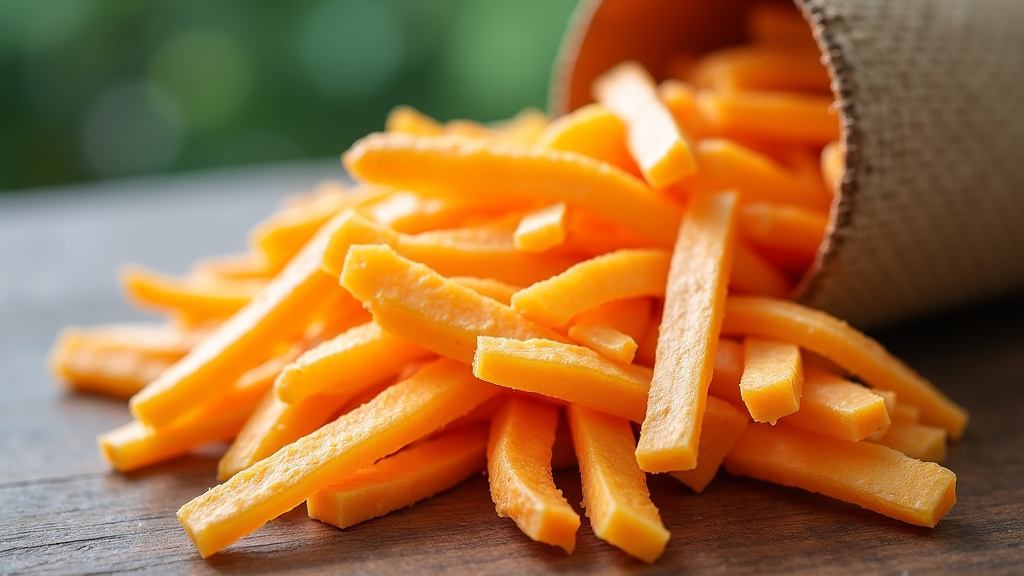
Consider carrot slices or bell pepper strips. These often fall into the 6 to 8-hour range. Leafy greens, like kale for chips, can be surprisingly fast, sometimes ready in 3 to 5 hours. Broccoli florets might take a bit longer, perhaps 6 to 8 hours.
Mushrooms are a bit of an outlier. While they are vegetables, they have a unique spongy texture and can absorb a lot of moisture. Dried mushrooms can take anywhere from 4 to 10 hours, depending on thickness and type. Some sources suggest pre-treating mushrooms to help them dry more evenly (National Center for Home Food Preservation).
Meats and Jerky: A Protein Powerhouse
Dehydrating meat, especially for jerky, has slightly different considerations because of food safety. It’s vital to ensure the meat reaches a safe internal temperature during the process.
Typically, jerky requires a longer, slower dehydration time at a slightly higher temperature than fruits or vegetables. You’re looking at 8 to 12 hours or even more. This ensures all moisture is removed and harmful bacteria are destroyed.
Many guidelines recommend pre-heating or cooking the meat before dehydrating to kill surface bacteria. This step is important for safety. We found that thinner strips of meat dry faster than thicker ones, which makes sense!
Herbs: Tiny but Mighty
Herbs are the quickest to dehydrate by far. They have very little moisture and small surface areas.
Most herbs will be ready in about 1 to 4 hours. You’ll know they’re done when they are brittle and crumble easily. It’s so fast, you almost have to watch them closely to avoid over-drying them into dust.
How to Tell When Your Food is Perfectly Dehydrated
So, how do you know when to pull your food out? It’s not just about the clock. You need to use your senses!
Visual and Texture Checks
For fruits, you’re looking for a texture that is pliable and leathery. It should not be sticky or wet. An apple slice should bend without breaking, but also shouldn’t feel moist to the touch. For berries, they should be shrunken and firm, but not rock hard.
Vegetables should be leathery or crisp, depending on what you’re going for. Dried vegetable pieces should snap or bend easily without being floppy. If you can still squeeze moisture out, they need more time.
The “Cool Down” Test
This is a really useful trick. Once you think your food is done, take a piece and let it cool for about 10 minutes. As food cools, any residual moisture on the surface becomes more apparent.
If it feels sticky or moist after cooling, it’s not dry enough. Put it back in the dehydrator for another hour or two and test again. This simple step can save you from spoilage.
A Quick Dehydration Checklist
Here’s a simple checklist to keep in mind as you’re dehydrating:
- Slice uniformly: Aim for consistent thickness (around 1/4 inch).
- Arrange on trays: Don’t let pieces overlap; allow air to circulate.
- Check periodically: Start checking around the minimum estimated time.
- Feel for pliability: Food should be leathery, not sticky or wet.
- Perform the cool-down test: Let a piece rest before final judgment.
- Store properly: Once cool, store in airtight containers immediately.
Conclusion
You’ve learned that dehydrating most foods usually takes 4 to 12 hours. This time can change based on your food’s moisture content, slice thickness, and your dehydrator’s power. Getting the hang of these factors means you can perfectly preserve your favorite foods. Now you know what to expect and how to check for that ideal leathery or crisp texture. So, gather your ingredients, prepare your slices, and get ready to enjoy your homemade dried treats!
Frequently Asked Questions
Can I dehydrate food without a dehydrator?
Yes, you can. Some people successfully dehydrate food in a low-temperature oven or using a food-safe dehydrating net outdoors in hot, dry climates. However, a dehydrator offers more control over temperature and airflow, leading to more consistent results.
How do I know if my food is dehydrated enough?
You’ll know it’s ready when it feels leathery, pliable, and not sticky or moist to the touch. For some items, like herbs, they should be brittle and easily crumbled. Always perform the cool-down test to check for any residual surface moisture.
Why are jerky and some meats taking so much longer to dehydrate?
Jerky and meats require longer drying times to ensure they reach a safe internal temperature and to remove enough moisture to prevent spoilage. This extended process also helps destroy harmful bacteria, making it safe to consume.
What happens if I over-dehydrate my food?
Over-dehydrated food can become too hard, brittle, or even turn to dust. It loses some of its desirable texture and flavor, becoming less enjoyable. It’s best to check your food periodically towards the end of the estimated drying time.
Is it okay to let dehydrated food sit on the tray overnight if it’s not quite done?
It’s generally not recommended to leave food sitting out uncovered overnight after it has been partially dehydrated. Once food is removed from the dehydrator and cools, any surface moisture can attract condensation or contaminants. It’s better to continue the drying process until it’s properly finished.