How to Dehydrate Basil in a Dehydrator
Dehydrate basil at 95°F to 115°F until the leaves are crisp and crumble easily. Wash and dry the leaves well, arrange them in a single layer, and store the dried basil in an airtight container.
On this page (8 sections)
- How do you prepare basil for a dehydrator?
- What temperature should you use to dehydrate basil?
- How do you arrange basil leaves in the dehydrator?
- How long does it take to dehydrate basil in a dehydrator?
- How do you cool and store dried basil?
- Can you dehydrate basil in another appliance?
- What else can you dry after basil?
- What is the best way to dehydrate basil in a dehydrator?
Dehydrate basil at 95°F to 115°F until the leaves are crisp and crumble easily. Wash the leaves if needed, remove surface water, spread them in one layer, and cool them fully before storing.
Fresh basil holds a lot of surface moisture, and that moisture affects how well the dried leaves keep. Leaves packed away while still soft can spoil, even if they still look fresh.
That is why preparation matters as much as the setting you choose. A short rinse, gentle drying, and thin spacing help the warm air work evenly.
A clock alone is not a reliable guide. Leaf size, tray load, and water left after washing all change the timing.
A dehydrator holds a low temperature steadily while air moves around the food. That makes gentle moisture removal easier to manage than repeatedly opening an oven door.
Start with clean leaves and remove dark or damaged areas. Rinse only when there is visible dirt, dust, or grit.
Pat the leaves dry or use a salad spinner, then let any remaining water evaporate for a few minutes. Spread the leaves flat so they do not touch where possible.
Check after the earliest likely time has passed. Keep drying until a leaf breaks cleanly instead of bending, then cool it fully before sealing for storage.
How do you prepare basil for a dehydrator?
Pick clean, healthy basil leaves and remove as much surface water as possible. Discard leaves with dark, slimy, or damaged areas, then separate the leaves from thick stems.
Rinse the basil gently under cool water if it has dirt or dust. Shake off the water, pat the leaves dry with a clean towel, or use a salad spinner.
Let the leaves sit briefly so moisture on the surface can evaporate. Do not load dripping-wet basil because the extra water can extend drying time.
If you enjoy preserving several herbs, see our guide to drying herbs in a dehydrator for similar preparation and tray-spacing advice. For another herb, see how to dry dill in a dehydrator.
Should you leave basil leaves whole?
Leave small and medium leaves whole when possible. Whole leaves are easier to spread and remove, while very large leaves can be torn or cut into smaller pieces for more even drying.
Keep pieces similar in size on the same tray. Avoid chopping the basil too finely before drying because small fragments can fall through tray openings or scatter when the fan runs.
What temperature should you use to dehydrate basil?
Set the dehydrator to 95°F to 115°F for basil leaves. Use the lowest setting that gives steady airflow and heat, especially if preserving the herb's color and aroma is your priority.
Some machines begin at a higher temperature. If yours cannot reach the low range, use its lowest available setting and check the basil more often.
For a broader explanation of heat and moisture removal, read What Temperature Dehydrates Food? What to Expect.
Our guide to What Temperature Should I Set My Dehydrator To? Good to Know can also help when your machine has several settings.
A low-temperature dehydrator can be useful for herbs and other delicate foods. Compare features in our guide to the best low temp food dehydrator.
How do you arrange basil leaves in the dehydrator?
Place basil leaves in a single layer with space around each leaf. Keep the leaves flat when possible, and avoid stacking or overlapping them.
Use a mesh screen if your dehydrator includes one for herbs. It can help support small leaves and pieces while allowing warm air to move around the basil.
Leave the other trays empty if you only have a small amount of basil. If you fill several trays, keep the layer thin and check whether the leaves are drying at a similar rate.
Which dehydrator suits basil leaves?
A dehydrator with a low temperature setting, steady airflow, and a tray surface that supports herbs is a practical choice for basil. Easy cleanup also helps when you dry herbs often.
The Hamilton Beach Digital Food Dehydrator for Fruit has 5 stackable BPA-free trays, a mesh screen for herbs, a temperature range of 100°F to 160°F, and a digital timer that runs up to 48 hours.
The Hamilton Beach model has a 500 watt base-mounted heater and fan, plus a clear vented lid for checking the leaves without removing it. The trays and lid are dishwasher safe, but the mesh screen should be hand washed.
Do not use heated drying or sanitize cycles for those dishwasher-safe parts.
The Commercial Chef Food Dehydrator has 5 BPA-free, 9.25 in round trays and an adjustable temperature range of 104°F to 158°F. Its 280 watt design suits readers who want a compact machine for herbs, fruit, vegetables, and jerky.
The Commercial Chef model measures 9.92 in wide, 9.43 in deep, and 7.01 in high, and it weighs 3.3 lb. The trays are reversible to allow more space for thicker foods, although basil leaves should still be spread in a thin layer.
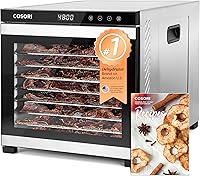
The Magic Mill Premium Food Dehydrator Machine has 10 extra-large stainless steel trays, a 95°F to 167°F temperature range, and a 48-hour digital timer. Its rear-mounted fan is designed for airflow across all trays, which helps when you are drying a larger batch.
The Magic Mill model uses 700 watts and has a transparent door for monitoring. Its trays and liners are dishwasher safe, while the housing can be wiped with a damp cloth.
It is 18 in deep, 13 in wide, and 14 in high, so measure your storage area before choosing it.
How long does it take to dehydrate basil in a dehydrator?
Basil usually takes about 2 to 4 hours at a low temperature, but leaf thickness, surface moisture, tray spacing, and airflow can change the timing. Start checking after 2 hours instead of relying on one exact number.
Turn or rearrange leaves only if your dehydrator's airflow seems uneven. Some machines are designed to dry without tray rotation, but crowded trays can still slow the process.
Basil is ready when the leaves are dry, crisp, and easy to crumble. A leaf that bends, feels cool and soft in the center, or clings together needs more time.
Do not judge doneness by color alone. Green basil can still contain moisture, and darker or brittle edges do not always mean the whole leaf is fully dry.
How do you cool and store dried basil?
Cool the dried basil completely before sealing it. Remove the trays and let the leaves cool in a clean, dry place away from steam and splashing water.
Crumble the basil by hand or leave the leaves whole. Whole leaves may keep their aroma better during storage, while crumbled basil is ready to add to soups, sauces, vegetables, and dressings.
Place the cooled basil in a clean airtight jar or container. Keep it in a dark, dry cupboard away from the stove, sink, and direct sunlight.
Check the container after a day or two. If you see condensation or find soft leaves, spread the basil out and dry it again before returning it to storage.
Can you dehydrate basil in another appliance?
Yes, but a food dehydrator gives you a steady low-temperature setup designed for moisture removal. An oven may need closer monitoring because its lowest setting can be higher than the ideal basil range.
For oven instructions, see How to Dehydrate Basil in an Oven. An air fryer can work for small batches, but its fan and heat may be more intense, so follow the method in How to Dehydrate Basil in an Air Fryer.
Avoid crowding basil in any appliance. The leaves need exposed surface area and moving air so moisture can leave evenly.
What else can you dry after basil?
After drying basil, you can use the same preparation ideas for other produce, but each food needs its own temperature and texture check. For another vegetable, see how to dehydrate broccoli and cauliflower.
The shared habits are washing or trimming as needed, drying the surface, and spacing pieces so air can reach them. Thickness, moisture, and the texture you want decide the differences.
Basil leaves are thin and dry quickly, while denser vegetables need more time and closer checks. Carrots and similar foods also benefit from even slices, because mixed thicknesses dry at mixed rates.
Keep raw meat separate from herbs, and clean trays according to the appliance instructions. That separation protects flavour and keeps the drying area suitable for ready to use foods.
For fruit, see how to dehydrate apples. For vegetables, how to dehydrate carrots in a dehydrator explains why even slices and consistent spacing matter.
Use basil as a starting point, then adjust for each new food. Wash, dry, space, and test for texture, and the method carries over well.
What is the best way to dehydrate basil in a dehydrator?
For how to dehydrate basil in a dehydrator, wash and dry the leaves, spread them in one layer, use 95°F to 115°F, and continue until they crumble easily. Cool them fully before sealing them in an airtight container.
Choose the Hamilton Beach if you want a herb mesh screen and a 100°F low setting. Choose the Commercial Chef for a lighter 5-tray machine, or the Magic Mill if its 95°F setting and 10 stainless steel trays fit your larger drying routine.
The key decision is texture. If a basil leaf bends instead of breaking, keep drying it and check again before storage.
Frequently asked questions
How long does it take to dehydrate basil in a dehydrator?
Basil usually takes about 2 to 4 hours at a low temperature, but the exact time depends on leaf size, moisture, airflow, and how full the trays are. Start checking early, and continue drying until the leaves feel crisp and crumble instead of bending.
What temperature should I use to dehydrate basil?
Use a low setting between 95°F and 115°F when your dehydrator allows it. A lower temperature helps protect basil's color and aroma, while a slightly higher setting can shorten the drying time.
Always judge doneness by texture, not the clock alone.
Should basil be washed before dehydrating?
Yes, rinse fresh basil gently under cool water if it needs cleaning, then remove excess water with a towel or salad spinner. Wet leaves take longer to dry and can make the process uneven, so let the surface moisture evaporate before loading the trays.
How should dried basil be stored?
Store fully dried basil in a clean, dry, airtight container away from heat, light, and moisture. Label the container with the drying date, and check for soft leaves or condensation before using it.
If moisture appears, dry the basil again before storing it.