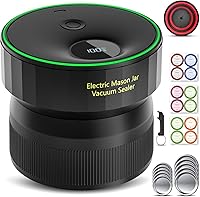
How to Check If a Mason Jar Sealer Is Made in USA
You verify a mason jar vacuum sealer made in USA claim by checking the product label, the box, the model number and the maker. A US brand name alone does not prove US production.
On this page (13 sections)
- Where is the country of origin mark on a vacuum sealer?
- How does Made in USA differ from Assembled in USA?
- Does a US brand name prove US production?
- What should you check on the box and manual?
- How do model numbers help you verify a claim?
- How should you ask the maker about origin?
- How do you check jar sealer accessories and lids?
- Which machines let you test jar sealing in real use?
- How do jar sealer kits differ from bag sealing machines?
- Which products help you compare origin claims?
- How can you spot misleading Made in USA claims?
- What records should you keep after you buy?
- How should you decide on a mason jar vacuum sealer made in USA?
You verify a mason jar vacuum sealer made in USA claim by checking the label on the unit, the box, the manual and the maker record for that model. A US brand, US shipping, or a flag on the package does not prove US production.
Start with the simplest check. Search the product photos for a country of origin line near the rating plate.
Then confirm the same origin in the manual or maker page. If those two sources disagree, trust the physical label on the unit you receive.
This guide explains each check in order. You will learn where origin marks appear, how to read model numbers, and how to ask the maker a clear question.
You also get a simple rule at the end of each section, so you can decide fast.
Where is the country of origin mark on a vacuum sealer?
The country of origin mark is usually on the rating label on the bottom or back of the machine. Look for text near the model number, voltage and serial number.
It may read Made in USA, Assembled in USA, or Made in China, among other countries.
You should also check the box bottom and the manual cover. Some makers print the same origin on all three places.
A mismatch is a warning sign, and you should ask the maker which one is correct for your unit.
Check the bottom label first
Turn the sealer over and find the rating plate. The plate holds the model, input power and a country line.
Take a clear photo for your records before you plug the unit in. That photo helps if you need to return the item or ask about warranty cover.
Do not rely on a hang tag alone. Hang tags can stay on the box when a seller ships a different version.
The rating plate travels with the machine itself, so it gives you a stronger check.
Rule: trust the rating plate on the unit over flags, hang tags and listing photos.
How does Made in USA differ from Assembled in USA?
Made in USA points to a stricter claim about where a product was made. Assembled in USA can mean parts came from other countries and final assembly happened in the US.
The words matter, so read them word for word.
A maker may use both phrases for different parts of one product. For example, a machine could be assembled in the US with imported motors and seals.
That does not make every part US made, and you should note which parts the claim covers.
You can ask for a breakdown by part. Ask which parts were made in the US and which were imported.
A clear answer names the pump, housing, cord, seal bar and accessory port.
Rule: treat Made in USA and Assembled in USA as different claims, and ask which parts each claim covers.
Does a US brand name prove US production?
No. A US brand name proves where the brand is based, not where a given model was built.
Many US brands design in the US and build in other countries for cost and scale reasons.
FoodSaver and NESCO are examples of brands sold widely in the US. Their brand origin does not tell you the factory for a specific sealer or jar accessory.
You still need the model-level origin check for each item.
Apply the same logic to sellers. A US seller can ship a product made anywhere.
A US warehouse, US customer service team or US return address does not change the factory origin.
Rule: check the model, not the brand, when you care about production origin.
What should you check on the box and manual?
The box should repeat the origin claim in plain text. Look on the bottom panel, near the barcode and product name.
The manual often lists the model and origin on the cover or first page.
Compare the box, manual and rating plate. All three should agree on the model number and origin.
If one says USA and another names a different country, pause and ask the maker before you keep the item.
Keep the box for a short time. You may need the barcode, model and origin panel if a part fails or a lid does not fit.
A photo of each panel gives you a record without keeping bulky packaging.
Rule: buy only when the box, manual and rating plate agree on model and origin.
How do model numbers help you verify a claim?
Model numbers tie a claim to one exact version of a product. Makers can change factories while keeping the same product name.
The model number helps you ask about the right version.
Write down the full model number from the rating plate. Include any suffix letters, because they can mark a factory or market change.
Then search that exact model on the maker site.
If the maker site lists a different model for the same name, ask which one you received. Makers sometimes sell a newer version with a small model change.
That change can also change the origin.
Rule: always ask about the full model number, including suffix letters, never just the product name.
How should you ask the maker about origin?
Ask the maker a short, specific question with the model number. Name the product, the model and the exact claim you want checked.
A clear question gets a clear answer.
You can write: "For model X, was the unit made in the USA, and which parts were imported?" That wording avoids a vague yes or no.
It also asks for the part list you need to judge the claim.
Save the reply with your order record. If the item arrives with a different origin, you have a clear record for a return or a charge dispute.
If the maker does not reply, treat the claim as unverified.
Our best vacuum sealer for bags and jars guide helps you compare machine types before you check origin for a final pick. That order saves time, because you only need deep origin checks on your top choice.
Rule: send the model number and ask for a part-by-part origin answer, then save the reply.
How do you check jar sealer accessories and lids?
Check each part on its own. A vacuum sealer machine, a mason jar sealer accessory and replacement lids can come from different factories.
A bundle deal does not make them one product for origin purposes.
Look for an origin mark on the accessory body, its box and its instructions. Lids often carry origin on the box or a paper band.
Regular mouth and wide mouth lids can also come from different sources.
Fit matters as much as origin. Our best vacuum sealer lids for mason jars guide explains lid types and fit checks.
Check lid size before you buy, because a US made lid will not help if it does not match your jar.
Rule: label each item in a bundle on its own, and check lid size as well as origin.
Which machines let you test jar sealing in real use?
A machine with an accessory port and hose gives you a direct way to test jar sealing. You connect the hose to a jar sealer accessory and watch the lid pull down.
That setup also lets you test other accessories, such as canisters.
{{product B00LUGK5QW | A FoodSaver machine with an accessory port and hose, plus dry and moist modes for bag sealing.}} The FM2100 includes an 11 x 10 ft roll, three 1-quart bags, two 1-gallon bags and an accessory hose.
FoodSaver backs this model with a 5-year limited warranty.
That accessory port is useful for origin checks too. You can test the jar accessory with the same machine and note which lid seals well.
If a lid fails, you can rule out the machine before you blame the jar accessory.
Our how to use electric mason jar vacuum sealer guide walks through the basic steps. Read it before your first test, so you can tell a setup error from a faulty lid.
Rule: choose a machine with an accessory port if you plan to test jar sealers and lids yourself.
How do jar sealer kits differ from bag sealing machines?
Jar sealer kits focus on one task. They pull air from a mason jar through a jar sealer accessory and a lid.
Many buyers use them with a machine they already own, or with a handheld unit made for jars.
Bag sealing machines focus on bags first. They use a heat seal bar to seal plastic bags after air is removed.
Some models add an accessory port for jars, while others do not.
A vacuum sealer machine may suit you if you seal bags often and jars in small batches. A jar-only kit may suit you if jars are your main use.
The right choice depends on your daily routine, not on origin alone.
Consider storage too. Jar kits take less counter space, but they may need a separate machine for bags.
Bag machines take more space, but they cover more food types in one unit.
Rule: pick bag sealing, jar sealing or both based on what you seal most days, then check origin on that exact setup.
Which products help you compare origin claims?
Use product examples to see how origin checks work in practice. Each example below shows a different machine type, so you can match the check to the setup you want.
{{product B00DI342B4 | A 2-in-1 FoodSaver machine with automatic bag detection, a handheld sealer and jar sealer accessory compatibility.}} The V4400 includes an 11 x 10 ft roll, three 1-quart vacuum seal bags, two 1-gallon vacuum seal bags, three 1-quart zipper bags and two 1-gallon zipper bags.
FoodSaver says optional accessories include regular and wide mouth mason jar sealers.
That mix makes the V4400 a good test case. You can check the machine origin, then check each jar sealer accessory on its own label.
FoodSaver also notes compatibility with 8-inch and 11-inch vacuum seal rolls and pre-made bag sizes, which helps you plan bag use.
{{product B01KCK9W1K | A compact NESCO machine with dry, moist and double seal modes and a viewing lid.}} The VS-12 is 130 watts and weighs 6 pounds. It includes an 8.6 x 9.85 ft roll and an 11.8 x 9.85 ft roll.
NESCO says the double heat seal design helps with moist foods.
The VS-12 does not list jar sealer compatibility in the same way as the V4400. That does not make it a poor machine.
It means you should ask the maker whether it works with a jar accessory before you buy for jar use.
Our best mason jar vacuum sealer guide lists jar-focused options. Use it to find a kit or accessory that matches your jar size, then run the origin checks in this guide on that exact model.
Rule: compare machine, accessory and lid origins as three separate checks before you buy any bundle.
If you want jar-focused picks, read our plateful mason jar vacuum sealer reviews for a detailed look at one jar sealer option. Then apply the same label and model checks to that product.
If you mostly seal bags, our best reusable vacuum sealer bags guide lists bag options that pair with bag machines. Check bag size and material before you buy, because the wrong bag can cause seal failures.
If you are still deciding between jar vacuum sealing and heat canning, read our mason jar vacuum sealer vs canning guide. That guide explains the basic difference in purpose and food safety, which helps you choose the right method before you check origin.
How can you spot misleading Made in USA claims?
Watch for flags, eagles and patriotic colors without clear origin text. Those images can suggest US production, but they do not state it.
Look for plain words that name the country.
Watch for phrases such as designed in USA or USA warehouse. Those phrases describe design or shipping, not production.
A product can be designed in the US and made elsewhere, and the ad may still look local.
Watch for claims that cover the brand but not the model. A maker page may say it is a US company, and that line may sit near a product made in another country.
Click through to the model page and find the origin there.
Watch for seller-added badges. A marketplace seller can add a badge that the maker did not approve.
Maker pages, manuals and rating plates carry more weight than a seller badge.
Rule: ignore flags and vague phrases, and require plain origin text tied to your model.
What records should you keep after you buy?
Keep your receipt, the model number and photos of the rating plate and box. Those records help with returns, warranty claims and origin questions.
Store them in one folder on your phone or computer.
Note the date you checked the origin and the source you used. If you asked the maker, save the reply.
If you checked only the box, note that too, so you know what still needs a check.
Test the seal soon after you buy. Use dry food first, such as beans or rice, so you can judge the seal without liquid.
Wash and dry the lid and rim, then check that the lid pulls down tight.
Our score weighs specs, features and buyer feedback against what you're shopping for. For this guide, that means we weigh origin clarity, jar compatibility and basic machine features together.
Origin is one factor, not the only factor.
Rule: keep photos and the maker reply for 30 days, and test the seal with dry food first.
How should you decide on a mason jar vacuum sealer made in USA?
Decide in this order. First, choose bag sealing, jar sealing or both based on your routine.
Second, pick a model that fits your jars and food types. Third, verify origin on the machine, accessory and lids.
If origin is a must for you, buy only a model with a clear rating plate, matching box text and a maker reply that names the country. If origin is a preference, not a must, choose the model with the best fit, clear warranty terms and strong seal performance.
For a mason jar vacuum sealer made in USA check, the final test is simple. The label, box and maker record should all point to the same answer for your exact model.
If they do not, ask again or choose a different model.
Rule: buy the model where label, box and maker record agree, and skip any model where they do not.
Frequently asked questions
How can I tell if a mason jar vacuum sealer is made in the USA?
Look for a clear Made in USA or Assembled in USA mark on the product, box and manual, then match the model number to the maker record. Also check the country of origin label required on imports.
A US company name or US warehouse does not prove where the sealer was made.
Does a US brand mean the sealer was made in the USA?
No. Many US brands design products in the US and manufacture them overseas.
Treat brand origin and production origin as separate facts.
Ask the maker for the factory location for the exact model and version you plan to buy, and keep that reply with your receipt.
What should I do if a listing claims USA made but shows no label photo?
Treat the claim as unverified until you see close photos of the rating label, box bottom and manual cover. You can also message the maker with the model number and ask which parts were made where.
If the answer stays vague, choose a model with clear documentation.
Are mason jar sealer attachments made in the same place as the vacuum sealer?
Not always. The main vacuum sealer machine, the jar sealer accessory and the lids can come from different factories.
Check each item on its own label.
This matters when you buy a machine and jar sealer as a bundle from different sellers.
Does Made in USA matter for performance or safety?
Origin alone does not guarantee better suction or safer seals. Performance depends on the pump, seal bar, accessory port and lid fit.
Use origin as one buying fact, then check compatibility, warranty terms and basic safety certifications for the exact model.