9 Best Dehydrated Food for Long Term Storage (November 2026)
The best best dehydrated food for long term storage include the Mountain House Emergency Meal Assortment Kits for ready comfort meals, the Ready Hour 120 Serving Entree Bucket-Freeze Dried for 120 serving entrees, and the Augason Farms Dehydrated Diced Carrots Emergency Food Supply for 216 serving vegetables.
On this page (8 sections)
- How the best dehydrated food for long term storage was compared
- Best dehydrated food for long term storage: product by product
- How much dehydrated food should you store for long term use?
- What is cheap dehydrated food for long term storage?
- Which storage format protects dehydrated food best?
- How should you store dehydrated food at home?
- Are dehydrated foods healthy enough for daily use?
- Verdict: which dehydrated food should you buy first?
The best dehydrated food for long term storage is the one you will use, store correctly, and replace on schedule. For ready meals, Mountain House Emergency Meal Assortment Kits lead this group.
For bulk entrees, Ready Hour 120 Serving Entree Bucket gives more servings. For vegetables and ingredients, Augason Farms and Gourmanity give large counts in simple formats.
Our score weighs specs, features and buyer feedback against what you are shopping for. We compared shelf life, serving counts, pouch counts, package size and prep needs across these nine products.
We did not test them hands on.
Our picks at a glance
-
1
 Best for ready comfort meals
Mountain House Emergency Meal Assortment Kits
9.7/10 our score
See it on Amazon -
2
 Best for 120 serving entrees
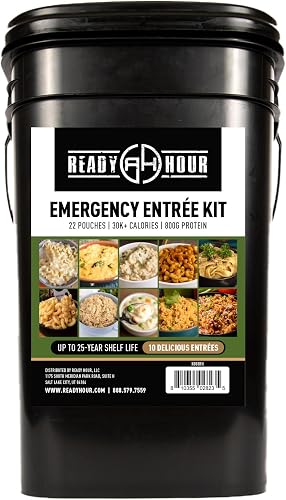
Ready Hour 120 Serving Entree Bucket-Freeze Dried
9.6/10 our score
See it on Amazon -
3
 Best for 216 serving vegetables
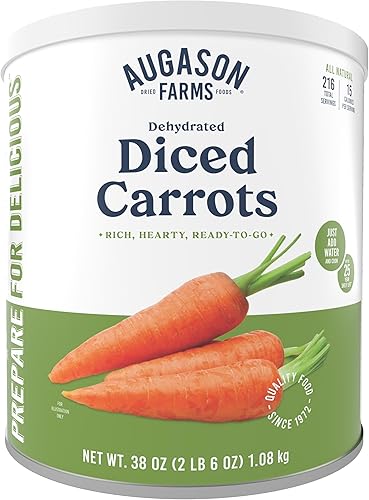
Augason Farms Dehydrated Diced Carrots Emergency Food Supply
9.5/10 our score
See it on Amazon
- 4
 Check it
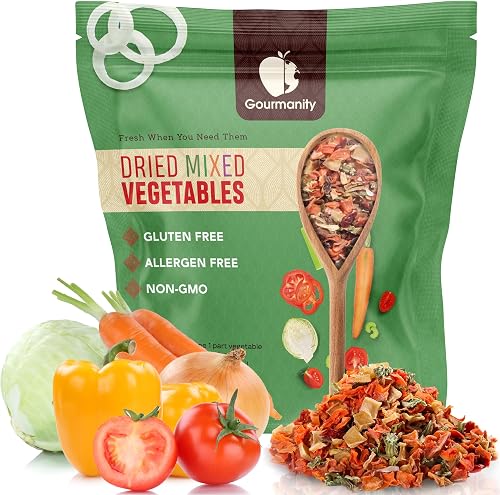
Gourmanity Dehydrated Mixed Vegetables for Soup
Best for soup mixed vegetables - 5
 Check it
READYWISE Emergency Food Survival Supply Vegetables Bucket
Best for vegetable buckets - 6
 Check it
READYWISE Emergency Food Survival Supply 14 Day
Best for 14 day buckets - 7
 Best for fruit and veggie mixCheck it
- 8
 Check it
Mountain House Ground Beef #10 Can
Best for ground beef protein - 9
 Check it
ReadyWise SIMPLE KITCHEN Powdered Eggs #10 Can
Best for powdered eggs
How the best dehydrated food for long term storage was compared
Shelf life came first, because a 30 year claim changes how much you can buy at once. Serving count came next, because 24 servings and 216 servings solve different problems.
We then checked pouch counts, package size, water needs and resealable options.
Freeze dried and dehydrated are not the same, but both can store well when dry. To understand the difference, read [What Happens to Food When It Is Dehydrated?
What It Means](/what-happens-to-food-when-it-is-dehydrated/). That guide explains water removal in plain terms.
Health matters for long term plans, since you may eat these foods often. See [Is Dehydrated Food Healthy?
What to Remember](/is-dehydrated-food-healthy/) before you build a menu around one brand.
Storage format matters as much as food. Buckets, cans and pouches each protect food in different ways.
Our container guides below help you match the format to your shelf space.
Shelf life, servings and format together
A long shelf life only helps if the format matches your kitchen. A flood safe bucket with a handle suits a garage or basement, while a small can suits a cupboard shelf.
A resealable bag suits daily cooking, but it needs a dry spot and a tight seal after each use.
Serving counts need the same check. A 216 serving can of carrots stretches across many soups, while a 22 serving can of beef is used up in a few meals.
Pouch counts matter too, since 22 resealable pouches let you open one portion at a time.
| Factor to check | What it tells you |
|---|---|
| Shelf life | How long the food is stated to keep in cool, dry storage |
| Servings | How many portions you get before you need to reorder |
| Pouch count | How often you can open part of the supply at a time |
| Package size | Whether it fits your shelf, car or storage room |
Use that table before you compare two buckets with similar serving counts. The better fit is the one you can store flat, stack safely and reach without moving heavy boxes.
| Product | Best for | Servings | Shelf life | Package | Our score |
|---|---|---|---|---|---|
| Mountain House Emergency Meal Assortment Kits | ready comfort meals | 24 | 30 years | Bucket, 12 pouches | 9.7 |
| Ready Hour 120 Serving Entree Bucket-Freeze Dried | 120 serving entrees | 120 | Up to 25 years | 9.6 | |
| Augason Farms Dehydrated Diced Carrots Emergency Food Supply | 216 serving vegetables | 216 | 25 years | 9.5 | |
| Gourmanity Dehydrated Mixed Vegetables for Soup | soup mixed vegetables | Resealable bag | 9.2 | ||
| READYWISE Emergency Food Survival Supply Vegetables Bucket | vegetable buckets | 120 | Up to 25 years | 9.0 | |
| READYWISE Emergency Food Survival Supply 14 Day | 14 day buckets | 150 | Up to 25 years | 8.8 | |
| Ready Hour | fruit and veggie mix | 56 | 30 years | 8.5 | |
| Mountain House Ground Beef #10 Can | ground beef protein | 22 | 30-Year Taste Guarantee | 8.2 | |
| ReadyWise SIMPLE KITCHEN Powdered Eggs #10 Can | powdered eggs | 72 | 8.0 |
Best dehydrated food for long term storage: product by product
The order below follows score, highest first. Each write up covers who it suits, what the specs mean in daily use, and the trade off against the other products here.
Mountain House Emergency Meal Assortment Kits: Best for ready comfort meals
- 12 pouches, 24 servings
- Freeze-dried meals
- 30-Year Taste Guarantee
- Bucket 12 x 10 x 12.31 in, 5.52 lb
A ready meal assortment with beef stew, stroganoff, spaghetti and chicken fried rice, plus granola for breakfast.
Pros
- Ready meals, just add water
- 30-Year Taste Guarantee
- No cleanup, eat from pouch
Cons
- Only 24 servings
- Needs 18 cups water for all meals
Mountain House Emergency Meal Assortment Kits suit people who want familiar comfort meals with no cooking. The bucket holds 12 pouches and 24 servings, with beef stew, beef stroganoff with noodles, spaghetti with beef marinara, chicken fried rice and granola with milk and blueberries.
That mix covers breakfast and dinner, which matters when you store food for a power cut or a camping trip. Granola with milk and blueberries gives a sweet start, while the beef meals handle hearty evening portions.
Prep is simple. You add water and eat from the pouch in less than 10 minutes, with no cleanup.
The kit needs 18 cups of water to prepare all meals, so plan for water if you use this for emergencies.
Those 18 cups set a real limit. The bucket is light at 5.52 lb, but the meals are not water free.
Store it with water, not only beside it, if you want it ready for home use.
The bucket weighs 5.52 lb and measures 12 by 10 by 12.31 inches. That size fits a pantry shelf or a car storage area better than the larger 120 serving buckets.
Mountain House backs it with a 30-Year Taste Guarantee. That is a taste and freshness promise, not a promise that every pouch stays sealed forever if stored in heat or moisture.
Trade off: at 24 servings, this is a starter or rotation kit, not a full long term supply. Pair it with larger buckets or ingredient cans if you need more meals.
Ready Hour 120 Serving Entree Bucket-Freeze Dried: Best for 120 serving entrees
- 120 servings
- 22 resealable pouches
- Up to 25 years
- Flood-safe container
A large entree bucket made for multiple uses, with resealable pouches so you use only what you need.
Pros
- 120 servings in one bucket
- 22 resealable pouches
- Re-sealed pouches last up to a year
Cons
- 20 lb package
- Large footprint for small pantries
Ready Hour 120 Serving Entree Bucket suits buyers who want many entree servings in one container. It includes 120 total servings across 22 resealable pouches.
That pouch count is the key benefit. You can use only what you need and save the rest for later.
Ready Hour says re-sealed pouches last up to a year, which helps rotation.
In daily use, that means you can open a pouch for one meal, reseal it well and keep the rest of the bucket sealed. It also means you can rotate opened pouches into weekly cooking without opening all 120 servings at once.
The package measures 15.75 by 11.72 by 9.81 inches and weighs 20 lb. It needs more shelf space than the Mountain House bucket, and it is heavier to move.
That weight changes where you store it. A floor shelf, a storage room or a garage corner suits it better than a high kitchen cupboard.
The handle helps for transport, but it does not make 20 lb light.
Shelf life is up to 25 years in a cool and dry place. The container is described as durable and flood-safe, with a handle for transport.
Trade off: this is an entree supply, not a vegetable or ingredient supply. If you want carrots, eggs or beef to add to your own cooking, look at the cans and bags below instead.
Augason Farms Dehydrated Diced Carrots Emergency Food Supply: Best for 216 serving vegetables
- 216 servings
- 25 year shelf life
- Resealable can
- Dehydrated diced carrots
A single vegetable can with 216 servings for soups, stews, rice dishes and casseroles.
Pros
- 216 servings
- No peeling or dicing
- Portable resealable can
Cons
- One vegetable only
- 38 oz total weight for the can
Augason Farms Dehydrated Diced Carrots suit cooks who want one versatile vegetable in bulk. The can gives 216 servings with a 25 year shelf life.
You skip washing, peeling, slicing and dicing. The carrots are ready for soups, stews, casseroles, salads and rice dishes.
In practice, that makes this can a base ingredient rather than a meal. Add it to a soup mix, a rice dish or a stew, and you stretch fresh ingredients that you already own.
The can measures 6.3 by 6.3 by 7 inches and weighs 2.4 lb. It is compact for a pantry shelf compared with full meal buckets.
That compact size is a practical plus. One can fits beside grains and canned goods, while a full bucket takes a whole shelf section.
You can also move it to a camping kit without filling a bag.
The can is resealable, which helps between uses. Store it in a cool, dry place and close it after each use.
Trade off: it is only carrots. You still need other vegetables, proteins and grains to make complete meals.
That is why mixed vegetable products exist in this group.
Gourmanity Dehydrated Mixed Vegetables for Soup: Best for soup mixed vegetables
- 5 lb resealable bag
- Onion, carrot, celery, tomato, bell pepper, cabbage
- Ready in 10 to 15 minutes
- Non-GMO, gluten free
A 5 lb blend for soups, stews, ramen and stir fries, with small pieces cut to rehydrate fast.
Pros
- No chopping or washing
- Real vegetables, no fillers
- Fast rehydration
Cons
- Bag format, not a can or bucket
- No stated shelf life in the data
Gourmanity Dehydrated Mixed Vegetables suit soup and stew cooks who want a blend, not a single vegetable. The bag weighs 5 lb and holds onion, carrot, celery, tomato, bell pepper and cabbage.
That blend matters in daily use. Instead of adding one vegetable at a time, you add a mixed base to soups, stews, sauces, casseroles and stir fries.
It also suits ramen toppings, where small pieces spread through the broth.
Prep is fast. Gourmanity says add 1 part vegetables to 2 parts water and simmer 10 to 15 minutes, or soak in cold water.
Small pieces rehydrate fast in ramen and quick soups.
The 1 to 2 ratio gives you a clear rule for a pot. For a small pan you need less water, and for a large soup you can scale the ratio up.
Cold soaking suits salads or dishes where you do not want to heat the pot.
The bag is resealable, which suits large families and bulk pantries. It is also certified non-GMO and naturally gluten and allergen free.
There is no stated shelf life in the data for this bag. Plan to rotate it based on the date on your bag and store it cool and dry.
Trade off: a bag needs a safe shelf spot and careful sealing after opening. If you prefer a rigid can or bucket, the Augason Farms and ReadyWise options may fit your storage better.
READYWISE Emergency Food Survival Supply Vegetables Bucket: Best for vegetable buckets
- 120 servings
- Freeze dried corn, broccoli, peas, green beans
- Up to 25 years
- Split bucket lid
A 120 serving vegetable bucket with corn, broccoli, peas and green beans in airtight Mylar pouches.
Pros
- 120 vegetable servings
- Split lid doubles as tray
- Stackable bucket
Cons
- Light package, check pouch count for your use
- Vegetables only, not full meals
READYWISE Emergency Food Survival Supply Vegetables Bucket suits buyers who want vegetables in a bucket format. It gives 120 servings of freeze dried corn, broccoli, peas and green beans.
That list covers four vegetables in one bucket. Corn adds sweetness, broccoli adds bulk, and peas and green beans suit soups and side dishes.
Shelf life is up to 25 years in airtight Mylar pouches inside a durable polyethylene bucket. ReadyWise recommends cool, dry storage.
The Mylar pouch layer matters for storage. You get a bucket for stacking and protection, plus sealed pouches for portion control inside it.
The bucket measures 15 by 12.5 by 10.5 inches and weighs 2.08 lb. It is stackable and fits a pantry, car or backpack in the maker's description.
That low weight is unusual for a bucket this size. It makes the bucket easier to lift and move than the 14 lb and 20 lb buckets in this group.
The split lid is useful. It gives quick access to pouches and doubles as a tray and holder for servings.
Trade off: this is vegetables only. For full meals, the ReadyWise 14 Day bucket or the Ready Hour entree bucket covers more ground, but with different foods and serving counts.
READYWISE Emergency Food Survival Supply 14 Day: Best for 14 day buckets
- 150 servings
- 14 Day bucket
- Up to 25 year shelf life
- Cheesy Macaroni, Pasta Alfredo, Whey Milk Alternative
A 150 serving bucket aimed at 14 days, with protein packed meals and a split lid for serving.
Pros
- 150 servings
- Just add water
- Stackable, split lid tray
Cons
- 14 lb, heavier than vegetable bucket
- Meal list is shorter than the details given
READYWISE Emergency Food Survival Supply 14 Day suits buyers who want a named number of days in one bucket. It gives 150 servings with an up to 25 year shelf life.
Meals named in the data include Cheesy Macaroni, Pasta Alfredo and Whey Milk Alternative. That mix points to pasta based meals and a milk alternative for breakfast or drinks.
Prep is just add water, and any water temperature works, though hot water cooks food faster.
That flexibility helps in different settings. At home you can use hot water for a faster meal, while on a trip you can still prepare food with cooler water if needed.
The package measures 16 by 12.5 by 10.5 inches and weighs 14 lb. It is stackable for pantry or emergency kit storage.
At 14 lb, this bucket needs a low shelf or floor space. It is lighter than the 20 lb Ready Hour entree bucket, but heavier than the 2.08 lb vegetable bucket.
The split lid doubles as a tray or small table. That helps when you serve food away from a counter.
Trade off: 150 servings sounds large, but daily needs vary by person and meal type. Count your actual meals per day before you treat any bucket as a set number of days for your household.
Ready Hour: Best for fruit and veggie mix
- 56 servings
- Fruit and Veggie Mix
- 30 year shelf life
- 7 resealable pouches
A 56 serving fruit and veggie mix with 30 year shelf life, in seven resealable pouches.
Pros
- 30 year shelf life
- 7 resealable pouches
- Compact durable container
Cons
- 56 servings, smaller than buckets
- Re-sealed pouches last up to a year
Ready Hour Fruit and Veggie Mix suits buyers who want a smaller, mixed supply. It includes 56 total servings with a 30 year shelf life.
The mix comes in seven resealable pouches. You can open one pouch at a time and save the rest for later.
Ready Hour says re-sealed pouches last up to a year.
In daily use, seven pouches give a clear rotation plan. Open one pouch for a soup or side dish, use it across a few meals, then move to the next pouch.
The container is durable and flood-safe, with a handle for transport. The package measures 10.98 by 10.43 by 7.95 inches.
This size suits a closet, car or small pantry better than the 120 and 150 serving buckets. It also suits camping and adventure use.
The smaller footprint also makes it easier to store upright. You can place it on a shelf without rearranging a whole storage area, and you can lift it with one hand for transport.
Trade off: 56 servings is less than the entree and vegetable buckets. If you need a core long term supply, this works best as a supplement, not as the whole plan.
Mountain House Ground Beef #10 Can: Best for ground beef protein
- 22 servings
- Gluten-free ground beef
- 30-Year Taste Guarantee
- 29 oz container
Freeze dried ground beef in a #10 can for tacos, stuffed peppers and campfire spaghetti.
Pros
- 22 servings in one can
- Just add water, no cooking
- Gluten-free
Cons
- One ingredient, not a full meal
- 22 servings only
Mountain House Ground Beef #10 Can suits cooks who want protein they can add to their own meals. The can gives 22 servings of freeze dried ground beef.
Prep is simple. You add water and wait about 10 minutes.
No cooking is needed for a hot meal, according to Mountain House.
That short wait changes how you use it. You can rehydrate the beef, then add it to tacos, stuffed bell peppers or a campfire spaghetti that you cook separately.
The can measures 7 by 6.25 by 6.25 inches and weighs 2 lb. It fits a shelf more easily than a full bucket.
At 2 lb and 22 servings, this can is a focused ingredient supply. It is easy to pack for camping, and you can scoop out single servings instead of using the whole can at once.
Mountain House backs it with a 30-Year Taste Guarantee. The beef is gluten-free and has no artificial flavors or colors.
Trade off: this is one ingredient, not a menu. Use it for tacos, stuffed bell peppers or spaghetti, and pair it with grains, vegetables and sauces you store separately.
ReadyWise SIMPLE KITCHEN Powdered Eggs #10 Can: Best for powdered eggs
- 72 servings
- Powdered whole eggs
- Long-term storage can
- 6.5 x 6.5 x 7 in, 2.1 lb
Powdered eggs for scrambled eggs, omelets, baking, camping and emergency breakfasts.
Pros
- 72 servings
- Use for baking and breakfast
- Any water temperature works
Cons
- Reconstituted eggs need prompt use
- One ingredient, not a meal
ReadyWise SIMPLE KITCHEN Powdered Eggs #10 Can suits breakfast cooks, bakers and campers. The can gives 72 servings of powdered whole eggs.
For one egg, ReadyWise says mix 2.5 Tbsp egg powder with 2.5 Tbsp water, then whisk and cook as desired. Any water temperature works, and warm water helps it dissolve faster.
That measure makes portioning simple. You do not need a scale, and you can make one egg for a single omelet or a larger batch for baking.
The can measures 6.5 by 6.5 by 7 inches and weighs 2.1 lb. Reseal it between uses and keep the dry powder cool and dry.
For baking, powdered eggs can add texture to cakes, cookies, pancakes and muffins. Once reconstituted, refrigerate and use promptly.
That prompt use rule matters after opening. Keep the dry powder sealed in the can, and treat reconstituted eggs like fresh eggs for storage and cooking time.
Trade off: eggs alone do not make a full meal. Pair them with grains, vegetables or meal pouches, and check other guides for container choices before you open the can.
How much dehydrated food should you store for long term use?
Start with meals you already like. A 24 serving kit, a 56 serving mix and a 216 serving can all fail if the food sits unused.
Count servings per day, not days on a label. A 150 serving bucket covers different spans for one person, a couple or a family, depending on how many meals come from storage.
Buy in stages. Start with one ready meal bucket, one vegetable product and one protein or egg product.
Then add larger buckets once you know what you eat.
Rotate foods that are opened. Resealable pouches in this group state up to a year after resealing, according to Ready Hour.
Use opened pouches in daily cooking first.
Build a simple rotation plan
Write the opening date on each pouch or can as soon as you open it. Move opened items to the front of the shelf, and keep sealed buckets behind them.
Use opened pouches in soups, rice dishes and breakfasts during the week. That keeps rotation practical, and it stops a small opened pouch from waiting through a whole season.
Check serving counts after each use. If a 22 serving can is used in a few meals, plan to reorder it sooner than a 216 serving can.
What is cheap dehydrated food for long term storage?
Cheap dehydrated food for long term storage usually means single ingredient cans and bags, not full meal buckets. Augason Farms carrots give 216 servings in one can.
Gourmanity gives 5 lb of mixed vegetables in a bag.
Per serving cost is not stated here, so compare serving counts and package size first. A low price per package can still cost more per serving if the count is small.
Bulk bags need careful storage. Use airtight containers and seal bags well.
Our guide to what are the best food storage containers helps you choose a format for home dried foods.
Cheap options to compare
- Augason Farms Dehydrated Diced Carrots, 216 servings, resealable can
- Gourmanity Dehydrated Mixed Vegetables, 5 lb resealable bag
- Mountain House Ground Beef #10 Can, 22 servings, one protein
These options cost less in complexity, not always less in total. You still need grains, fats and other vegetables for full meals.
Which storage format protects dehydrated food best?
Buckets protect pouches from light, moisture and pests. ReadyWise buckets use airtight Mylar pouches inside polyethylene buckets.
Ready Hour buckets use a durable flood-safe container.
Cans protect single ingredients well. Augason Farms carrots and Mountain House ground beef use #10 style cans that are compact and resealable.
Bags need extra care. Gourmanity uses a resealable bag, so store it in a dry spot and seal it well after each use.
For home filled bags, compare mylar bags vs vacuum bags. For sealed bags, choose from best mylar bags for food storage and use a hand held impulse sealer to close them.
Containers for opened pouches and cans
- Airtight containers for pantry use
- Mylar bags for light and moisture protection
- Buckets for unopened pouches and stacking
Our guides to best airtight food storage containers and best rubbermaid airtight food storage containers cover sizes and lids for different shelves.
How should you store dehydrated food at home?
Store all of these foods in a cool, dry place. Heat and moisture shorten shelf life for every product here.
Keep buckets off a damp floor. Use a shelf, a raised platform or a pallet in a garage or basement.
Label each container with the food, serving count and date you opened it. That helps you rotate opened pouches before unopened ones.
Check cans and buckets once a year. Look for dents, broken seals, pests or off smells, and replace damaged food.
Do not open every pouch at once. Open one pouch at a time, use it in daily meals when you can, and reseal it well between uses.
Are dehydrated foods healthy enough for daily use?
Dehydrated foods can fit a healthy diet when you check salt, sugar and serving size. Vegetables like carrots, corn, broccoli, peas and green beans add variety.
Ready meals vary more. Check each pouch for sodium and portion size before you plan daily use.
Our guide Is Dehydrated Food Healthy? What to Remember lists what to check.
Pair stored foods with fresh foods when you can, for cost and nutrition.
Verdict: which dehydrated food should you buy first?
Buy Mountain House Emergency Meal Assortment Kits if you want ready comfort meals and a 30-Year Taste Guarantee. Buy Ready Hour 120 Serving Entree Bucket if you want more entree servings in resealable pouches.
Buy Augason Farms Dehydrated Diced Carrots if you want the largest single vegetable count. Buy Gourmanity Dehydrated Mixed Vegetables if you want a soup blend in a 5 lb bag.
Buy READYWISE Vegetable Bucket for 120 vegetable servings, Ready Hour Fruit and Veggie Mix for a compact 56 serving mix, Mountain House Ground Beef for protein, and ReadyWise Powdered Eggs for breakfast and baking.
Start with the foods you will eat this year. Then add larger buckets and ingredient cans as your storage plan grows.
Our top 3 picks at a glance
-
1
Best for ready comfort meals
Mountain House Emergency Meal Assortment Kits
9.7/10 our score
See it on Amazon -
2
Best for 120 serving entrees
Ready Hour 120 Serving Entree Bucket-Freeze Dried
9.6/10 our score
See it on Amazon -
3
Best for 216 serving vegetables
Augason Farms Dehydrated Diced Carrots Emergency Food Supply
9.5/10 our score
See it on Amazon
Frequently asked questions
What is the best dehydrated food for long term storage?
It depends on your goal. For ready meals, Mountain House Emergency Meal Assortment Kits offer 24 servings with a 30-Year Taste Guarantee.
For larger supplies, Ready Hour 120 Serving Entree Bucket gives 120 servings in 22 resealable pouches.
For single vegetables, Augason Farms Dehydrated Diced Carrots give 216 servings in one resealable can.
How long does dehydrated food last in long term storage?
Shelf life varies by product and storage conditions. In this group, Ready Hour Fruit and Veggie Mix states 30 years, Mountain House products state a 30-Year Taste Guarantee, and several ReadyWise and Augason Farms products state up to 25 years.
Cool, dry storage helps all of them.
Is dehydrated food healthy for long term storage?
Dehydrated foods keep many nutrients, but salt, added sugars and serving size vary by meal. Our guide on whether dehydrated food is healthy explains what to check on each pouch.
Choose meals and vegetables you will actually eat, not only foods you might never use.
What containers are best for dehydrated food storage?
Buckets and #10 cans protect pouches from light, pests and moisture. For home dried foods, airtight containers and mylar bags help when sealed correctly.
Compare options in our guides to food storage containers and best airtight containers before you buy.
Can I store dehydrated food in mylar bags or vacuum bags?
Both can work when sealed well. Mylar bags block light and moisture, while vacuum bags remove air for some foods.
Our comparison of mylar bags vs vacuum bags explains the trade offs, and a hand held impulse sealer helps close bags you fill yourself.