9 Best Food Grade Lubricants for Meat Slicers (November 2026)
The best meat slicer lubricant include the Petrol-Gel Food Grade Equipment Lubricant NSF for everyday slicer gears, the DuPont Non-Stick Dry-Film Lubricant Aerosol for dry, dirt resistant parts, and the Billy Buckskin Grease-Whiz Food Grade Grease Lubricant for meat slicer specific use.
On this page (10 sections)
- How the best meat slicer lubricant picks were compared
- Which meat slicer lubricant is best for your slicer?
- How we research meat slicer lubricant choices
- What kind of meat slicer lubricant should you buy?
- How do you apply meat slicer lubricant safely?
- How often should you lubricate a meat slicer?
- Can meat slicer oil replace food grade grease?
- What should you avoid when choosing meat slicer lubricant?
- How does slicer care connect with cleaning and parts?
- Verdict: which best meat slicer lubricant should you buy?
The best meat slicer lubricant for most owners is Petrol-Gel Food Grade Equipment Lubricant NSF, because its gel stays on gears and moving parts without dripping. Our score weighs specs, features and buyer feedback against what you are shopping for.
A meat slicer needs care that protects moving parts without contaminating food. The right food grade lube reduces friction, helps parts move smoothly, and makes cleaning easier after each batch of meat.
Temperature, moisture and meat residue all affect how a lubricant performs. A product that stays in place after cleaning will usually protect gears better than a thin oil that runs off during the first slicing session.
If you are also choosing a blade, read our guide to a best serrated blade for meat slicer before you sharpen or replace a worn edge. A dull blade can make the motor work harder and increase wear on gears.
Our picks at a glance
-
1
 Best for everyday slicer gears
Petrol-Gel Food Grade Equipment Lubricant NSF
9.7/10 our score
See it on Amazon -
2
 Best for dry, dirt resistant parts
DuPont Non-Stick Dry-Film Lubricant Aerosol
9.6/10 our score
See it on Amazon -
3
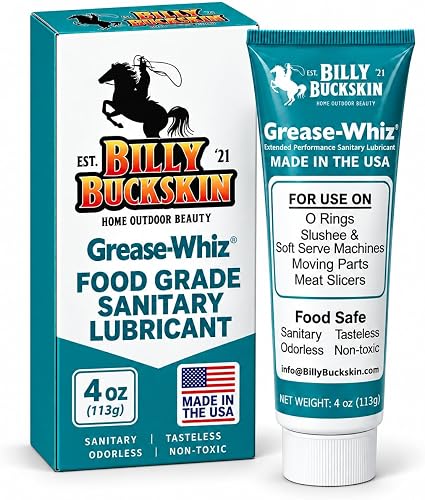 Best for meat slicer specific use
Billy Buckskin Grease-Whiz Food Grade Grease Lubricant
9.3/10 our score
See it on Amazon
- 4
 Check it
BTAS Food Safe Lubricant Grease for Kitchenaid
Best for gears and worm drives - 5
 Check it
THE FRYOILSAVER COMPANY Taylor Blue Food Grade Lubricant
Best for O-rings and seals - 6
 Check it
Stera Sheen Food Safe Machine Lube
Best for clear, odorless care - 7
 Check it
Haynes Lubri-Film Plus Food Grade Grease
Best for long lubrication intervals - 8
 Check it
CRC Food Grade Machine Oil Spray
Best for light spray lubrication - 9
 Check it
CRC Food Grade Penetrating Oil
Best for freeing stuck parts
How the best meat slicer lubricant picks were compared
We compared form, size, food grade approval, temperature range and the parts each lube is made for. Grease and gel usually win for gears, while sprays suit light parts and stuck fasteners.
We checked specs for NSF status, container size, viscosity and material. We also noted whether a product names meat slicers directly or suits food machines in general.
| Product | Best for | Form | Size | Material | Our score |
|---|---|---|---|---|---|
| Petrol-Gel Food Grade Equipment Lubricant NSF | everyday slicer gears | Gel | 4 fluid ounces, pack of 2 | Mineral Oil | 9.7 |
| DuPont Non-Stick Dry-Film Lubricant Aerosol | dry, dirt resistant parts | Spray | 10 oz | Dry film | 9.6 |
| Billy Buckskin Grease-Whiz Food Grade Grease Lubricant | meat slicer specific use | Grease | 4 oz | Synthetic | 9.3 |
| BTAS Food Safe Lubricant Grease for Kitchenaid | gears and worm drives | Grease | 8 oz | Silicone | 9.1 |
| THE FRYOILSAVER COMPANY Taylor Blue Food Grade Lubricant | O-rings and seals | Grease | 4 oz | Food-Grade Petroleum | 8.9 |
| Stera Sheen Food Safe Machine Lube | clear, odorless care | Gel | 4 oz tube, 4 count | Synthetic | 8.7 |
| Haynes Lubri-Film Plus Food Grade Grease | long lubrication intervals | Grease | 4 oz tube, pack of 4 | Silicone | 8.4 |
| CRC Food Grade Machine Oil Spray | light spray lubrication | Spray | 11 oz | White mineral oil | 8.2 |
| CRC Food Grade Penetrating Oil | freeing stuck parts | Oil | 11 wt oz | Penetrating oil | 7.9 |
Which meat slicer lubricant is best for your slicer?
Petrol-Gel is the best all around pick for gears and moving parts. DuPont suits parts where a dry film is better than a wet grease.
Billy Buckskin names meat slicers directly, so it fits owners who want a slicer focused tube. BTAS suits thicker gear grease needs, while Taylor Blue and Haynes focus on seals and O-rings.
Stera Sheen suits clear, odorless gel care across several machines. The CRC sprays suit light lubrication and freeing stuck parts, not heavy daily grease work.
Petrol-Gel Food Grade Equipment Lubricant NSF: Best for everyday slicer gears
- NSF approved food grade gel
- Mineral oil base
- 4 fluid ounces per tube
- Pack of 2 tubes
- High viscosity
A smooth gel that stays where you put it. It suits gears and moving parts that need steady protection between cleanings.
Pros
- NSF approved for food processing equipment
- Gel stays in place without dripping
- Two tubes for home and backup use
Cons
- Gel needs reapplication after thorough cleaning
- Not a spray for wide, light coverage
Petrol-Gel suits owners who want one food grade lube for slicer gears, slides and other moving parts. Its gel form stays in place and does not drip like a thin oil.
The 4 fluid ounce tubes come in a pack of 2, so you have a backup tube for storage. Petrol says the mineral oil formula is NSF approved for food processing equipment and machinery parts in contact with food products.
High viscosity helps the gel coat gears and resist moving off during slicing. That makes it a strong choice for a slicer motor housing, carriage parts and other parts away from direct meat contact.
Its flash point and upper temperature rating are 185 F. Most home slicers run well below that, so heat is rarely the limit for this lube.
The smooth consistency also makes application simple. You can place a small amount with a fingertip or cloth, then wipe away excess so crumbs do not collect.
The trade off is that gel needs a wipe and reapplication after deep cleaning. It is not a penetrating oil for rusted fasteners, and a spray reaches tight spots more easily.
DuPont Non-Stick Dry-Film Lubricant Aerosol: Best for dry, dirt resistant parts
- 100% dry film coating
- 10 oz aerosol can
- Oil free and silicone free
- Effective from -100F to +500F
- Thin dirt repelling layer
A dry film spray for metal on metal parts where grease would collect crumbs. It leaves a thin, dry layer rather than a wet film.
Pros
- Dry to touch finish
- Repels dust, grit and grime
- Wide temperature range
Cons
- Dry film is not a heavy grease for sealed gears
- Spray needs ventilation and careful aim
DuPont suits slicers and parts where dust, crumbs and grit collect on moving metal. Its dry film coating leaves a thin layer that is dry to touch.
The 10 oz aerosol can sprays a 100% dry film lubricant. DuPont says it is oil free, silicone free and effective from -100F to +500F for tight tolerance, metal on metal uses.
That dry finish helps on exposed slides and non sealed parts. You get lubrication without a wet film that can trap meat residue.
The proprietary resin bonding helps the coating stay on metal surfaces. That matters when a slicer carriage rail or adjustment screw needs smooth movement without a greasy build up.
It is less suited to sealed gears that need grease to cushion load. A gel or grease stays longer inside a gear housing and can fill small gaps between teeth.
Spray use needs care to avoid overspray near food surfaces. Wipe excess and let the film set before slicing.
The trade off is that dry film is not food grade grease for incidental food contact equipment. Use it only where the slicer maker allows a dry film and keep it away from food surfaces.
Billy Buckskin Grease-Whiz Food Grade Grease Lubricant: Best for meat slicer specific use
- Food grade grease for meat slicers
- 4 oz bottle
- Synthetic formula
- For metal, rubber and plastic
- Waterproof grease
A food grade grease made for slicers, mixers and soft serve machines. It helps reduce metal to metal contact on moving parts.
Pros
- Named for meat slicer use
- Works on metal, rubber and plastic
- Long lasting coverage
Cons
- Single 4 oz bottle
- Grease can attract crumbs if overapplied
Billy Buckskin suits owners who want a food grade grease that names meat slicers as a use. Its synthetic grease is made for slicers, mixers, soft serve machines and ice cream makers.
The 4 oz bottle is a practical size for a home kitchen. You can apply a small amount to moving parts without buying a large commercial tub.
It is listed for metal, rubber and plastic food contact surfaces. That range helps with O-rings, seals and plastic parts around slicer mechanisms.
Billy Buckskin says the waterproof formula reduces metal to metal contact and helps extend equipment life. Even coverage across moving parts is the goal, not a thick glob.
The synthetic base also helps in wet or humid kitchen conditions. A waterproof grease can protect parts during washing and storage better than a light oil that rinses away.
It is made in the USA under strict regulatory standards for sanitary use. That focus suits restaurants, delis and bakeries as well as home kitchens.
The trade off is a single bottle, so heavy users may run out sooner. Grease can also collect crumbs, so use a thin layer and wipe away excess.
BTAS Food Safe Lubricant Grease for Kitchenaid: Best for gears and worm drives
- NLGI 2 grease
- 8 oz bottle
- Silicone base
- For incidental food contact
- Rated from -40F to 428F
A thicker NLGI 2 grease for gears and worm drives. It suits mixer style mechanisms and O-rings that need firm lubrication.
Pros
- NLGI 2 consistency holds shape
- Large 8 oz size
- Odor free formula
Cons
- Thick grease is not for light spray jobs
- Avoid high speed bearings per guidance
BTAS suits slicers with gear and worm drive mechanisms that need a firmer grease. Its NLGI 2 consistency holds shape better than a thin oil.
The 8 oz bottle gives more volume than most 4 oz tubes. That size suits owners who also maintain mixers, blenders, grinders or other kitchen appliances.
BTAS says the silicone grease is for incidental food contact and rated from -40F to 428F. It is odor free and made to reduce friction without drying out or gumming up.
NLGI 2 grease works well for gears, O-rings and seals. It can also help reduce noise from dry metal parts.
The 7 centipoise viscosity and high viscosity level describe a grease that coats rather than sprays. That coating action is useful where gears mesh and a thin film would be squeezed out quickly.
BTAS also lists use for coffee machines, bread machines, juicers and ice cream machine assemblies. That wider list shows why one bottle can cover several kitchen machines.
The trade off is thickness. It is not the right choice for a light spray on exposed parts or high speed bearings, and excess grease must be wiped clean.
THE FRYOILSAVER COMPANY Taylor Blue Food Grade Lubricant: Best for O-rings and seals
- NSF H1 certified
- 4 oz tube
- Food grade petroleum grease
- For O-rings, gaskets and seals
- Non sticky formula
A blue food grade grease for O-rings, gaskets and seals. It fits slicer parts that need a small, controlled smear of lube.
Pros
- NSF H1 for incidental food contact
- Compact 4 oz tube
- Odorless and non staining
Cons
- Made mainly for soft serve style seals
- Single tube only
Taylor Blue suits slicer owners who focus on O-rings, gaskets and seals. Its food grade petroleum grease is made for soft serve machines and other food service equipment.
The 4 oz tube is compact and easy to store in a kitchen drawer. THE FRYOILSAVER COMPANY says it is NSF H1 certified and non toxic with an odorless formula.
A small smear can protect rubber seals without staining equipment. That helps parts stay flexible and reduces wear where seals meet moving metal.
The grease is aimed at non heated equipment such as yogurt machines and slush machines. That focus suits slicer seals that stay near room temperature rather than near a motor that runs hot.
It is also listed for Taylor machines, Stoelting equipment, espresso machines, coffee brewers, stand mixers, pool filters and beer brewing systems. That range helps owners who maintain a small beverage or dessert station.
The non sticky formula helps keep equipment clean between applications. A thin layer is enough for most O-rings, and extra grease only collects residue.
The trade off is a single tube and a petroleum base. Owners who prefer synthetic or silicone formulas may choose Stera Sheen or Haynes instead.
Stera Sheen Food Safe Machine Lube: Best for clear, odorless care
- NSF listed H1 synthetic gel
- 4 oz tubes, 4 count
- Clear, odorless and tasteless
- Rated from -40F to +350F
- Stays where you put it
A clear synthetic gel for bearings, slides and seals. Four tubes make sense for a slicer plus other kitchen machines.
Pros
- Clear and odorless
- NSF H1 for incidental food contact
- Four tubes in one pack
Cons
- Gel is not a penetrating oil
- Washes out during deep cleaning
Stera Sheen suits owners who want a clear, odorless and tasteless lube. Its synthetic gel is NSF listed H1 for incidental food contact.
The pack includes four 4 oz tubes, for 16 oz total. That supply suits a slicer plus mixers, grinders or soft serve equipment.
Stera Sheen says the formula stays where you put it on bearings, slides and seals. It is rated from -40F to +350F and lasts longer than some petroleum based options.
Clear gel is useful where a colored grease would show on light colored parts. It also washes out during cleaning, so check parts after a deep clean.
The synthetic base is designed to extend the life of bearings, slides and seals. That makes it a good fit for slicer parts that move often but do not need a heavy gear grease.
Stera Sheen recommends use every time you reassemble a machine. That habit helps after cleaning, when old lube has been removed and fresh protection is needed.
The trade off is that gel is not a penetrant for rusted bolts. For stuck fasteners, a CRC penetrating oil is a better tool.
Haynes Lubri-Film Plus Food Grade Grease: Best for long lubrication intervals
- NSF certified H1
- 4 oz tubes, pack of 4
- Silicone grease
- For O-rings and food machines
- Medium to high viscosity
A silicone grease that wears evenly on moving parts. It is made to last longer and reduce friction on slicers and soft serve machines.
Pros
- NSF H1 certified
- Four tubes for long term supply
- Does not dry or gum on equipment
Cons
- Silicone may not suit every seal type
- Grease needs wipe off of excess
Haynes Lubri-Film Plus suits commercial style food machines and slicers that need long intervals between lubrication. Its silicone grease is NSF certified H1.
The pack of four 4 oz tubes gives 16 fluid ounces total. That bulk size suits a deli, butcher shop or home user with several machines.
Haynes says the medium to high viscosity formula wears evenly on moving parts and does not dry or gum on equipment. It helps prevent metal to metal contact and reduce friction.
It is made for O-rings, soft serve machines and meat slicers. Approved use is for incidental food contact on food machines.
The even wear is important for slicer gears and slides. A grease that thins in spots can leave dry patches, while a formula that spreads evenly keeps protection more consistent.
Haynes says the lube is made in the USA with FDA ingredients. That detail matters to buyers who want a food machine lubricant from a long standing food service brand.
The trade off is silicone chemistry. Some owners prefer mineral oil or petroleum gel, and grease still needs careful wipe off to avoid collecting crumbs.
CRC Food Grade Machine Oil Spray: Best for light spray lubrication
- NSF H1 registered
- 11 oz spray can
- No silicone
- Colorless and odorless
- 2 way spray
A light food grade oil spray for exposed parts and fasteners. It reaches parts that a grease tube cannot spread over evenly.
Pros
- NSF H1 for incidental food contact
- Sprays from any position
- Colorless and odorless
Cons
- Light oil fades faster than grease
- Can drip if sprayed in excess
CRC Food Grade Machine Oil Spray suits light lubrication on exposed slicer parts. Its white mineral oil spray is NSF H1 registered for incidental food contact.
The 11 oz can sprays from any position, even upside down. That helps with fasteners, rails, carts and other parts that are hard to reach with a tube.
CRC says it contains no silicone and is virtually colorless and odorless. It will not harm metal, wood, plastic or painted surfaces.
A spray is fast for a quick maintenance pass. It can also loosen rust, scale and dirt around fasteners before you clean them.
The highly refined white mineral oil meets NSF, USDA and FDA standards as stated by the brand. That makes it easier to choose for food processing equipment than a general purpose spray.
CRC lists use on scales, fans, carts, galleys, bottlers, chutes, conveyors, racks, ovens, stoves, fillers, mixers, freezers and rails. A slicer has several parts in that style, including carriage rails and adjustment hardware.
The trade off is durability. Thin oil fades faster than grease and can drip, so spray lightly and wipe away excess before slicing.
CRC Food Grade Penetrating Oil: Best for freeing stuck parts
- NSF H1 registered
- 11 wt oz aerosol
- Low viscosity penetrant
- For food processing equipment
- Rated up to 300F
A penetrating oil for corroded and rusted fasteners. It helps during disassembly, not as a daily slicer grease.
Pros
- Penetrates cracks and threads
- NSF H1 registered
- Helps free frozen fasteners
Cons
- Not for regular gear lubrication
- Thin film needs frequent reapplication
CRC Food Grade Penetrating Oil suits maintenance jobs, not daily slicing. Its low viscosity penetrant is made to reach cracks, seams, joints and frozen fasteners.
The 11 wt oz aerosol can is NSF H1 registered for incidental food contact. CRC says it meets USDA, NSF and FDA standards for food processing equipment.
It helps loosen corroded hinges, fittings, bolts and nuts during disassembly. That can save time when a slicer guard, handle or food pusher hardware sticks.
Use it as a helper before cleaning, then wipe parts clean. It forms a non drying layer, but it is not a heavy grease for gears under load.
The low viscosity formula helps the oil flow into threads and tight joints. That is different from a grease, which stays on the surface and does not creep into a rusted connection as easily.
CRC lists use on refrigerators, ovens, conveyors, cooking ranges, rails, scales, carts, fans and fillers. Those examples overlap with slicer maintenance when a screw, hinge or carriage part seizes.
The trade off is thin coverage. For regular slicer gears, choose Petrol-Gel, Billy Buckskin or Haynes grease instead.
How we research meat slicer lubricant choices
We research, we do not test hands on. We compared specs, food grade approvals, container sizes and stated uses for each product.
We looked for NSF H1 or NSF approval where the brand states it. We also checked form, viscosity and temperature range, because those facts decide where a lube belongs on a slicer.
Our score weighs specs, features and buyer feedback against what you are shopping for. Higher scores go to products that fit slicer gears, seals and food contact needs most directly.
We also separated products by job. A penetrating oil can be excellent for a stuck bolt and still be the wrong choice for daily gear care.
Grease and gel were scored higher for slicers because they stay in place. Sprays scored higher for access and speed, but lower for long term protection under load.
Price, ratings and seller claims were not used as a substitute for specs. The comparison stays focused on form, material, approvals and stated compatible surfaces.
What specs matter most for a slicer
NSF status tells you whether a product is registered for incidental food contact. Viscosity tells you whether it will coat a gear or run like an oil.
Temperature range tells you whether it can handle a warm motor housing or a cold storage room. Container type tells you how precisely you can apply a small amount.
Material type, such as mineral oil, silicone, synthetic or petroleum, affects where the lube is placed. A silicone grease may suit an O-ring, while a mineral oil gel may suit a gear.
What kind of meat slicer lubricant should you buy?
Choose grease or gel for gears, worm drives and sealed moving parts. Grease stays put, protects under load and lasts longer between applications.
Choose a spray oil for exposed rails, fasteners and parts you can wipe clean. Spray is quick, but it needs more frequent reapplication and can drip.
Choose a penetrating oil only for stuck or rusted hardware. It helps during repair and cleaning, not as a daily slicer lube.
Dry film is a fourth option for exposed metal. It suits dusty slides and tight tolerance parts, but it does not replace grease inside a gear case.
Grease and gel for gears and seals
Grease suits gear housings, worm drives, O-rings and gaskets. Petrol-Gel, Billy Buckskin, BTAS, Taylor Blue and Haynes all fit this group.
Gel is easier to control than a runny oil. You can place a thin layer exactly where friction occurs and wipe away the rest.
Spray and dry film for exposed parts
Sprays suit parts that need light coverage and easy access. DuPont dry film suits dusty or gritty parts, while CRC oil spray suits quick maintenance.
Dry film leaves less residue, but it does not cushion sealed gears like grease. Use each form for the job it fits best.
How do you apply meat slicer lubricant safely?
Apply lube only to moving parts that the manual allows. Keep it off the blade surface and food contact areas unless the maker states it is approved for that use.
Clean and dry the slicer first, then add a thin layer. Extra lube can collect meat particles and make cleaning harder.
If your slicer sits on a work stand, check our best meat slicer table guide for stability and height. A stable table reduces vibration and helps the slicer move smoothly.
A clean cloth, a small amount of lube and a dry surface are all you need for most applications. Working in good light helps you see dry patches and old residue.
Step by step application
Turn the slicer off and unplug it before cleaning or lubrication. Remove the blade guard and other removable parts that block access.
Wipe old lube and residue with a clean cloth. Add a small amount to gears, slides or seals, then wipe away excess.
Reassemble the slicer and run it briefly without food. Check for smooth movement, then do a final wipe of any surface near food.
How often should you lubricate a meat slicer?
Most owners lubricate after cleaning and before storage. Frequency depends on use, heat, moisture and the parts that move during slicing.
A slicer used daily for deli meat may need care more often than a home slicer used once a month. Check gears and seals for dryness or squeaks.
Washing a slicer often removes old lubricant along with residue. That is normal, and it means a fresh thin layer is needed after the parts dry.
Commercial kitchens may follow a set schedule for each machine. Home owners can use sound and feel as a guide, while still checking the manual.
Signs it is time to reapply
Dry metal sound, stiff carriage movement or visible dry seals are common signs. Crumbs stuck in old grease also signal a clean and fresh layer.
A sharpener also affects smoothness. Our best meat slicer blade sharpener guide covers tools for keeping the blade edge ready.
Can meat slicer oil replace food grade grease?
No, oil and grease do different jobs. Oil spreads thin and reaches tight spots, while grease stays in place and protects gears under load.
Use oil spray for light parts and fasteners. Use grease or gel for gear housings, worm drives, O-rings and seals.
Oil can also help loosen a part before cleaning. Grease is better after cleaning, when you want protection that lasts through slicing.
When to use each form
Use penetrating oil for rusted or frozen fasteners during disassembly. Use dry film for exposed metal parts that collect grit.
Use gel for general slicer care across gears and slides. Use a thicker NLGI 2 grease when a worm drive needs firm coverage.
What should you avoid when choosing meat slicer lubricant?
Avoid non food grade lubricants near food. Household oils, automotive grease and general sprays are not made for incidental food contact.
Avoid excess lube on food surfaces. More grease does not mean more protection, and it can trap residue that is hard to clean.
Avoid lubricating the cutting edge unless the manual allows it. Keep lube on gears, slides and seals, then wipe the area clean.
Avoid mixing many products on the same part without cleaning first. Old residue can trap grit and reduce the benefit of a fresh layer.
If a guard or pusher is worn, replace it before slicing. See our best meat slicer guard and best meat slicer pusher guides for safer parts.
How does slicer care connect with cleaning and parts?
Lubricant works best after a full clean. Old grease, meat residue and moisture can cause wear if they stay on moving parts.
Use a best meat slicer cleaner product made for food equipment, then dry parts before you add fresh lube. Clean parts also help you spot cracks, rust or loose hardware.
For slicing produce or deli items with other tools, our vegetable slicer guide covers a different set of blades and guards. Keep slicer lube focused on the meat slicer parts it is made for.
Cleaning also affects how long grease lasts. A slicer that is wiped clean after each use will keep a thin lube layer on gears for longer.
Verdict: which best meat slicer lubricant should you buy?
Petrol-Gel is the best meat slicer lubricant for most owners because its gel stays on gears and moving parts. It gives steady protection without dripping like oil.
Pick Billy Buckskin if you want a grease that names meat slicers directly. Pick BTAS for thicker NLGI 2 gear grease, and Taylor Blue or Haynes for O-rings and seals.
Pick DuPont for dry, grit prone parts, Stera Sheen for clear odorless gel, and CRC spray for light maintenance. Pick CRC penetrating oil only for stuck fasteners.
For a worn blade or dull edge, check stones in our best meat slicer sharpening stones guide. For a loose grip, see best meat slicer handle options before your next slicing session.
Our top 3 picks at a glance
-
1
Best for everyday slicer gears
Petrol-Gel Food Grade Equipment Lubricant NSF
9.7/10 our score
See it on Amazon -
2
Best for dry, dirt resistant parts
DuPont Non-Stick Dry-Film Lubricant Aerosol
9.6/10 our score
See it on Amazon -
3
Best for meat slicer specific use
Billy Buckskin Grease-Whiz Food Grade Grease Lubricant
9.3/10 our score
See it on Amazon
Frequently asked questions
What is the best meat slicer lubricant for home use?
A food grade gel or grease is usually best for home slicers. It stays on gears and seals, and you can apply a small amount by hand.
Sprays suit light parts, but they fade faster and can drip.
Choose food grade products for any part near food.
Can I use vegetable oil on a meat slicer?
No, vegetable oil can turn rancid and gum up parts. It also is not made for incidental food contact equipment.
Use a food grade lubricant made for food machinery instead.
Wipe away excess after each application.
How often should I lubricate a meat slicer?
Check the manual for the moving parts that need care. Many owners apply a thin layer after cleaning and before storage.
Gears, slides and O-rings are common spots.
Avoid areas where meat directly contacts the blade unless the maker allows it.
Is meat slicer oil the same as food grade grease?
No, oil is thinner and spreads more easily. Grease stays in place longer and suits gears and seals.
Oil sprays reach tight spots and help free parts.
Grease protects under load and lasts longer between applications.