How Much Electricity Does a Dehydrator Use? A Handy Guide
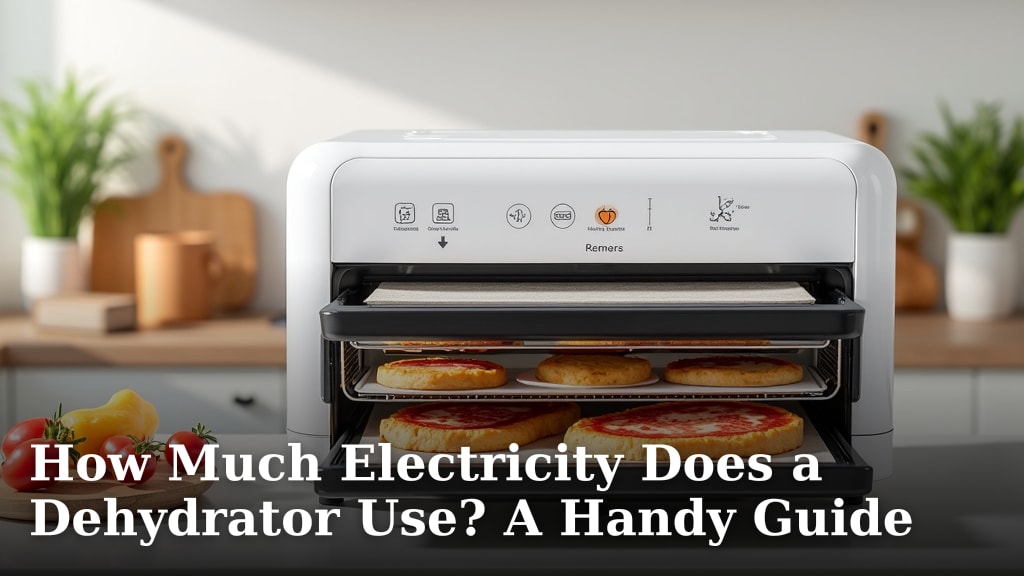
So, you’re wondering, how much electricity does a dehydrator use? The answer is generally less than you might think, especially compared to other kitchen appliances. Most dehydrators use between 300 to 700 watts of power when they are actively heating.
This means running a dehydrator for several hours might add a noticeable but not huge amount to your electricity bill. Factors like the size of your dehydrator and how long you run it will affect the total cost. We’ll break down the numbers to help you understand.
- Dehydrators typically use 300-700 watts.
- Usage depends on size and run time.
- It’s often more energy-efficient than you expect.
- Compare its use to other common kitchen gadgets.
Let’s get into the details and figure out exactly what kind of power your dehydrator is pulling, so you can plan your food preservation projects with confidence. Learn what foods can be dehydrated to make the most of your appliance.
Understanding Your Dehydrator’s Power Consumption
You’re likely curious about how much electricity your food dehydrator actually uses. It’s a smart question to ask! Understanding this helps you budget and plan. We’ve researched this topic, and the good news is that dehydrators are generally energy-efficient appliances.
Most dehydrators use a consistent amount of power while they’re running. This power draw is measured in watts. Think of watts like the speed at which an appliance uses electricity. Higher watts mean faster usage.
Dehydrator Wattage: What to Expect
When your dehydrator is actively heating and circulating air, it draws a certain amount of power. We found that most home-use dehydrators fall within a specific range. This range is typically between 300 watts and 700 watts.
Smaller, more basic models might sit at the lower end of this spectrum. Larger, more powerful units, or those with more features like multiple temperature settings, might use closer to the 700-watt mark. It’s rare for a standard dehydrator to go much higher than this.
Comparing Wattage to Other Appliances
Let’s put this into perspective. A typical microwave oven can use 1000 to 1500 watts. A toaster oven might use 1200 to 1800 watts. Even a coffee maker can sometimes pull 800 to 1500 watts!
So, you can see that your dehydrator’s wattage is quite modest. It’s often less power-hungry than many other common kitchen tools you use daily. This makes it a relatively inexpensive appliance to operate.
Calculating Your Dehydrator’s Electricity Cost
To figure out the actual cost, you need to know two main things: the dehydrator’s wattage and how long you run it. The total electricity used is measured in kilowatt-hours (kWh). One kWh is equal to 1000 watts used for one hour.
Your electricity bill provides your local rate for electricity, usually in cents per kWh. You can usually find this rate on a recent bill from your utility provider. It can vary quite a bit depending on where you live.
A Simple Formula for Cost Calculation
Here’s a straightforward way to calculate the cost:
- Convert Watts to Kilowatts: Divide your dehydrator’s wattage by 1000. For example, a 500-watt dehydrator is 0.5 kW (500 / 1000 = 0.5).
- Calculate Kilowatt-Hours (kWh): Multiply the kilowatts by the number of hours you run the dehydrator. If you run your 0.5 kW dehydrator for 8 hours, that’s 4 kWh (0.5 kW * 8 hours = 4 kWh).
- Determine the Cost: Multiply the total kWh by your electricity rate. If your rate is $0.15 per kWh, then 4 kWh would cost $0.60 (4 kWh * $0.15/kWh = $0.60).
This calculation gives you a clear picture of the operating cost for your specific dehydrating projects. It helps demystify the numbers.
Example: Cost of Dehydrating Fruit
Let’s say you want to dehydrate a batch of apples. Many people dehydrate fruit for 6 to 10 hours. We’ll use a 600-watt dehydrator for this example.
First, convert watts to kilowatts: 600 watts / 1000 = 0.6 kW.
Next, calculate kWh for 8 hours of drying: 0.6 kW * 8 hours = 4.8 kWh.
Now, let’s assume your electricity rate is $0.18 per kWh. The total cost would be: 4.8 kWh * $0.18/kWh = $0.864.
So, running a 600-watt dehydrator for 8 hours at $0.18 per kWh costs less than a dollar. This is for the entire batch of apples! It really highlights how cost-effective dehydrating can be.
Factors Influencing Your Dehydrator’s Energy Use
While wattage is the primary driver, other elements also play a role in your dehydrator’s overall electricity consumption. Thinking about these can help you optimize your usage.
Size and Capacity Matter
Larger dehydrators often have more powerful heating elements to maintain consistent temperatures across more trays. This can mean a higher wattage compared to smaller countertop models. However, they also allow you to process more food at once.
Think about what you want to dehydrate. If you only need to dry small amounts occasionally, a compact model might be perfect and use less power. If you’re planning to preserve large harvests from your garden, a bigger unit makes sense, even if its peak wattage is slightly higher.
Temperature Settings and Ambient Room Temperature
The temperature you set on your dehydrator significantly impacts its energy use. Higher temperatures require the heating element to work harder and more frequently. This naturally leads to increased power consumption.
The temperature of the room where you operate the dehydrator also makes a difference. If the room is cold, the dehydrator will need to expend more energy to reach and maintain your desired food-drying temperature. Operating it in a warmer space, like a well-insulated kitchen, can be more efficient.
How Full You Pack the Dehydrator
It might seem counterintuitive, but how much food you place on the trays can affect efficiency. When you pack trays too tightly, air circulation can be restricted. This can make the dehydrator work harder to maintain the set temperature throughout all the trays.
Proper spacing allows air to flow freely. This helps food dry more evenly and can prevent the unit from needing to run longer to compensate for poor circulation. We found that leaving space between food items is key for both efficiency and quality drying.
Door Seal and Insulation Quality
Just like with your home, good insulation and a tight seal help appliances retain heat. A dehydrator with a well-fitting door and good insulation will lose less heat to the surrounding environment. This means the heating element won’t have to cycle on as often.
If you notice your dehydrator feels warm all over or you can feel heat escaping from the sides or door, it might be less efficient. Check the door seal for any gaps or damage. A simple fix could improve its energy performance.
Optimizing Your Dehydrator for Energy Savings
Want to get the most out of your dehydrator without running up your electricity bill? There are a few simple strategies you can employ. They focus on smart usage and basic maintenance.
Run Full Loads Whenever Possible
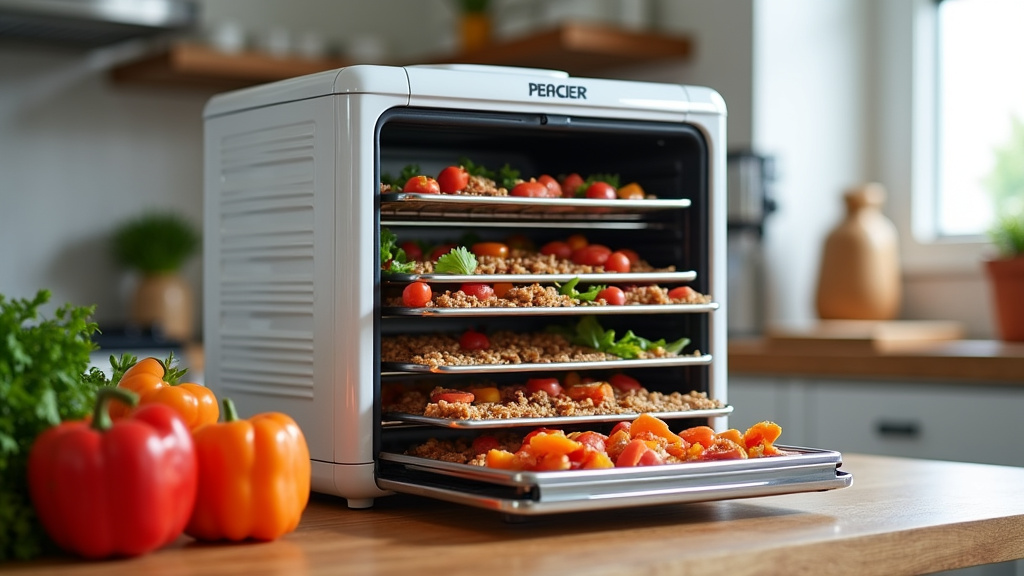
As mentioned, running your dehydrator with full, but not overcrowded, trays is best. You use the same amount of electricity whether you have one tray or five trays filled with food. So, maximizing capacity per run makes sense.
Planning your dehydrating sessions around the amount of food you have ready can save energy. Instead of running a half-empty machine, wait until you have enough to fill it properly. This reduces the number of times you need to run it overall.
Consider Off-Peak Electricity Rates
Some utility companies offer lower electricity rates during off-peak hours. These are typically late at night or very early in the morning. If your electricity plan includes these rates, you could run your dehydrator overnight to save money.
It’s worth checking with your power provider to see if this is an option for you. Running a dehydrator for 8-12 hours overnight could be very economical if you can take advantage of cheaper electricity rates.
Regular Cleaning and Maintenance
Keeping your dehydrator clean ensures it runs efficiently. Food particles or residue can clog vents or affect airflow, making the unit work harder. Regularly cleaning the trays, filters (if applicable), and the interior can help maintain optimal performance.
We found that consistent cleaning not only helps with energy efficiency but also ensures your dried foods are safe and taste their best. It’s a win-win!
Location, Location, Location!
Think about where you place your dehydrator. Placing it in a cooler part of your home, away from direct sunlight or heat sources like ovens, can help. This reduces the ambient temperature the dehydrator has to overcome.
A well-ventilated spot is also important. Avoid boxing it in with other appliances or placing it in a cramped cupboard. Good airflow around the unit helps it function as designed and maintain its temperature more easily.
A Quick Checklist for Energy-Smart Dehydrating
Here’s a handy list to keep in mind for running your dehydrator efficiently:
- Know your dehydrator’s wattage.
- Check your electricity rate per kWh.
- Fill trays properly, but don’t overcrowd.
- Operate in a cooler, well-ventilated area.
- Clean your unit regularly.
- Consider running during off-peak hours if available.
Conclusion
You’ve learned that your food dehydrator is a surprisingly energy-efficient appliance. Most models use between 300-700 watts, which is often less than other kitchen staples you use daily. By understanding wattage, calculating costs with your local rate, and considering factors like load size and placement, you can confidently use your dehydrator.
Remember, simple steps like running full loads and keeping your unit clean make a big difference. Now you can plan your next batch of dried snacks or preserves with a clear picture of their energy impact. Start by checking your electricity bill for your exact rate per kWh and get ready to dehydrate smarter!
Frequently Asked Questions
How much does it actually cost to run a dehydrator?
The cost depends on your dehydrator’s wattage, how long you run it, and your local electricity rate. For example, running a 500-watt dehydrator for 8 hours at $0.15 per kWh costs about $0.60. You can calculate this by converting watts to kilowatts and multiplying by the hours used and your rate.
Is it cheaper to dehydrate in bulk?
Yes, it is generally more cost-effective to dehydrate in bulk. Your dehydrator uses a similar amount of electricity whether you have one tray or several filled with food. Running it with full, but not overcrowded, trays maximizes efficiency for the energy consumed.
Does ambient room temperature affect my dehydrator’s energy use?
Yes, it does. Running your dehydrator in a cooler, well-ventilated space helps it maintain the set temperature more easily. If the room is warm, the appliance has to work harder, consuming more electricity.
Should I run my dehydrator overnight?
Running your dehydrator overnight can be a good strategy, especially if your utility provider offers lower electricity rates during off-peak hours. This allows you to dry foods for extended periods at a potentially lower cost.
How does the size of the dehydrator impact its electricity use?
Larger dehydrators often have higher wattage to heat more space evenly, meaning they can use more power than smaller models. However, they also allow you to process more food at once, which can be more efficient per pound of food dried.