How Many Watts Does a Food Dehydrator Use? A Simple Guide

A food dehydrator uses between 300 to 1,000 watts of power, depending on its size and settings. Most common models run around 500 watts. This means they use less energy than many kitchen appliances like ovens or microwaves. Think of it as a gentle, steady heat rather than a powerful burst.
How many watts your dehydrator uses directly impacts your electricity bill. While they might run for many hours, their wattage is usually quite low. Understanding this helps you plan for costs and avoid surprises. It’s all about knowing your appliance’s energy footprint.
TL;DR:
- Food dehydrators use 300-1,000 watts.
- Most models use around 500 watts.
- They use less power than ovens.
- Wattage affects your electricity bill.
Ready to get a clearer picture of your dehydrator’s power needs? Below, we’ll break down exactly how to figure out its wattage and what that means for your kitchen.
Understanding Your Food Dehydrator’s Power Needs
So, you’re curious about how much electricity your food dehydrator actually uses? It’s a smart question to ask. Knowing the wattage helps you understand your energy bills and plan your kitchen’s power usage. Let’s break it down simply. Learn if is dehydrated food healthy and what to remember about its nutritional value.
The truth is, most food dehydrators are surprisingly energy-efficient. They use a gentle, consistent heat. This is quite different from appliances that blast high heat for short periods. Think of it like a slow cooker versus a microwave.
What is Wattage and Why Does It Matter?
Wattage tells you how much power an appliance uses at any given moment. It’s like the engine size of your car. A higher wattage means it uses more electricity when it’s running. For your dehydrator, this number directly affects how much it costs to operate.
You’ll typically find the wattage listed on a sticker on the appliance itself. It might also be in the user manual. If you can’t find it, don’t worry. We’ll help you estimate it. The wattage is key to understanding its energy footprint. It’s a simple number that tells a big story.
Finding the Wattage on Your Dehydrator
Your dehydrator’s manual is the best place to start. It will usually have a specifications section. Look for “power consumption” or “wattage.” It might be listed in watts (W) or sometimes in amps (A) and volts (V). If you see amps and volts, you can calculate watts. Just multiply amps by volts (A x V = W).
If the manual is lost, check the appliance. Most electrical devices have a label on the back or bottom. This label, called a nameplate, lists the voltage and wattage. It’s often a small sticker with fine print. Be patient, it’s usually there!
Estimating Wattage Without a Label
Don’t have a label or manual? Most standard home food dehydrators run between 350 and 700 watts. Smaller, more basic models might be on the lower end. Larger, more powerful units could go up to 1,000 watts or even a bit more. A common average is around 500 watts. This is a good ballpark figure for planning.
Remember, this is an estimate. Your actual usage might vary slightly. But for general understanding, these numbers are quite reliable. It’s rare for a home dehydrator to exceed 1,000 watts. They simply don’t need that much power for their function.
Dehydrator Wattage Compared to Other Appliances
It’s helpful to see how your dehydrator stacks up against other kitchen gadgets. This really puts its energy use into perspective. You might be surprised at how little it uses compared to some common items.
Comparing Dehydrators to Ovens and Microwaves
Your kitchen oven is a big energy user. A conventional oven can draw anywhere from 1,200 to 5,000 watts or more. This is because it needs to heat a large space very quickly and maintain a high temperature. A microwave is also quite power-hungry, often using 600 to 1,200 watts.
In contrast, a 500-watt dehydrator is much more efficient. It uses less than half the power of a typical microwave. It’s a fraction of what an oven uses. This means you can dehydrate food for hours without a huge spike in your electricity bill. It’s a marathon runner, not a sprinter, in the energy world.
Comparing Dehydrators to Other Small Appliances
Let’s look at other small appliances. A toaster might use 800 to 1,500 watts. A coffee maker can range from 600 to 1,200 watts. Even a blender can pull 300 to 1,000 watts depending on its power. Your dehydrator’s 300-1,000 watt range fits right in with many of these common kitchen tools.
The key difference is run time. While a toaster runs for a few minutes, your dehydrator might run for 6, 8, or even 12 hours. But because its wattage is lower, the total energy used over time is often less than you might expect. It’s a gentle, steady hum of energy use.
How Dehydrator Settings Affect Wattage
The wattage your dehydrator uses isn’t always fixed. Some settings and features can influence its power consumption. Understanding these can help you optimize your dehydrator’s use.
Temperature Settings and Power Draw
Higher temperature settings generally require more power. The heating element has to work harder to reach and maintain a hotter temperature. So, if you’re dehydrating foods that require a higher heat, like some meats for jerky, you might see a slightly higher energy draw.
However, most dehydrating happens at lower temperatures, typically between 120°F and 160°F (49°C to 71°C). These moderate temperatures are what keep the wattage relatively low. For fruits and vegetables, you’re usually operating in the most energy-efficient range.
Fan Speed and Wattage
The fan in your dehydrator circulates air to remove moisture. Some models allow you to adjust the fan speed. A higher fan speed might use slightly more energy. The motor needs more power to spin the fan faster.
However, the fan motor itself is usually a low-wattage component. It’s the heating element that uses the most power. So, while fan speed can have a minor impact, it’s usually secondary to the temperature setting. Many dehydrators have a single, fixed fan speed designed for optimal airflow.
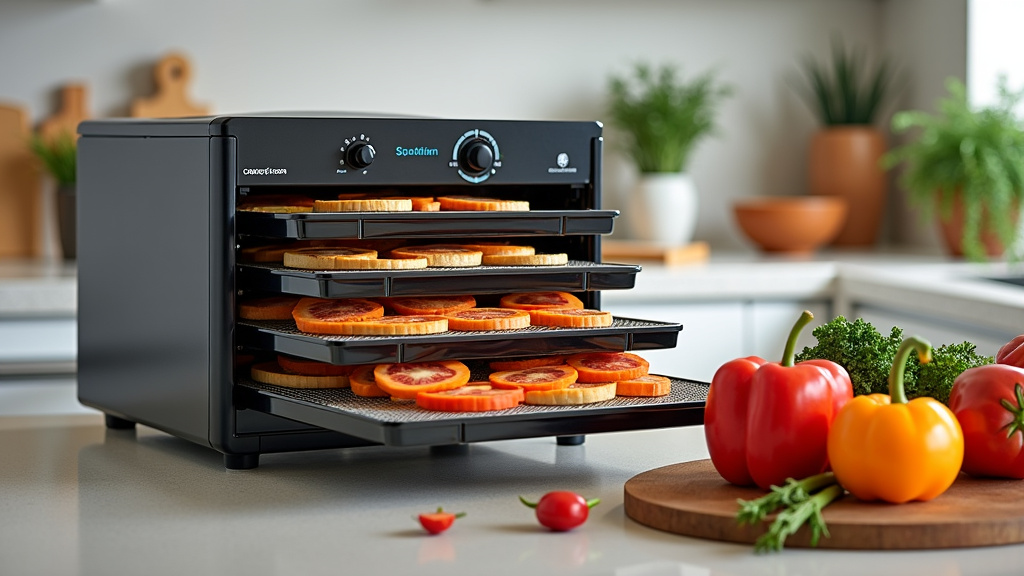
Calculating Your Dehydrator’s Running Cost
Knowing the wattage is great, but how do you translate that into actual money? It’s quite straightforward when you break it down. You’ll need two pieces of information: your dehydrator’s wattage and your local electricity rate.
Finding Your Electricity Rate
Your electricity bill is the best place to find your rate. Look for terms like “cost per kilowatt-hour” or “cents per kWh.” A kilowatt-hour (kWh) is 1,000 watts running for one hour. Most residential rates fall between 10 and 25 cents per kWh, but this can vary widely by location and provider (U.S. Energy Information Administration).
Let’s say your rate is 15 cents per kWh. This means for every 1,000 watts your appliance uses for one hour, you’ll pay $0.15. Having this number handy is essential for calculating your operating costs. You can usually find this information on your monthly bill or by contacting your utility company.
Putting it All Together: A Simple Calculation
Here’s the formula: (Wattage / 1000) x Hours of Use x Cost per kWh = Total Cost
Let’s use an example. You have a 500-watt dehydrator. You run it for 8 hours. Your electricity costs 15 cents per kWh ($0.15).
- First, convert watts to kilowatts: 500 watts / 1000 = 0.5 kW
- Next, calculate total kWh used: 0.5 kW x 8 hours = 4 kWh
- Finally, calculate the cost: 4 kWh x $0.15/kWh = $0.60
So, running your 500-watt dehydrator for 8 hours would cost about 60 cents. Not too bad for preserving a whole batch of food! This calculation shows that while dehydrators run for a long time, their lower wattage makes them cost-effective.
Tips for Energy-Efficient Dehydrating
Want to make your dehydrating even more efficient? A few simple tricks can help reduce energy use without compromising your results. These are easy habits to adopt.
- Run a full load: Fill your dehydrator trays completely. This maximizes the use of the heat and fan.
- Group similar foods: Dehydrate foods with similar drying times together. This prevents over- or under-drying.
- Check the weather: On warm, dry days, you might need less heat. Consider the ambient temperature and humidity.
- Don’t peek too often: Each time you open the dehydrator, you lose heat and moisture. This makes it run longer.
- Keep it level: Ensure your dehydrator is on a stable, level surface for optimal air circulation.
- Clean it regularly: A clean appliance often runs more efficiently. Remove any food debris.
Conclusion
You’ve learned that food dehydrators are surprisingly energy-efficient appliances. Most use between 300 and 1,000 watts, with many common models hovering around 500 watts. This means they draw less power than many other kitchen appliances you use daily. By understanding your dehydrator’s wattage and your electricity rate, you can easily calculate its running cost, which is often quite low. Ready to start preserving? Now you can confidently use your dehydrator, knowing its impact on your energy bill.
Frequently Asked Questions
Do dehydrators use a lot of electricity?
No, most food dehydrators do not use a lot of electricity. They typically consume between 300 to 1,000 watts, which is less than many ovens or microwaves. While they run for many hours, their lower wattage makes them quite efficient for their task.
How can I find out the exact wattage of my dehydrator?
You can usually find the exact wattage on a sticker or label on the back or bottom of your dehydrator. Check your user manual as well; it will often list power consumption details in a specifications section.
Is it cheaper to dehydrate food in a dehydrator or in an oven?
It is generally much cheaper to dehydrate food in a food dehydrator than in a conventional oven. Ovens use significantly more wattage to reach and maintain high temperatures, making dehydrators a more energy-efficient choice for long drying times.
Does a higher temperature setting on my dehydrator use more power?
Yes, higher temperature settings on your dehydrator will generally use more power. The heating element has to work harder to reach and maintain hotter temperatures, leading to a slightly increased energy draw compared to lower settings.
Can I run my dehydrator and other appliances at the same time?
Yes, you can typically run your dehydrator along with other appliances. Since dehydrators have relatively low wattage compared to appliances like ovens or hair dryers, they are less likely to overload your home’s electrical circuits when used alongside other common kitchen gadgets.