Pressure Canner vs Pressure Cooker: What Is the Difference? (November 2026)
A pressure canner is built for preserving low-acid foods, while a pressure cooker is mainly for preparing meals. Some appliances combine both roles, but you should follow the exact canning instructions for the equipment and food.
On this page (9 sections)
- Pressure canner vs pressure cooker: what is the core difference?
- Can a pressure cooker be used for home canning?
- Which appliance is better for low-acid foods?
- Which is better for everyday cooking?
- Is an electric pressure canner different from an electric pressure cooker?
- How do capacity and jar space affect the choice?
- What safety features should you compare?
- How should you choose between a pressure canner and cooker?
- Pressure canner vs pressure cooker: which should you buy?
A pressure canner is built for preserving low-acid foods, while a pressure cooker is mainly for preparing meals. That basic split is the fastest way to narrow the choice before you look at capacity, controls, or price.
The pressure canner vs pressure cooker decision starts with the job you will repeat most often. If that job is sealing jars of vegetables, meats, poultry, or seafood for storage, you need equipment designed around jar processing.
If that job is getting rice, beans, soup, or stew on the table quickly, a pressure cooker will usually fit better. It is built to cook food directly in the pot, not to hold jars on a rack.
The two appliances can look alike because both use heat and pressure to cook food faster. Their inner shapes, lids, racks, and control systems are designed for different tasks, and those details matter at home.
A canner needs open space so jars can sit upright with water around them. A cooker needs space for ingredients, liquid, and safe stirring or searing, which is a different layout.
Controls also follow the task. A canner is meant to hold a set pressure for a full processing time, while a cooker cycles through programs for meals that you serve soon after cooking.
That is why names on the box deserve a close look. A model called a cooker may not have the rack, space, or instructions needed for canning, even if it builds pressure well for dinner.
A model called a canner and cooker may cover both roles, but only within the limits stated in its manual. You still need to check which foods, jars, and processes it supports.
Heat source is another practical difference. Some canners sit on a stovetop and need burner attention, while electric models use built-in elements and digital settings that run on a counter.
We compared the features and product information for four options to show how those differences play out. The products include stovetop and electric models, plus cookers focused on daily meals.
The scores weigh specs, features, and buyer feedback against the shopper's likely goal. They are a starting point for comparison, not a substitute for reading the manual for any model you consider.
Use the sections below to match your food, batch size, and preferred control style. That match will point you toward a canner, a cooker, or a true combination model.
 Best for stovetop canning
Presto 01755 16-Quart Aluminum Pressure Canner
Pressure canner vs pressure cooker: what is the core difference?
A pressure canner processes sealed jars, while a pressure cooker cooks food directly in a pot. A canner needs enough space for jars, a rack and the required processing method.
Pressure canning is used for low-acid foods such as vegetables, meats, poultry and seafood. The equipment must support the pressure and processing instructions for the recipe you are following.
A pressure cooker is usually smaller and more focused on meal preparation. It can cook beans, rice, soups, stews and meat under pressure, but that does not automatically make it suitable for preserving jars.
The difference between a pressure canner and pressure cooker is not just the word on the lid. It includes the vessel's capacity, pressure controls, heat management and approved use.
Can a pressure cooker be used for home canning?
Don't assume that a pressure cooker can safely replace a pressure canner. A general-purpose cooker is built to prepare meals, not to process sealed jars for storage, and the needs of those two jobs are not the same.
Jar space is the first problem to check. A canner must hold jars upright on a rack, with water able to circulate around them during the full processing time.
Many meal cookers have a smaller or differently shaped pot that leaves little room for jars. Even when jars fit on paper, the rack, water level, and spacing may not match a tested process.
Pressure control is the second concern. Canning low-acid foods calls for a steady, readable pressure held for a set time, often with attention to altitude adjustments.
A cooker may reach pressure quickly for cooking, yet run its cycle by time and temperature in a way that was not designed for jar processing. Fast pressure is not the same as a canning process.
Check the equipment manual and current food-safety guidance before you preserve any food. The manual should state clearly whether the exact model supports pressure canning, and which jars and foods it covers.
Do not rely on a general claim that an appliance can both cook and can. Ask whether the canning instructions are separate, specific, and tied to a tested recipe for your food.
The pressure canner pot buying guide explains parts that matter, including capacity, materials, gauges, and cooking surfaces. It can help you separate a meal cooker from equipment intended for preservation.
Use that guide to check jar counts, rack fit, and how pressure is shown or controlled. Those details tell you more about canning suitability than a long list of cooking programs.
For low-acid foods, use a tested recipe and follow its time, pressure, and altitude instructions exactly. Do not shorten processing time because a cooker reaches pressure quickly or because the food looks done.
If a model does not list pressure canning as an approved use, treat it as a cooker only. That honest limit protects both the food you store and the meals you cook each day.
Which appliance is better for low-acid foods?
A dedicated pressure canner is the better choice for vegetables, meats, poultry and seafood. It gives you a vessel and control system intended for jar processing.
The Presto 01755 has a 16-quart aluminum body, a deluxe pressure dial gauge and a cooking and canning rack. It works on gas, electric and smooth-top ranges, so it suits households that want manual stovetop control.
The best pressure canners for meat guide is useful if your main goal is preserving beef, poultry, fish or other meat. Capacity matters because jars, racks and headspace all reduce the room available for food.
The NESCO NPC-9 is another canning-focused option. It has automatic pressure and temperature regulation, digital controls, a canning rack and a 9-quart capacity.
The NESCO suits you if you prefer an electric appliance with automatic controls. Its pressure cook, slow cook, steam and water bath modes also give it more uses than a single-purpose canner.
Which is better for everyday cooking?
A pressure cooker is better for daily meals when you don't need to process jars. Its smaller vessel and automatic controls suit rice, beans, soup, stew, steamed food and other kitchen tasks.
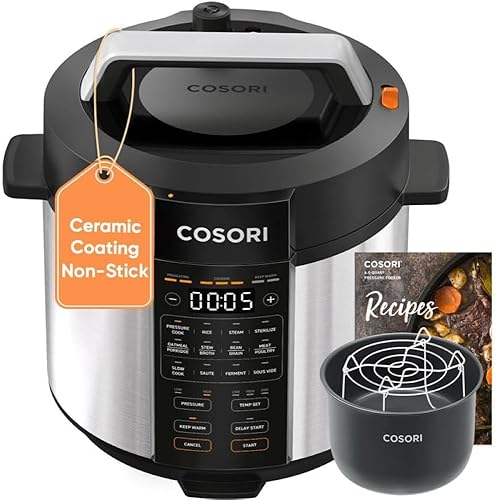
The Cosori Pressure Cooker 6QT has a 6-quart capacity, 1100 watts, a ceramic-coated inner pot and 9-in-1 cooking functions. Its automatic operation is aimed at meal preparation, with functions such as pressure cook, rice, steam, slow cook, sauté and sous vide.
The Cosori also has a dishwasher-safe lid, inner pot and accessories. That can make cleanup easier after cooking, but it doesn't change the appliance's main role as a pressure cooker.
The Instant Pot Duo 6 Qt 7-in-1 Electric has a 5.68-liter capacity and 1000 watts. Its functions include pressure cooking, slow cooking, steaming, rice, yogurt, sautéing and warming.
Choose the Instant Pot when you want several cooking modes in one countertop appliance. Its stainless steel pot and tri-ply bottom support searing and sautéing before pressure cooking.
For a daily cooker, compare capacity with your usual batch size. A 6-quart cooker can suit family meals, but it does not offer the same jar-processing space as a 16-quart canner.
Is an electric pressure canner different from an electric pressure cooker?
An electric pressure canner adds canning-focused controls and accessories to the electric pressure cooker format. It still needs a manual and tested process for the foods you plan to preserve.
The NESCO NPC-9 is described as a smart electric pressure canner and cooker. Its digital display, timer, automatic pressure regulation, locking lid, float valve and canning rack are aimed at repeatable home preservation.
That does not mean every electric pressure appliance has the same canning function. Compare the exact model's stated purpose, capacity and included rack before choosing one for jars.
An electric canner also needs a suitable outlet and counter space. The NESCO is a 22-pound, 9-quart stainless steel appliance and uses 120 volts, so plan where it will sit before filling it.
If you want electric water-bath processing as part of your setup, read our guide to an electric water bath canner. Water-bath canning and pressure canning are different processes for different food types.
How do capacity and jar space affect the choice?
Choose capacity based on the food you preserve, not only the number printed on the box. A canner needs room for water, jars, a rack and safe spacing around the jars.
The Presto's 16-quart capacity is the largest of these options. Its regular Mason jar capacity is 12 half-pints, 10 pints or 7 quarts, with half-pints and pints used for boiling water processing.
The NESCO has a 9-quart capacity and includes a canning rack. The Cosori and Instant Pot are smaller 6-quart-class cookers, so they are more naturally suited to meals than larger preservation batches.
Jars also need to match the recipe and process. Our guides to the best Mason jars for canning and best quart canning jars can help you plan the container side of the setup.
Measure storage space around the appliance too. Include room for the lid, steam release, power cord or stovetop controls, and safe handling of hot jars.
What safety features should you compare?
Look for a secure lid, pressure-release control and a clear way to confirm that pressure has dropped. These features reduce mistakes, but they don't replace the manual or a tested recipe.
The Presto has an air vent and cover lock that allows pressure to build only when the cover is closed properly. It also prevents opening until pressure is safely reduced.
The Cosori uses an alignment system for closing the lid, a seal and vent button, a backward-angled steam release design and 12 safety features. Its lid should remain closed until the float valve has dropped.
The NESCO includes a safety-lock lid, automatic float valve and pressure regulation system. Those controls support its automatic pressure and temperature management.
The Instant Pot has an easy-release steam switch and programmable controls. Like the other appliances, it still requires careful attention to the manual, fill limits and steam release method.
Never force a lid open. Keep your hands and face away from escaping steam, and allow pressure to reduce according to the appliance instructions.
How should you choose between a pressure canner and cooker?
Choose a pressure canner if preserving low-acid food is your main goal, and choose a pressure cooker if you mainly prepare meals. Choose a combination model only when its stated functions match both jobs you plan to do.
Pick the Presto if you want the largest capacity here, manual stovetop control and a canner that also works for boiling water processing and pressure cooking.
Pick the NESCO if you want electric operation, digital controls and dedicated canning functions in a smaller 9-quart appliance.
Pick the Cosori for automatic everyday cooking with a 6-quart pot, ceramic coating and several cooking modes. Pick the Instant Pot for 7 cooking functions and a stainless steel pot with a tri-ply bottom.
Before you preserve food, follow the instructions in a guide to canning with a pressure canner. If your choice is the Presto, our guide on how to use a Presto pressure canner covers the setup and operating steps.
Pressure canner vs pressure cooker: which should you buy?
Buy the Presto or NESCO when home canning is the priority. Buy the Cosori or Instant Pot when fast, flexible meal cooking is the priority.
The right pressure canner and cooker depends on the food, batch size and control style you will use most often.
A pressure canner is the safer fit for planned preservation because it is built around jar processing. A pressure cooker is the simpler fit for daily meals because its smaller capacity and automatic programs focus on cooking ingredients.
If you need both functions, compare the exact appliance's canning instructions before ordering. The name pressure canner and cooker is useful only when the model's controls, racks and approved process match your intended use.
Frequently asked questions
Can you use a pressure cooker as a pressure canner?
A pressure cooker should not automatically be treated as a pressure canner. Low-acid foods need a tested pressure-canning process with suitable time, pressure and temperature control.
Use equipment and instructions intended for pressure canning, such as a dedicated canner, and follow current food-safety guidance.
What is the main difference between a pressure canner and pressure cooker?
A pressure canner is designed to process jars of low-acid foods at controlled pressure for preservation. A pressure cooker is designed to cook food quickly under pressure.
Some appliances combine both functions, but their approved canning process and capacity still matter.
Is a pressure canner bigger than a pressure cooker?
Usually, a pressure canner has more room because it must hold jars and a rack, while a pressure cooker holds ingredients for a meal. The Presto has a 16-quart capacity, while the Cosori and Instant Pot are 6-quart cookers.
Can a pressure canner also cook food?
Some pressure canners can also cook food. The Presto is described as a pressure canner and cooker, while the NESCO has pressure cook, slow cook, steam and water bath modes.
Check the manual before using a canner for a cooking task.


