Pressure Canner vs Water Bath Canner: Which Do You Need? (November 2026)
Choose a pressure canner for low-acid foods such as vegetables and meat, and a water bath canner for high-acid foods such as fruit, pickles and jams. The right method depends on the food's acidity and the tested recipe you follow.
On this page (10 sections)
- Pressure canner vs water bath canner: which food needs which method?
- What does a pressure canner do?
- What does a water bath canner do?
- Which option gives you more batch flexibility?
- Is an electric pressure canner easier to use?
- Which canner is better for meat?
- What should you check before buying?
- How should you set up and care for either canner?
- Can one product replace both types of canner?
- Pressure canner vs water bath canner: which should you choose?
Choose a pressure canner for low-acid foods, and a water bath canner for high-acid foods. The pressure canner vs water bath canner choice is mainly a food-safety decision, not a choice between 2 interchangeable pot styles.
Treat the 2 methods as different tools for different recipes. A pressure canner is built to reach higher temperatures inside a sealed pot.
A water bath canner is built to hold jars in boiling water.
Low-acid foods need the higher temperatures that pressure canning can provide. Vegetables, meat, poultry and seafood usually fall into this group.
They do not have enough natural acidity to make water bath processing safe on their own.
High-acid foods can suit water bath canning when a tested recipe says so. Fruit, jams, jellies, pickles and salsa are common examples.
Their acidity helps control the risks that remain when jars are stored at room temperature.
Do not swap methods to make a batch easier. A water bath pot cannot replace pressure canning for a low-acid food.
A pressure canner also should not be used loosely without following the recipe for that method.
The USDA explains that pressure canning is the only recommended method for safely canning low-acid foods at home. That guidance is the starting point for vegetables and meats.
It is also why food type matters more than pot shape.
Always use a current tested recipe for the exact food you plan to preserve. Use its processing time, jar size and preparation steps.
Follow its pressure setting or water depth as written.
Altitude can change the conditions needed during processing. A tested recipe may include an adjustment for where you live.
Do not guess that adjustment or skip it to save time.
Think about your pantry before you buy either type of canner. If most of your plans involve fruit and pickles, a water bath setup may suit your kitchen.
If vegetables and meat are the main goal, pressure canning should come first.
Batch size and cooktop fit also deserve early attention. A large pot is only useful if it fits your stove and storage space.
Controls matter too, because manual and digital models ask for different levels of attention.
Set up on a stable surface and check the parts before you heat anything. Make sure jars are the size the recipe calls for.
Keep the work area clear before water is boiling or pressure starts to build.
Care comes after each batch as well as before it. Clean the pot, rack and sealing parts and store them dry.
Replace worn parts when the appliance instructions call for it.
The right choice becomes clearer once the food list is honest. Start with the foods you will preserve most often.
Then match the method, cooktop and capacity to those recipes.
 Best for stovetop versatility
Presto 01755 16-Quart Aluminum Pressure Canner
Pressure canner vs water bath canner: which food needs which method?
Use pressure canning for low-acid foods and water bath canning for high-acid foods. Food acidity determines which process can control the risks involved in storing sealed jars at room temperature.
Acidic recipes and low-acid recipes place different demands on the canner. A water bath canner relies on boiling water around the jars.
A pressure canner relies on pressure to raise the temperature inside the pot.
A pressure canner reaches the processing conditions needed for foods that do not have enough natural acidity. Common examples include plain green beans, carrots, meat, poultry and seafood.
These foods need the full pressure process specified in a tested recipe.
A water bath canner is suited to foods with enough acidity for the tested recipe. Fruit, jams, jellies, pickles and many salsas may fit this method.
The recipe still controls the required time and preparation.
Salsa shows why the recipe matters more than the food name alone. Some tested salsa recipes are designed for water bath processing.
Other recipes may call for pressure canning, so read the instructions before choosing a pot.
Pickles have a similar split between recipes. Acidity from the brine and the tested ingredients guide the method.
Do not change the acid level or processing time to fit the equipment you already own.
Do not choose a water bath canner because it is simpler if the food requires pressure canning. A familiar pot cannot replace the method specified for a low-acid food.
Simplicity is not a safety substitute.
Match the pot to the recipe first and the shopping list second. That order reduces wasted equipment and wasted food.
It also keeps the choice focused on safe storage.
What does a pressure canner do?
A pressure canner combines a sealed vessel, pressure control and a jar rack to process low-acid foods. It needs careful setup because pressure, time and altitude all affect the process.
The Presto 01755 16-Quart Aluminum Pressure Canner has a 16-quart capacity and manual operation. It is made from aluminum, includes an air vent and cover lock, and works on gas, electric and smooth-top ranges.
Its pressure dial gauge helps you monitor processing pressure. The pot also doubles as a boiling water canner, so one appliance can cover both low-acid and high-acid recipes.
Choose this model if you want a large stovetop pressure canner with a second use for water bath processing. Its 16-quart size may suit larger batches, but measure your storage space before buying.
For more details on choosing the right pressure canner pot, compare its capacity, cooktop fit, gauge style and jar arrangement with the batches you plan to make.
What does a water bath canner do?
A water bath canner holds jars in boiling water for high-acid foods. The rack keeps jars from sitting directly on the pot base and helps you lower and lift them safely.
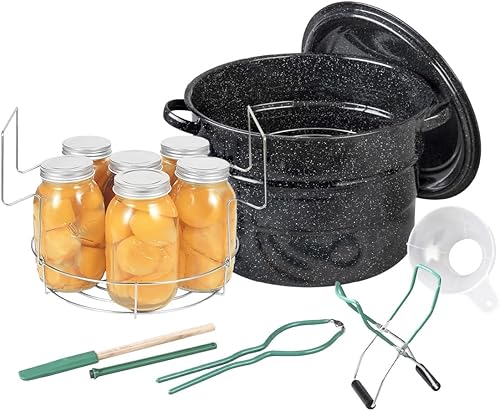
The Granite Ware Canning Pot with Rack is a 21.5-quart enamel-coated steel water bath canner. Its rack can hold 7 one-quart jars, 9 pint jars or 12 half-pint jars, and the 8-piece set includes a canning toolset.
The toolset includes a bubble remover and ruler, jar lifters, a magnetic lid lifter, a jar wrench and a jar funnel. That combination may help a beginner who needs the pot and basic jar tools together.
This canner is not suitable for glass cooktops or induction stovetops. Choose it for a traditional water bath setup on a compatible cooktop, especially if you expect to process several jars at once.
If you already have jars, check whether your rack fits their size. If you are comparing colored Ball canning jars, match the jar type and size to the tested recipe and rack arrangement.
Which option gives you more batch flexibility?
A pressure canner gives you access to both pressure and water bath methods when the model supports both, while a basic water bath canner stays focused on boiling water processing. That difference matters if your pantry plans include both vegetables and fruit.
The Presto 01755 is the most flexible option in this group because it is described for pressure canning and boiling water canning. It also holds 12 half-pints, 10 pints or 7 quarts for pressure canning, while half-pints and pints are used for its boiling water function.
A dedicated water bath pot can still be the better fit when most of your recipes are high-acid foods. Its wide pot and rack may make repeated jam or pickle batches easier to plan.
The Granite Ware set gives you a 21.5-quart water bath pot. The Supa Ant kit gives you a 24-quart water bath pot with a rack, lid and starter tools, but it is not suitable for induction or glass cooktops.
For another look at water bath equipment, our guide to the best water bath canner rack covers rack fit, jar support and handling during processing.
Is an electric pressure canner easier to use?
An electric pressure canner can simplify control, while a stovetop model can offer more capacity and direct manual control. Choose based on how much monitoring you want to do and how many jars you process per batch.
The NESCO NPC-9 Smart Electric Pressure Canner has a 9.5-quart capacity, digital controls and automatic pressure and temperature regulation. Its modes include pressure cook, slow cook, steam and water bath.
It includes a canning rack, steam rack and removable condensation catcher. The stainless steel appliance has a digital display, preset programs and a timer, and it uses a 120-volt electrical connection.
Choose the NESCO if countertop automation matters more than the larger batch size of the Presto. Its 9.5-quart capacity may suit smaller preserving sessions, while the added cooking modes can support soups, stews, jams and meal preparation.
Do not confuse an electric pressure cooker with a pressure canner. Our pressure canner vs pressure cooker comparison explains why cooking pressure alone does not mean an appliance is approved for canning.
Which canner is better for meat?
Choose a pressure canner for meat because meat is a low-acid food. A water bath canner does not provide the processing method needed for plain meat stored in sealed jars.
The Presto 01755 is the strongest fit here for larger meat batches because it has a 16-quart capacity and is designed for pressure canning. The NESCO NPC-9 suits smaller countertop batches when digital control is more important than capacity.
Plan the jar size, processing time and pressure from a tested recipe. Meat can be dense, so do not shorten the process or change the pressure because a batch looks cooked before canning is complete.
Our guide to the best pressure canner for meat compares the features that matter for meat preservation, including capacity and operating style.
If you are new to this method, read how to use a pressure canner before preparing your first batch. A safe setup includes checking the vent, cover seal, rack and pressure-control parts.
What should you check before buying?
Check food type first, then cooktop compatibility, capacity, controls and storage space. A canner that cannot sit safely on your stove or fit your jars will not solve the preservation problem.
For a pressure canner, confirm that the model matches your intended foods and that its pressure-control system suits your cooking style. Manual models need close attention to pressure, while digital models automate more of the process.
For a water bath canner, check the pot diameter, rack support and jar sizes used in your recipes. A larger capacity is useful only if your cooktop, sink and storage area can handle the pot safely.
Cooktop fit is especially important here. The Granite Ware pot is not suitable for glass cooktops or induction stovetops, and the Supa Ant kit is also not suitable for induction or glass cooktops.
Keep replacement parts in mind for pressure canners. A worn seal can affect safe operation, so use the correct replacement gasket for a pressure canner when the manual calls for one.
How should you set up and care for either canner?
Set up the canner on a stable, compatible cooktop and follow the exact recipe and appliance instructions. Clear the work area before heating water, loading jars or handling a pressurized pot.
Inspect jars for cracks and use the size specified by the recipe. Keep jar rims clean, leave the required headspace and use the correct lids and bands for the food being preserved.
Use a rack rather than placing jars directly on the pot base when the equipment requires one. Lower hot jars carefully, keep them upright and leave enough space for water or steam to circulate.
A pressure canner must cool and depressurize according to its instructions before you try to open it. Never force the lid while pressure remains inside.
Clean the pot, rack and removable parts after each batch. Keep vents, valves, sealing surfaces and gaskets free of food residue, and replace parts according to the appliance instructions.
Can one product replace both types of canner?
The Presto 01755 is the clearest 2-in-1 choice in this comparison because it supports pressure canning and boiling water canning. A water bath-only pot cannot replace a pressure canner for low-acid foods.
The NESCO NPC-9 also includes pressure and water bath modes, with digital controls and automatic regulation. Its smaller stated capacity makes it a different fit from the larger Presto rather than a direct capacity match.
The Granite Ware and Supa Ant products are water bath setups. They may be practical for high-acid foods, but they do not provide the same low-acid processing method as a pressure canner.
Do not choose by the word “canner” alone. Read the appliance instructions and match the method to the tested recipe.
Pressure canner vs water bath canner: which should you choose?
Pick a pressure canner if you want to preserve vegetables, meat, poultry or seafood. Pick a water bath canner if your main goal is fruit, jams, jellies, pickles or other high-acid recipes.
Choose the Presto 01755 for a larger manual stovetop setup that can handle both methods. Choose the NESCO NPC-9 for digital countertop control and a smaller pressure-canning capacity.
Choose the Granite Ware set for a 21.5-quart water bath pot with a rack and tools. Choose the Supa Ant kit for a 24-quart water bath starter setup with measuring and jar-handling accessories.
The deciding rule is simple: food acidity determines the method, and your cooktop and batch size determine the product. Once you know which foods you plan to preserve, the pressure canner vs water bath canner choice becomes much easier.
Frequently asked questions
What is the main difference between a pressure canner and a water bath canner?
A pressure canner uses pressure and higher temperatures to process low-acid foods such as vegetables, meat and poultry. A water bath canner keeps jars in boiling water and is used for high-acid foods such as fruit, jams, jellies, pickles and salsa when a tested recipe calls for it.
Can a water bath canner process meat or vegetables?
A water bath canner is not the right method for plain meat or most low-acid vegetables. Use a pressure canner and follow a current tested recipe for those foods.
Acidified recipes may have different instructions, so do not replace the stated processing method with a water bath.
Can a pressure canner be used as a water bath canner?
Some pressure canners can also be used for boiling water canning if the pot, rack and recipe setup allow it. The Presto 01755 is designed for both pressure canning and boiling water canning.
Follow the appliance instructions and the tested recipe for jar coverage and processing time.
Is an electric pressure canner easier than a stovetop model?
An electric pressure canner can reduce manual monitoring because the NESCO NPC-9 automatically regulates pressure and temperature and uses digital controls. A stovetop model such as the Presto 01755 gives you a larger 16-quart capacity, so ease depends on whether automation or batch size matters more.
Which canner should a beginner buy first?
Choose a water bath canner first if you mainly want to preserve fruit, jams, jellies, pickles or salsa. Choose a pressure canner first if vegetables, meat, poultry or seafood are your main goal.
Buy a model that fits your cooktop, storage space and batch size.


