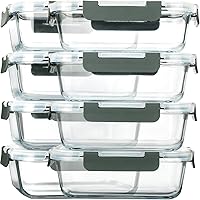
Food Storage Containers: The Complete Buying Guide
The best food storage containers match the food, the space and the way you open them: choose airtight plastic or glass for pantry dry goods, leak-proof latching containers for leftovers and meal prep, and large or stackable sets when you store in bulk. Start with material, size and lid type, then add specialty jars, buckets and bags only for foods those formats suit.
On this page (11 sections)
- What are the best food storage containers for most kitchens?
- Which container materials work best for dry food storage?
- How do lids and seals keep food fresh?
- What sizes of food storage containers do you need?
- Which food storage container formats suit each job?
- How do the three example sets compare for everyday use?
- How do stackable containers save space in a pantry or fridge?
- How do you organize dry food storage for freshness and ease?
- When should you add oxygen absorbers, mylar bags or canning jars?
- What should you check before you buy a storage container set?
- So, what are the best food storage containers for you?
The best food storage containers are the ones you will use every day without a struggle. Airtight lids, the right size and a shape that stacks matter more than a long feature list.
You need different containers for different jobs. Leftovers need a leak-proof seal.
Dry pantry food needs an airtight lid that opens often. Bulk staples need height or volume.
This guide explains materials, sizes, lids and formats in plain terms. It also shows three real sets that cover the most common needs.
Our score weighs specs, features and buyer feedback against what you are shopping for. We compared product details and buyer patterns, and we did not test products.
What are the best food storage containers for most kitchens?
The best food storage containers for most kitchens are airtight, stackable containers in at least three sizes. That mix covers leftovers, lunches and dry goods without forcing every food into one shape.
Start with containers that seal with a gasket or a latching lid. A loose lid lets moisture in and lets pantry odors spread.
Look for clear walls so you can see contents at a glance. Clear walls save time and reduce forgotten food.
Rectangular and square containers usually stack better than round ones. They use shelf space more evenly and fit fridge shelves.
Choose BPA free plastic or glass as your base material. Both work well, and your choice comes down to weight and break risk.
Buy a starter set first, such as a best airtight food storage containers roundup, before you add specialty jars or buckets.
How do you decide what to store first?
List the foods you store most often this week. Mark each one as fridge, pantry or freezer food.
Count how many containers you need for leftovers alone. Meal prep households usually need more small and medium containers than they expect.
Note which foods you open daily, such as rice, coffee or snacks. Those foods need the easiest lids.
Note which foods you buy in bulk, such as flour, oats or pasta. Those foods need tall or large containers.
This simple list stops you from buying a large set that has the wrong sizes for your actual kitchen.
Which container materials work best for dry food storage?
Plastic, glass and Tritan are the three main choices for everyday containers. Each material wins on a different point, so pick for your daily use rather than for a single claim.
BPA free plastic is light, shatter resistant and easy to carry. It suits lunch bags, picnic coolers and busy family kitchens.
Glass is heavy but resists stains and odors well. It also handles heat better than most plastic, though you should check each container's care limits.
Tritan is a BPA free plastic that stays clear and resists stains and odors. Rubbermaid uses Tritan in the Brilliance line, and buyers often like the clear view.
Ceramic and metal canisters look good on a counter. They suit sugar, coffee or tea that you use often and want to keep visible.
Mylar bags and food grade buckets suit bulk or long term storage. They are not everyday lunch containers, and they solve a different problem.
If you want plastic as your main material, compare best airtight food plastic containers before you choose a set.
What are the trade-offs between plastic and glass?
Plastic wins on weight and drop resistance. A plastic container is easier to carry to work or school and less risky on a crowded counter.
Glass wins on long term clarity and odor resistance. It does not hold onto tomato sauce or onion smells the way some plastic can.
Tritan sits between those two options. It is light like plastic, yet it stays crystal clear and resists stains.
Glass can break if dropped on tile. Plastic can scratch or warp if misused in heat.
Neither material keeps food fresh by itself. The lid seal does that work, so test the seal type before you judge the wall material.
For a glass focused shortlist, see best glass food storage containers.
How do lids and seals keep food fresh?
A good lid creates an airtight seal with a gasket, a flip top or latching tabs. That seal blocks moisture, which is the main enemy of dry food.
Flip top lids open fast and work well for cereal, coffee and snacks. Vtopmart uses side locking lids with a silicone gasket in its 24 piece set.
Latching lids press down on a gasket and lock in place. Rubbermaid Brilliance uses clip on latches and describes the seal as leak proof.
Screw lids work well on jars. They seal well, but they take two hands for some people and they thread wear over time.
Snap lids are the fastest to use. They suit short term fridge storage, but they rarely create a true airtight seal for pantry staples.
If your dry goods go stale, check the seal before you blame the food. A warped gasket or crumbs on the rim can break the seal.
For a deep look at seal types, read about best oxo airtight food storage containers and how their lids differ.
What should you check on a lid before you buy?
Press the lid at each corner and feel whether it sits flat. A lid that rocks is less likely to seal well.
Look for a silicone or rubber gasket that you can remove for washing. A fixed gasket traps crumbs and old food.
Check whether the lid opens with one hand. Daily foods need a lid you can open while holding a scoop.
Check whether spare lids or gaskets are easy to find. A container without a lid is just a box.
Think about microwave use if you store leftovers. Some lids have vents, and some must stay off during heating.
What sizes of food storage containers do you need?
You need small, medium and large containers because no single size holds every food well. A tall container wastes space for a small amount of rice.
Small containers, under 1 liter, suit spices, nuts, snacks and lunch portions. They keep small amounts of food from rattling around.
Medium containers, about 1.5 to 2 liters, suit leftovers, pasta, oats and baking supplies. This is the workhorse size for many kitchens.
Large containers, 2.5 liters and up, suit flour, cereal, rice and bulk snacks. Tall shapes fit pantry shelves and use vertical space.
Extra large containers and buckets suit bulk buys and long term staples. They need shelf space and a plan for lifting them.
Measure your shelves before you buy. A container that is 1 inch too tall will live on the floor instead of in the pantry.
For large needs, compare best airtight food containers large and check shelf height first.
How do you match size to the food you store?
Fill a container close to the top for best freshness. Extra air space lets moisture and odors reach more of the food.
Use tall containers for pourable foods such as rice, beans and oats. A wide, short container makes pouring messy.
Use wide containers for leftovers you will reheat. A wide shape heats more evenly and is easier to eat from.
Group foods by how often you use them. Daily foods go at eye level, and rarely used foods go higher.
Label every container with the food name and the date you stored it. Labels beat memory, especially for bulk bins.
Which food storage container formats suit each job?
Formats include canisters, jars, buckets, bags and countertop sets. The format should follow the food and the place you store it, not the other way around.
Canisters suit dry goods you open often. They have wide mouths, simple lids and a shape that sits on a counter or pantry shelf.
Jars suit spices, small amounts of dry goods and home canning. Glass jars show contents well and look neat in a pantry.
Buckets suit bulk staples and long term storage. Food grade buckets with lids hold large amounts and stack in a storage room.
Bags suit dehydrated food, bulk rice and long term storage. Mylar bags block light and moisture, and they take less space than rigid containers.
Countertop canister sets suit coffee, sugar, tea and flour you use daily. They keep those foods handy and reduce pantry trips.
Explore canister sets in best airtight canister sets for kitchen if countertop storage fits your layout.
When do jars, buckets or bags make more sense than boxes?
Jars make sense for small amounts and for foods you want to see. Spice jars, for example, keep small amounts fresh and easy to find.
Buckets make sense for large amounts of one food. Working with best food grade buckets with lids suits bulk rice, beans or pet food stored in a pantry or storage room.
Bags make sense for dehydrated food and long term storage. They pack flat, and with best mylar bags for food storage you can block light and moisture.
Boxes make sense for everyday fridge and pantry use. They stack, they are easy to label and they fit most shelves.
Choose the format you will open most often for daily foods. A fancy format you avoid helps no one.
How do the three example sets compare for everyday use?
These three sets cover meal prep, pantry dry goods and a full mixed kitchen. Each set solves a different storage problem.
The Rubbermaid Brilliance 5 pack suits meal prep and leftovers. The Vtopmart 24 piece set suits pantry dry goods.
The Rubbermaid Brilliance 44 piece set suits a household that wants many sizes in one line.
All three use BPA free plastic. All three claim airtight or leak proof seals.
The main differences are size mix, lid style and how many containers you get.
Rubbermaid Brilliance Tritan Plastic Food Storage Containers: best for meal prep and leftovers
This set suits people who pack lunches and store leftovers. It has five 3.2 cup rectangular containers with matching lids, for 10 pieces total.
Rubbermaid says the Tritan plastic is BPA free, stain resistant and odor resistant. The clear walls show contents without opening the lid.
The lids have secure latches and a leak proof seal. Built in vents let you microwave food without removing the lid.
The containers stack for fridge or pantry storage. They are dishwasher, microwave and freezer safe, according to Rubbermaid.
The trade-off is size. At 3.2 cups each, these containers do not hold large amounts of flour or cereal.
Choose this set if your main need is fridge storage and lunch packing. Choose a taller pantry set if your main need is bulk dry goods.
Vtopmart Airtight Food Storage Containers with Lids: best for pantry dry goods
This set suits a pantry that needs order. It has 24 containers in four sizes, with 24 reusable labels.
The mix is 6 tall containers at 2.5 quart, 6 large at 1.8 quart, 6 medium at 1.5 quart and 6 small at 0.7 quart. That range covers spaghetti, cereal, flour, sugar, oats, pasta, rice, coffee, tea, snacks and nuts.
The side locking lids have a silicone gasket and flip open on top. Vtopmart describes the seal as airtight and the plastic as BPA free.
The containers are clear, so you can see contents without opening each one. The modular shape stacks neatly in cabinets and pantry shelves.
The trade-off is fridge use. This set is aimed at dry goods, so check care limits before you use it for wet leftovers.
Choose this set if your pantry feels messy today. Choose a latching set if your main need is leak proof fridge storage.
For more pantry focused options, see best stackable food storage containers for pantry.
Rubbermaid Brilliance BPA Free 44-Piece Food Storage: best for a full mixed kitchen
This set suits a household that wants one line for many jobs. It has 44 pieces in a BPA free Tritan plastic line with airtight, leak proof lids.
Rubbermaid describes 360 degree clarity from the Tritan plastic. The containers are stain and odor resistant and look clear in a fridge.
Built in steam vents allow microwave heating without removing the lids. Secure latches help prevent messy leaks with soups, stews and sauces.
The containers stack in a fridge or cabinet. They are dishwasher and freezer safe, and the line is aimed at meal prep, lunch and leftovers.
The trade-off is bulk dry goods. A mixed set gives you range, but tall pantry canisters may still serve flour and cereal better.
Choose this set if you want many sizes without mixing brands. Choose the Vtopmart set if your priority is tall pantry storage.
How do stackable containers save space in a pantry or fridge?
Stackable containers save space because they use vertical space instead of spreading out. A neat stack lets a small shelf hold more food.
To stack well, containers need flat tops, matching footprints or a modular design. Mixed shapes leave gaps that waste shelf space.
Start by grouping containers by size. Put the largest and heaviest foods at the bottom of a stack.
Keep daily foods in stacks you can reach. A stack you cannot reach will stay forgotten.
Measure shelf depth before you buy. A container that sticks out past the shelf edge is hard to store and easy to knock over.
For stack focused picks, read best stackable airtight food storage containers and compare footprints.
What are the mistakes people make with stackable storage?
People often buy containers that stack only when empty. A lid that bulges or a base that tapers can stop a full stack.
People also stack too high. A tall stack of heavy containers is unsafe to lift and hard to keep stable.
People mix too many brands. Different footprints rarely align, so stacks wobble and gaps grow.
People forget to label the bottom containers. Labels on the front and top help you find food in a deep stack.
Solve these issues by buying one modular line for your main pantry. Add specialty containers only where the shape truly helps.
How do you organize dry food storage for freshness and ease?
Good organization starts with labels, dates and grouping by food type. A neat system beats a perfect container.
Put dry goods in a cool, dark, dry pantry. Heat from an oven or a sunny wall speeds staling.
Store foods away from the floor if you have moisture or pests. A shelf keeps containers dry and easy to clean under.
Use a first in, first out habit. Put new food behind older food, and move older food to the front.
Wipe container rims before you seal them. Crumbs and oils break the seal and invite spoilage.
For specialty foods, match the container to the risk. Coffee loses aroma fast, so an airtight coffee canister helps, such as best airtight coffee canister.
How do you store spices, coffee and other sensitive foods?
Spices need small, airtight containers that block light. Amber glass helps, so compare best amber glass spice jars for small amounts.
Coffee needs an airtight container that blocks light and air. A dedicated coffee canister keeps beans fresh between uses.
Ceramic canisters suit sugar, tea and coffee on a counter. Compare best airtight ceramic canister if you want a look that stays out.
Herbs and spices also fit in best spice storage jars when you need many small amounts in one drawer or rack.
Baking staples need larger volume. Flour and sugar go stale with moisture, so an airtight seal matters more than looks.
When should you add oxygen absorbers, mylar bags or canning jars?
Add specialty storage when time and moisture are your main risks. Regular containers suit short term storage, and specialty formats suit longer horizons.
Oxygen absorbers remove oxygen inside a sealed container. They suit dehydrated food and long term staples stored in airtight bags or buckets.
Mylar bags block light, moisture and oxygen when sealed well. They suit dehydrated food, rice and beans stored for months.
Canning jars suit home canning and small amounts of dry goods. Wide mouth jars are easier to fill and clean, such as gallon canning jars wide mouth for large needs.
Plastic lids for canning jars add convenience for fridge and pantry storage. See best plastic lids for canning jars if you already own jars.
Decorative jars suit countertop display. Compare best canning jars decorative when looks matter as much as storage.
How do you choose between bags, buckets and jars for long term storage?
Choose bags when space is tight and you store dehydrated food. Bags pack flat and seal shut with a heat sealer.
Choose buckets when you need rigid protection and easy stacking. Buckets guard against bumps and stack in a storage room.
Choose jars when you need visibility and easy access. Jars show contents and work well for foods you open often.
Add best oxygen absorbers for food storage when you seal food for months. Absorbers help only in a truly airtight container.
Pair these tools with best dehydrated food for long term storage to plan what to store and how long it should last.
Use a best impulse bag sealer if you seal mylar bags often. A good seal matters more than the bag alone.
What should you check before you buy a storage container set?
Check size mix, lid type, material and care limits before you compare sets. Those four points decide daily satisfaction.
Count the sizes, not just the piece count. A set with many small containers may not hold flour or pasta.
Read the lid description closely. Flip top, latch and screw lids each suit different habits.
Confirm the material is BPA free if that matters to you. Tritan, glass and BPA free plastic all appear in this guide.
Check dishwasher, microwave and freezer limits. A container that cannot go in the dishwasher may get less washing.
Check the brand line for extra containers. A line you can expand fits your kitchen better over time.
Which brand lines are worth comparing first?
Start with Rubbermaid Brilliance and Vtopmart from the examples above. Both lines use BPA free plastic and clear walls.
Compare Rubbermaid sets in best rubbermaid food storage containers if you like latching lids and vented microwave use.
Compare OXO sets in best oxo airtight food storage containers if you want a different lid style.
Compare stackable sets in best stackable airtight food storage containers if shelf space is your main limit.
Pick one main line first. Add another line only for a job the first line cannot do.
So, what are the best food storage containers for you?
The best food storage containers for you are airtight, stackable containers in three sizes, matched to your fridge, pantry and daily habits. Start with that base, then add jars, buckets or bags for special foods.
Pick the Rubbermaid Brilliance 5 pack if your main need is meal prep and leftovers in 3.2 cup portions. Pick the Vtopmart 24 piece set if your main need is pantry dry goods in four sizes.
Pick the Rubbermaid Brilliance 44 piece set if you want a large mixed set in one Tritan line.
Measure your shelves, list your daily foods and check lid style before you order. That simple process will guide any set on this page.
Frequently asked questions
What are the best food storage containers for dry food?
Airtight plastic or glass containers with locking lids work best for most dry food, because they block moisture and keep odors in. Match size to the food so the container is nearly full, label the contents and date, and store in a cool, dark pantry away from heat.
Are plastic or glass food storage containers better?
Glass resists stains and odors and can usually go from fridge to oven, while Tritan plastic is lighter and less likely to break in a lunch bag. Both can seal well, so choose by weight, break risk and how you will use the containers each day.
What size food storage container should I buy first?
Start with a mix of small, medium and large containers rather than one size for everything. Small ones suit rice, spices and snacks, medium ones suit leftovers and lunch, and large ones suit flour, cereal and pasta.
How do I keep food fresh in storage containers?
Fill containers close to the top to limit air, seal the lid fully, and label with the date. Keep dry goods in a cool pantry, refrigerate perishables promptly, and use the oldest food first.
Can I store dehydrated food in regular containers?
Airtight containers can work for dehydrated food kept in a cool, dry place, and mylar bags with oxygen absorbers suit longer storage. The right choice depends on how long you plan to store the food and how often you will open it.