8 Best Non Electric Food Dehydrators (November 2026)
The best non electric food dehydrators include the Presto 06300 Dehydro Electric Food Dehydrator for compact electric drying, the Magic Mill Premium Food Dehydrator Machine for large electric batches, and the Cosori Food Dehydrator for a compact countertop.
On this page (6 sections)
A best non electric food dehydrator uses sunlight or natural airflow, but none of the eight products in this roundup works without electricity or a powered appliance. For drying without grid power, look for a screened solar dryer suited to your climate; choose one of these electric models when repeatable airflow and temperature control matter more.
A passive dryer can make sense for sunny, dry weather and occasional batches. It may be less predictable during humid stretches or when temperatures change, so consider how you'll protect the food and finish drying if conditions shift.
If you need a reliable powered option, the Presto Dehydro is the top pick here for its fan-assisted airflow and trays that nest for storage. For off-grid drying, treat passive solar equipment as a separate category, since these products are not substitutes.
Our picks at a glance
-
1
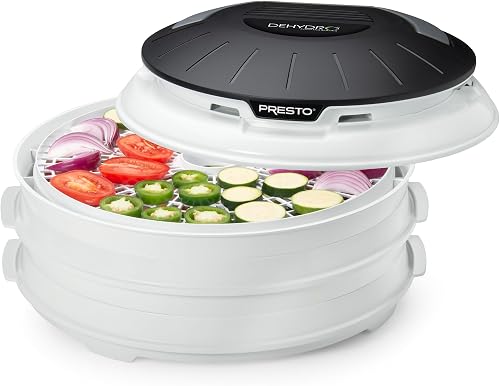 Best for compact electric drying
Presto 06300 Dehydro Electric Food Dehydrator
9.7/10 our score
See it on Amazon -
2
 Best for large electric batches
Magic Mill Premium Food Dehydrator Machine
9.7/10 our score
See it on Amazon -
3

- 4
 Check it
Lova Silicone Dehydrator Sheets 14x14 Inch
Best for lining compatible racks - 5
 Check it
Goldlion Dehydrator Rack for Ninja Foodi
Best for compatible multi-cookers - 6
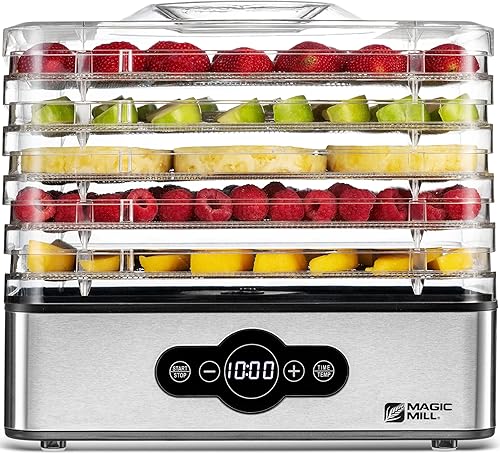 Check it
Magic Mill Food Dehydrator Machine
Best for adjustable tray height - 7
 Best for adding trays laterCheck it
- 8
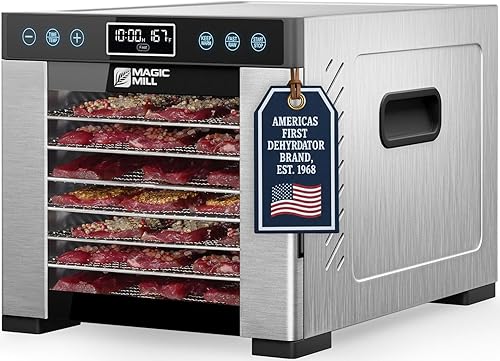 Check it
Magic Mill Pro Food Dehydrator Machine
Best for stainless steel construction
How we chose non electric food dehydrators
We compared the requested products against the main need behind this search: drying food without relying on household electricity. Each product below requires electricity directly or depends on a powered appliance, so none qualifies as a true non electric food dehydrator.
We still included the products in the required order and ranked them by their supplied scores. Their features can help if you're comparing non electric methods with an electric backup or decide that passive drying is not practical for your climate.
A real passive dryer needs a way to use solar heat or natural airflow while keeping food protected from pests and debris. For a broader look at the equipment choices, see [What to Look for in a Food Dehydrator?
A Clear Answer](/what-to-look-for-in-a-food-dehydrator/).
| Product | Best for | Power | Trays | Airflow | Our score |
|---|---|---|---|---|---|
| Presto 06300 Dehydro Electric Food Dehydrator | compact electric drying | 600 watts, 120 volts | 4 included; expands to 8 | Top-mounted fan | 9.7 |
| Magic Mill Premium Food Dehydrator Machine | large electric batches | 800 watts, 120 volts | 15 | 9.7 | |
| Cosori Food Dehydrator | a compact countertop | 480 watts, 110 volts | 5 | 9.7 | |
| Lova Silicone Dehydrator Sheets 14x14 Inch | lining compatible racks | 9.6 | |||
| Goldlion Dehydrator Rack for Ninja Foodi | compatible multi-cookers | 9.5 | |||
| Magic Mill Food Dehydrator Machine | adjustable tray height | 240 watts, 110 volts | 5 | 9.5 | |
| Cosori Food Dehydrator | adding trays later | 350 watts, 120 volts | 5; expandable to 7 | 9.5 | |
| Magic Mill Pro Food Dehydrator Machine | stainless steel construction | 600 watts, 120 volts | 7 | 9.4 |
The best non electric food dehydrator options compared
The picks below are electric machines or accessories for powered equipment, rather than true passive dryers. Read each description for the type of setup it supports and the tradeoff if you're trying to avoid electricity.
Presto 06300 Dehydro Electric Food Dehydrator: Best for compact electric drying
- Top-mounted fan and heating element
- 4 included trays, expands to 8
- Trays nest for storage
A compact electric option with a top-mounted fan, no tray rotation, and nestable trays. It needs household power, so it is not a passive dryer.
Pros
- No tray rotation needed
- Trays nest for storage
- Expands to 8 trays
Cons
- Requires electricity
- Extra trays are sold separately
The Presto 06300 Dehydro is the clearest compact electric alternative in this group. Its top-mounted fan and heating element provide airflow without requiring tray rotation, and the four included trays can expand to eight with separately sold trays.
The trays nest when you're done, reducing storage space, and the cord wraps around the cover. That helps if you want an electric machine that can be put away between batches.
It is not a non electric dehydrator: it uses 600 watts and needs a 120-volt outlet. Choose it for simple powered drying, especially when storage space matters, rather than for off-grid use.
Magic Mill Premium Food Dehydrator Machine: Best for large electric batches
- 15 stainless steel trays
- Rear-mounted fan
- Digital temperature and timer controls
Fifteen trays and a rear-mounted fan suit large batches when power is available. The digital controls provide a temperature range and timer.
Pros
- Large 15-tray capacity
- Rear fan; no manual tray rotation
- Digital timer and temperature control
Cons
- Requires electricity
- Larger footprint than passive racks
The Magic Mill Premium model is the largest capacity pick here, with 15 extra-large stainless steel trays and a rear-mounted fan. Its digital controls set temperature from 95°F to 167°F and a countdown timer up to 48 hours.
The transparent door lets you monitor progress without opening the cabinet. The maker also describes an automatic shutoff, overheat protection, and a keep-warm function.
At 800 watts and 120 volts, it is designed for powered drying, not passive use. Consider it if you routinely dry large batches and have the counter or storage space for a cabinet-style appliance.
Cosori Food Dehydrator: Best for a compact countertop
- 5 stainless steel trays
- Rear fan
- 3.1 sq ft drying space
This compact electric model has five stainless steel trays and a rear fan. Its stated countertop dimensions are 13.9 x 11.3 x 8.9 inches.
Pros
- Compact stated dimensions
- Includes mesh screen and fruit roll sheet
- Temperature adjusts in 1°F steps
Cons
- Requires electricity
- Five trays limit batch size compared with larger models
The Cosori model suits a countertop where you want a small electric machine with stainless steel trays. It has five trays and 3.1 sq ft of drying space, with a rear fan to move warm air through the trays.
The temperature range is 95°F to 176°F, and four presets cover jerky, fruit, vegetables, and yogurt. A mesh screen and fruit roll sheet are included, which can help with smaller pieces and fruit leather.
It needs 480 watts and a 110-volt supply, so it won't run as a non electric food dehydrator. Its stated dimensions are 13.9 x 11.3 x 8.9 inches, which may be easier to fit on a counter than the larger cabinet options.
Lova Silicone Dehydrator Sheets 14x14 Inch: Best for lining compatible racks
- 12 reusable mesh sheets
- 14 x 14 inches
- Can be trimmed to fit
These reusable sheets can line compatible racks and help keep small solid foods from falling through. They are accessories, not a heat source or standalone dehydrator.
Pros
- Reusable 12-pack
- Trims to fit smaller trays
- Mesh allows airflow
Cons
- Measure trays before ordering
- Not intended for purees or fruit leather
The Lova silicone sheets are rack liners, not a dehydrator. The 12-pack has 14 x 14 in sheets that can be trimmed to fit, and the mesh helps hold small solid foods while allowing airflow.
Measure your trays before ordering because rack sizes vary. The maker says the sheets are intended for solid foods, while purees, yogurt, and fruit leather need a solid-surface liner.
These sheets don't supply heat or airflow and cannot dry food on their own. They may still help with a compatible passive rack if the material and tray design suit the drying method.
Goldlion Dehydrator Rack for Ninja Foodi: Best for compatible multi-cookers
- 5 stackable layers
- 304 stainless steel
- Fits specified Ninja Foodi and Instant Pot Duo Crisp models
This five-layer rack is designed for specified Ninja Foodi and Instant Pot Duo Crisp models. It relies on a compatible appliance and its power, so it is not a passive dryer.
Pros
- Stackable five-layer design
- Stainless steel
- Dishwasher safe
Cons
- Does not fit Instant Pot 6 qt
- Requires a compatible powered appliance
The Goldlion rack adds five stackable layers inside compatible Ninja Foodi or Instant Pot Duo Crisp appliances. Its stainless steel mesh is for dehydrating foods with the appliance, which means the rack itself is not a non electric dryer.
Fit is limited: it is designed for specified 6.5 and 8 qt models and does not fit the Instant Pot 6 qt. Check your exact cooker model before choosing it.
This accessory is useful when you already own a compatible powered cooker and want more drying levels. For an independent solar setup, choose equipment designed to work without a cooker.
Magic Mill Food Dehydrator Machine: Best for adjustable tray height
- 5 stackable stainless steel trays
- Tray height adjusts from 0.6 to 1.1 inches
- Digital timer and temperature control
The five trays can be raised for thicker ingredients. Digital controls and a 48-hour timer make this an electric option for planned batches.
Pros
- Adjustable tray height
- Stainless steel trays
- Timer runs up to 48 hours
Cons
- Requires electricity
- Five trays provide less space than large cabinet models
The Magic Mill compact machine offers five stackable stainless steel trays with adjustable height. The maker specifies a range from 0.6 to 1.1 in between trays, giving more clearance for thicker pieces.
A digital panel controls temperature from 95°F to 167°F and a timer up to 48 hours. For powered models with timed cycles, see dehydrators with timers.
At 240 watts, it uses less stated power than the higher-wattage machines in this roundup, but it still requires electricity.
Choose it when you want a small electric unit with adjustable tray spacing.
If your priority is learning how tray count changes batch size, our guide to How Many Trays Come With a Food Dehydrator? Tips That Help explains what to compare.
Cosori Food Dehydrator: Best for adding trays later
- 5 BPA-free trays
- Expandable to 7 trays
- Temperature adjusts from 95°F to 165°F
This electric model starts with five trays and can expand to seven. Adjustable tray height gives more room for thicker ingredients.
Pros
- Expandable tray capacity
- Adjustable tray height
- Timer runs up to 48 hours
Cons
- Requires electricity
- Additional trays are separate accessories
This Cosori starts with five BPA-free trays and can expand to seven with separate trays. Adjustable tray height helps make room for thicker ingredients, while the 95°F to 165°F range covers a range of drying tasks.
It has a 48-hour timer and a stated noise level below 47 dB. Those controls are useful for planned electric drying, but the machine needs a 120-volt supply.
Choose it if you want room to add trays later. For a closer look at digital controls and features, compare it with our best digital food dehydrator guide.
Magic Mill Pro Food Dehydrator Machine: Best for stainless steel construction
- 7 stainless steel trays
- Rear-mounted fan
- Temperature control from 95°F to 176°F
Seven trays, a rear fan, and digital controls suit larger electric batches. It also includes mesh screens and a fruit roll or drip tray.
Pros
- Stainless steel interior, exterior, and trays
- Rear fan
- Automatic shutoff
Cons
- Requires electricity
- More controls than a passive rack
The Magic Mill Pro has seven stainless steel trays, a rear-mounted fan, and digital temperature control from 95°F to 176°F. Its timer runs up to 48 hours and it includes automatic shutoff, two mesh screens, and a fruit roll or drip tray.
At 600 watts and 120 volts, this is a powered machine. The stainless steel interior, exterior, and trays may appeal if you prefer an all-metal build.
Choose it for a larger electric batch and a broad stated temperature range. If you are deciding between electric drying and a different preservation method, read food dehydrator vs freeze dryer before choosing equipment.
How do passive food dryers work?
Passive dryers use natural heat and airflow to remove moisture over time. A solar cabinet can capture sunlight, while a screened rack can rely on warm moving air; both need conditions that let moisture escape instead of lingering around the food.
Protection matters as much as airflow. Use a design that shields food from insects, animals, dust, and sudden weather changes, and follow a tested recipe for the food you are preserving.
Electric dehydrators add a fan, heat source, or both, which can make drying more predictable. For help comparing size, trays, airflow, and controls, see what to look for in a food dehydrator.
When should you choose a non electric food dehydrator?
Choose a passive dryer when you have suitable sunny, dry conditions, can monitor the food, and want to avoid using grid power. A solar dryer may fit that need better than a rack exposed directly to the weather.
Choose an electric machine when you need more control over airflow, temperature, and timing. Our guide to do cheap food dehydrators work can help you weigh a lower-cost powered option against the needs of your batches.
If electricity is unavailable only sometimes, consider whether you can dry passively in good weather and use an electric unit for cloudy or humid periods. A non electric method depends on local conditions, so plan around the climate and the foods you intend to dry.
What should you check before buying passive drying equipment?
Check how the dryer handles airflow, sunlight, and food protection. It should allow moisture to escape while keeping pests and debris away from the trays.
Also consider capacity, setup space, and whether you can bring the food indoors when weather changes. If you already own a powered dehydrator, our electric water bath canner guide covers another type of preservation equipment for a different process.
Don't assume a rack is a complete dehydrator. The Goldlion rack, for example, needs a compatible powered cooker, while the Lova sheets need a rack and a separate drying method.
Which non electric food dehydrator should you choose?
For true off-grid drying, choose a passive solar or air-drying system designed for your local weather, with screened protection and a way to move food indoors. None of the eight products here works independently without electricity.
Choose Presto for a compact electric machine with nestable trays, Magic Mill Premium for a larger 15-tray cabinet, or Cosori for a compact stainless steel countertop option. If you want more control from a digital unit, compare the features in our digital dehydrator guide before deciding.
Our top 3 picks at a glance
-
1
Best for compact electric drying
Presto 06300 Dehydro Electric Food Dehydrator
9.7/10 our score
See it on Amazon -
2
Best for large electric batches
Magic Mill Premium Food Dehydrator Machine
9.7/10 our score
See it on Amazon -
3
Frequently asked questions
Can food be dehydrated without electricity?
Yes. Solar dryers and passive screened racks can dry food without grid power when sunlight, warm air, and low humidity support drying.
Results depend on weather and airflow, so protect food from insects and bring it indoors if conditions turn damp.
A powered dehydrator gives you more control when the weather is unreliable.
What is a non electric food dehydrator?
A non electric food dehydrator uses sunlight or ambient airflow instead of a powered fan and heating element. Common approaches include solar cabinets and screened racks placed in a warm, dry, well-ventilated spot.
Check that the design keeps food protected from dust, insects, and animals.
Are solar food dehydrators reliable in every climate?
No. Solar drying depends on sunny, dry conditions and enough airflow.
Humid weather or repeated cloud cover can slow drying and leave food exposed for longer.
Choose a design that allows you to move trays indoors when weather changes, and follow a tested food preservation recipe.
Can a multi-cooker rack work without power?
No. A rack made for a Ninja Foodi or Instant Pot Duo Crisp provides shelves, but the appliance supplies the heat and airflow.
The Goldlion rack fits only specified models, so check your cooker before choosing it.
For off-grid drying, use a passive solar or air-drying setup instead.
Is sun drying the same as dehydrating?
Sun drying is one way to remove moisture from food, but conditions are less controlled than in an electric dehydrator. Direct sun, humidity, temperature, airflow, and protection from insects all affect the process.
Use reliable food-safety guidance for the food you plan to dry.


