How to Choose a Hand Crank Meat Slicer
Choose a hand crank manual meat slicer by checking blade size, thickness control, mounting, meat temperature and cleaning access. A compact stainless steel model suits occasional thin slicing, while an electric slicer saves effort for larger batches.
On this page (10 sections)
- What makes a hand crank manual meat slicer a good choice?
- How should you choose the blade size?
- What thickness range should a manual meat slicer have?
- How important is mounting stability?
- Can a hand crank slicer cut frozen meat?
- Which products help with this buying decision?
- How do electric and hand crank slicers compare?
- What maintenance does a manual meat slicer need?
- What safety steps should you follow?
- How do you choose the right hand crank manual meat slicer?
A hand crank manual meat slicer is best when you want direct control over thin slices without relying on a motor. Choose one by checking the blade size, thickness adjustment, mounting stability, food holder and cleaning routine before comparing extra features.
Manual slicers can suit small kitchens, occasional meal prep and users who prefer to control the cutting speed themselves. They take more physical effort than electric models, but they also avoid motor noise and do not need a power outlet.
The right choice depends on the food you slice most often. Firm, partly frozen meat needs a different setup from soft cooked meat, cheese or vegetables.
What makes a hand crank manual meat slicer a good choice?
A good hand crank manual meat slicer gives you stable food support, predictable thickness control and safe access for cleaning. The crank should turn smoothly enough for your intended workload, while the base or mounting system should keep the slicer from shifting.
Before buying, decide whether you need the slicer for:
- Thin slices of partly frozen beef, lamb, chicken or fish
- Sandwich meat and cooked roasts
- Small portions for stir-fry, hotpot or jerky
- Occasional vegetable, cheese or bread slicing
- A countertop setup or a slicer that stores in a cabinet
Manual operation works best when you can keep a steady rhythm. If you plan to slice a large batch often, an electric model may reduce effort even if your original search started with a hand crank design.
For broader food-preparation choices, see our vegetable slicer guide. It explains how manual slicers differ when your main foods are vegetables rather than meat.
How should you choose the blade size?
Choose the blade size according to the widest food you expect to slice, not only the thinnest cut you want. A smaller blade can be easier to store, while a larger blade gives more room for wider pieces of meat.
An 8-inch blade is a practical size for smaller cuts and home portions. The befen manual slicer has an 8-inch blade and a 0.2–20 mm adjustable thickness range, so it suits buyers who want very thin slices from properly chilled or partly frozen food.
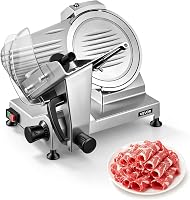
A larger blade can help when the food is wider or when you want more cutting surface per pass. The VEVOR Commercial Meat Slicer has a 10-inch carbon steel blade and a 0–12 mm thickness range, but it is an electric semi-automatic model rather than a hand crank slicer.
Blade material also matters. Stainless steel and high-carbon stainless steel are common choices because they can be cleaned after use and kept sharp with suitable care.
Carbon steel may offer a sharp cutting edge, but the maker's care instructions still matter more than the material name alone.
Is a longer blade always better?
A longer blade is not automatically better for every kitchen. Match blade length to food width, storage room and the amount of slicing you do.
A blade that is larger than your normal food may take more counter space and make storage less convenient. A blade that is too short may require you to reshape food before slicing.
Also check the full slicer dimensions. The befen model measures 18.11 x 6.3 x 4.72 inches, while the VEVOR model measures 18 x 14 x 15 inches.
Their blade sizes are only part of the space each one needs.
What thickness range should a manual meat slicer have?
Choose a thickness range that covers your recipes, with fine control near the thin end if you make hotpot, stir-fry or jerky slices. A wide range is useful only if the mechanism remains easy to set and clean.
The befen manual slicer adjusts from 0.2 to 20 mm. That range gives you room to make very thin slices or thicker portions, but the food still needs the right firmness for a clean cut.
For comparison, the Borlebbi Meat Slicer adjusts from about 0 to 15 mm. It is an automatic electric slicer with a 200W motor and two removable 7.5-inch stainless steel blades.
Thickness markings help you repeat a setting, but they do not guarantee identical slices if the food changes shape or temperature. Keep the food firm, use steady pressure and avoid forcing the blade through tough areas.
If you need a wider comparison of manual options, see our best manual meat slicer for home guide. It can help you compare compact manual designs with other home-focused choices.
How important is mounting stability?
Mounting stability is one of the most important factors in a hand crank manual meat slicer. A slicer that shifts while you turn the crank can produce uneven cuts and make the blade harder to control.
Look for a wide base, suction cups, clamps or another clear way to keep the slicer in place. The befen model includes 2 suction cups and 2 backup suction cups, which can help when the work surface is smooth and clean.
Before slicing, check that:
- The counter is dry and free of grease.
- The suction cups or mounting points sit flat.
- The slicer does not rock when you apply light pressure.
- The food holder moves without catching.
- Your crank hand has enough room to turn without hitting nearby objects.
Mounting does not replace safe technique. Keep your free hand away from the blade path and use the food holder whenever the design includes one.
Should you choose suction cups or a heavier base?
Choose suction cups when you need a compact slicer that can be removed after use. Choose a heavier or wider base when you want a more permanent countertop setup and have room to leave the slicer assembled.
Suction cups work best on smooth, clean surfaces. They may be less useful on textured, dusty or wet counters.
A heavy electric model can feel more stable because of its weight, but that does not make it a hand crank slicer. The VEVOR model weighs 34 pounds and has non-slip feet, while the Borlebbi model weighs 10.7 pounds and uses non-slip suction cup feet.
Can a hand crank slicer cut frozen meat?
A hand crank slicer works best with meat that is firm and partly frozen, not fully thawed or rock hard. The correct texture helps the blade make a clean cut without crushing soft meat or forcing the mechanism.
The befen model is designed for frozen foods such as beef, lamb, chicken, ham and fish. Its instructions recommend properly freezing the meat before use and note that thinner slices are easier to cut cleanly.
Do not use a manual slicer to cut bone. Bone can damage the blade or other parts, and it makes the cutting motion less predictable.
Prepare the food by trimming it into a shape that fits the food holder. Freeze it until firm, then let it sit only as long as needed for the surface to become workable.
The exact timing depends on the food's size and moisture.
For a focused comparison of firm-food options, read our best manual frozen meat slicer guide. A hand crank model may suit you if you want control over each pass and do not mind the extra effort.
Which products help with this buying decision?
The three products below show the main trade-off between manual control, compact electric slicing and larger electric capacity. The befen model is the only manual product in this group, while the other two can reduce hand effort for larger workloads.
Manual option for firm, thin cuts
The befen model measures 18.11 x 6.3 x 4.72 inches and weighs 5.8 pounds. Its stainless steel construction, separate meat holder, extra blade, 10 plastic meat bags, 2 backup suction cups and hex key give it a defined home-use setup.
Its main strength is direct control. You turn the slicer yourself, so the pace depends on your hand and the firmness of the food.
The trade-off is effort. Thin slicing can take longer than using a motorized slicer, especially when you prepare a large quantity.
Compact electric option for mixed foods
The Borlebbi Meat Slicer has a 200W motor, a stainless steel tray and a die-cast aluminum body. It measures 14.17 x 12.2 x 9.64 inches and weighs 10.7 pounds.
This model may suit a household that wants one slicer for several food types and prefers motor assistance. Its removable blade, food carriage, slide-rod extension and food pusher support hand cleaning.
The trade-off is that it does not provide the same hand-crank control as a manual slicer. It also needs a suitable outlet and counter space for the motorized setup.
For a smaller tool that you can hold rather than mount, compare our best hand held meat slicer guide.
Larger electric option for faster batches
The VEVOR Commercial Meat Slicer measures 18 x 14 x 15 inches and weighs 34 pounds. Its 10-inch blade, stainless steel tray, removable food holder and removable food pusher make it a larger countertop machine than the manual befen model.
Its 240W motor runs at 350–400 rpm, and the machine includes a built-in sharpening stone. The food-contact parts use food-grade materials, while the maker's care instructions call for hand washing.
This model suits buyers who want to reduce manual effort and slice meat more quickly. The trade-off is its size, weight and dependence on electricity.
How do electric and hand crank slicers compare?
A hand crank manual meat slicer suits small batches, direct control and buyers who do not want a motor. An electric slicer suits larger batches or users who want the machine to provide the cutting motion.
| Feature | Hand crank manual slicer | Electric slicer |
|---|---|---|
| Power source | Your hand | Electrical outlet |
| Cutting pace | Controlled by the operator | Motor driven |
| Best fit | Small batches and occasional use | Larger or repeated batches |
| Noise | No motor noise | Motor noise during use |
| Storage | Often easier to move | May need dedicated counter space |
| Effort | More physical work | Less hand effort |
| Control | Direct rhythm and pressure | Set the thickness, then guide the food |
The befen model shows the compact manual approach. The Borlebbi model offers a smaller electric alternative with a 200W motor, while the VEVOR model adds a larger blade and heavier body for a different workload.
If your main need is a knife rather than a machine, see our best meat slicer knife guide. A knife has a smaller storage footprint but requires more skill to keep slices even.
What maintenance does a manual meat slicer need?
A manual meat slicer needs cleaning after every use, careful blade handling and complete drying before storage. Maintenance protects the cutting edge and helps prevent residue from building up around moving parts.
Follow this routine:
- Remove leftover food before it dries.
- Take off removable food-contact parts according to the instructions.
- Wash the blade and food holder by hand if the model requires hand washing.
- Keep water away from bearings, joints, screws and other parts that should not stay wet.
- Rinse only where appropriate, then dry every part fully.
- Check suction cups, fasteners and the crank before the next use.
- Store the blade safely where it cannot contact loose utensils.
Do not put the befen slicer in a dishwasher. Its care guidance warns against dishwasher cleaning and advises keeping some hardware away from water.
The Borlebbi and VEVOR models also call for hand washing. Their removable blades and food-contact parts make access easier, but they still need careful handling because the blades are sharp.
What safety steps should you follow?
Use a manual slicer only when the food is bone-free, the slicer is stable and your fingers stay behind the food holder. A sharp blade can cut food cleanly, but it can also injure you if the food shifts or your hand enters the cutting path.
Keep the crank motion slow enough to maintain control. Stop if the food catches, the base moves or the blade no longer cuts cleanly.
For electric models, turn the unit off and unplug it before removing the blade, food carriage or other parts. The Borlebbi model includes an on/off switch and a food pusher that also acts as a blade guard.
Keep children away from the slicer during setup, use and cleaning. Store blades and removable parts where they cannot be reached accidentally.
How do you choose the right hand crank manual meat slicer?
Choose the befen manual slicer if you want an 8-inch blade, suction-cup mounting and a wide 0.2–20 mm thickness range for firm, partly frozen meat. Choose the Borlebbi if motor assistance and mixed-food use matter more, or choose the VEVOR if you need a larger 10-inch electric slicer for heavier batches.
Your final decision should follow your workload:
- Pick manual operation for direct control and occasional thin slicing.
- Pick a compact electric model for mixed foods and less hand effort.
- Pick a larger electric model when blade size, motor power and batch speed matter.
- Check the counter footprint before ordering.
- Confirm the food temperature and cutting limits in the instructions.
- Plan hand washing, drying and safe blade storage from the start.
For sale-focused comparisons, see our best meat slicer on sale guide. If you are also shopping for grinding equipment, our best Weston meat grinder guide covers a different stage of meat preparation.
Frequently asked questions
What should I look for in a hand crank manual meat slicer?
Look for a blade that matches your food size, a thickness range that covers your recipes, a stable mounting method and parts you can clean by hand. A hand crank manual meat slicer also needs enough clearance for your cutting motion and a food holder that keeps fingers away from the blade.
Is a hand crank meat slicer good for frozen meat?
A hand crank meat slicer can work well with meat that is firm and partly frozen, but fully thawed meat may bend or tear during thin slicing. Follow the model's instructions, avoid bone, and choose a thickness setting that matches the firmness and shape of the food.
What blade size is best for a manual meat slicer?
Choose blade size based on the widest food you plan to slice. An 8-inch blade suits smaller portions, while a larger blade gives more room for wider cuts.
Blade length alone does not guarantee better results, because mounting stability, food support and thickness control also affect each slice.
How do you clean a hand crank manual meat slicer?
Clean the blade, food holder and cutting surfaces after every use, following the maker's hand-wash instructions. Keep non-stainless hardware, bearings and joints away from standing water when the design requires it, then dry every part before storage to reduce wear and corrosion.