Steam Canners: How to Choose the Right Type
The right steam canner for canning depends on your recipes, cooktop and jar load: choose a dedicated steam canner for focused high-acid canning, or a combination pot when you also want water bath canning.
On this page (10 sections)
- What should you compare in a steam canner for canning?
- Dedicated steam canner or combination canner?
- Does a water bath steamer canner work on every cooktop?
- What is the difference between a water bath canner steamer and a regular pot?
- Which combination steam canner suits a starter setup?
- Is stainless steel better for steam canning?
- How should you choose between these 3 canners?
- What should you check before using steam canners for canning?
- What size steam canner do you need?
- Final decision: which steam canner for canning should you choose?
A steam canner for canning is best chosen by matching the pot to your recipes, cooktop and usual jar batch. Pick a dedicated steam design for a kitchen focused on suitable steam-canning recipes, or choose a combination canner when you want steam and water bath methods in one pot.
Your recipes should come first because steam canning suits only certain foods. A pot that offers both methods gives you more room to follow different tested recipes without changing equipment.
Steam canning uses a shallow amount of water to create steam around the jars. That can reduce the water you heat and lift, but it does not remove the need for tested recipes, correct times or safe handling.
A dedicated steam canner is built around one method and keeps the setup focused. It may suit cooks who know their recipes and want a pot shaped around steam circulation and jar placement.
A combination canner is built for more than one method in the same vessel. That flexibility helps when some foods suit steam processing and others need jars covered by boiling water.
Cooktop fit also matters from the start. Induction and glass ranges require a base made for those surfaces, while gas ranges allow more choice but still need a stable, centered pot.
Capacity should match the batches you make most often. A larger pot may look useful at harvest, yet it also needs storage space and safe lifting when filled.
Visibility helps during processing because you can watch boiling or steam build without lifting the lid. A glass lid is convenient, although it does not change recipe timing or method.
Safe handling links all of these choices together. The rack, lid fit, handle design and pot weight affect how easily you can load jars, move the canner and cool the batch.
In short, start with method, then cooktop, then capacity. The right pot is the one that fits your tested recipes and the kitchen you actually use.
What should you compare in a steam canner for canning?
Compare method, cooktop compatibility, rack capacity and visibility first. These details affect whether the pot fits your recipes and your kitchen more than its finish or appearance.
Look for these points before choosing:
- Canning method: Confirm whether the pot supports steam canning, water bath canning or both.
- Cooktop fit: Check induction, glass and gas compatibility before buying.
- Rack design: A rack should keep jars stable and allow the method's water or steam to circulate.
- Capacity: Match the pot to your normal batch size, not an occasional large harvest.
- Lid and controls: A glass lid helps you see the process, while a temperature indicator can make timing easier.
- Handling: Large filled pots need secure handles and a stable place to cool.
A steam canner is not a pressure canner. If you need a pressure canner pot, choose equipment designed for pressure processing instead of treating a steam pot as a substitute.
Dedicated steam canner or combination canner?
A dedicated steam canner suits focused steam use, while a combination canner is the better fit when you also want traditional water bath processing. Your recipe collection should decide the choice.
Dedicated steam canners may take less water and keep the setup simple. They are useful when you mainly preserve suitable high-acid foods and want a pot designed around steam circulation.
Combination pots offer more options. A reversible rack or multi-use insert can support water bath canning for one batch and steam canning for another.
The trade-off is that a combination design may have more parts to store and understand.
If most of your recipes require jars covered with boiling water, compare the best water bath canner options first. A steam feature is useful only when it matches the recipes you plan to make.
Does a water bath steamer canner work on every cooktop?
A water bath steamer canner works only when its base and materials match your cooktop. Induction and glass ranges need special attention because a pot can be too heavy, uneven or incompatible even when it looks suitable.
Stainless steel does not automatically mean induction compatible. Look for a flat, clad or encapsulated base when you use induction.
Also check whether the pot is described as safe for smooth glass cooking surfaces.
Gas ranges usually offer more flexibility, but the pot still needs a stable base. Keep the vessel centered over the burner and avoid letting flames extend beyond the bottom.
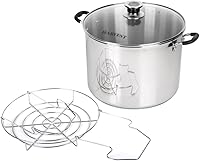
The KITCHEN CROP Harvest Stainless Steel 20 Qt Canning is described for induction, glass and gas cooktops. Its flat clad bottom is designed for even heating, and its stainless steel rack can be used for water bath or steam canning.
The KITCHEN CROP holds up to 8 pint or 7 quart jars. Its tempered glass lid includes a built-in temperature indicator with elevation marks, so you can watch the pot and use the indicated point to start timing.
This is the most flexible choice here for a cooktop-sensitive kitchen. The trade-off is its larger 14 x 14 x 11 in footprint and 10.1 lb weight, so measure your storage space before buying.
What is the difference between a water bath canner steamer and a regular pot?
A water bath canner steamer has a rack and lid arrangement intended to keep jars stable while steam or boiling water circulates. A regular stockpot may not provide the right height, spacing or support for safe processing.
The rack matters because jars should not sit directly on the bottom of the pot. It also helps you lower and lift a group of jars without gripping each hot jar individually.
The lid matters too. A well-fitting lid helps retain heat and steam during processing, so the pot can keep conditions steady from start to finish.
A glass lid adds visibility, but it does not replace the need to follow the recipe's timing and method. Checking the process through the lid is helpful, yet the written instructions still control each step.
For a dedicated electric setup, see our guide to choosing an electric water bath canner. Electric models can suit cooks who want the heat source and controls built into the canner.
Which combination steam canner suits a starter setup?
The Granite Ware Canning Pot with Rack suits a starter water bath setup with a large rack and toolset, but it is not suitable for glass or induction cooktops. It is an enamelware water bath canner rather than a steam-and-water-bath combination model.
Its rack holds 7 one-quart jars, 9 pint jars or 12 half-pint jars. The 8-piece set includes the pot, lid, rack, bubble remover and ruler, jar lifter, magnetic lid lifter, jar wrench and jar funnel.
The enamel-coated steel body gives this set a different feel from the stainless steel choices. At 4 lb, it is the lightest of the three, but the cooktop restriction is significant.
Do not choose it for an induction or glass range.
If you are new to the method, read our guide on how to use a water bath canner before preparing your first batch. It explains the basic sequence, jar handling and processing steps.
Is stainless steel better for steam canning?
Stainless steel is useful when you want a durable pot and broader cooktop compatibility, but the material alone does not decide whether a canner is right for you. Base design, rack capacity and method support matter just as much.
The Prep•N•Cook by McSunley 21.5Qt Induction Stainless Steel Water Bath Canner has a flat, encapsulated base designed for induction and glass top ranges. Its stainless steel rack holds 7 one-quart, 9 one-pint or 12 half-pint jars.
The tempered glass lid lets you view the process, while silicone-wrapped wire handles provide a more comfortable grip. The pot is also described for soups, stews and boiling foods, so it can serve beyond canning.
This option suits cooks who want a stainless steel water bath canner with a large rack and stockpot use. It is not the best match if your main goal is a built-in steam-and-water-bath combination, since its stated use is water bath canning.
How should you choose between these 3 canners?
Choose by method first, cooktop second and capacity third. A large pot that cannot work on your range, or does not suit your recipes, is the wrong choice regardless of its size.
| Canner | Best fit | Capacity and rack details | Main limitation |
|---|---|---|---|
| KITCHEN CROP Harvest | Steam and water bath flexibility | 20 qt; 8 pint or 7 quart jars | Larger footprint and weight |
| Granite Ware Canning Pot | Traditional water bath starter set | 21.5 qt; 7 quart, 9 pint or 12 half-pint jars | Not for glass or induction cooktops |
| Prep•N•Cook by McSunley | Stainless steel water bath use | 21.5 qt; 7 quart, 9 pint or 12 half-pint jars | Not presented as a steam canner |
Choose the KITCHEN CROP if you want one pot for steam and water bath canning across induction, glass and gas ranges. Its reversible stainless steel rack is the main reason it fits this guide.
One side of the rack suits traditional water bath canning and the other side supports steam canning. You can shift method by batch rather than by pot.
Its 20 quart capacity holds 8 pint or 7 quart jars, which covers many common household loads. The tempered glass lid and built-in temperature indicator let you watch the pot and start timing at the indicated mark.
The flat clad bottom gives even heating on induction, smooth top and gas ranges. The trade-off is size and weight at 14 by 14 by 11 inches and 10.1 pounds empty, so measure storage and lift carefully when full.
Choose Granite Ware if you want a lighter traditional water bath set with tools included for a compatible cooktop. Do not use it on glass or induction.
Its 21.5 quart enamelware pot has a rack holding 7 one-quart jars, 9 pint jars or 12 half-pint jars. The five piece toolset includes a bubble remover and ruler, jar lifter, magnetic lid lifter, jar wrench and funnel for standard and wide mouth jars.
At 4 pounds, it is far lighter to store and move than the stainless steel options. The clear limit remains cooktop fit, since this enamelware steel set is not suitable for glass or induction surfaces.
Choose McSunley if you want a stainless steel water bath canner for induction and glass ranges. Its rack and tempered glass lid support regular batch processing, and the pot can also serve as a large stockpot.
The 21.5 quart pot has a flat encapsulated base for even heat distribution and fewer hot spots. Its stainless steel rack rests on the pot sides, holds 7 one-quart, 9 one-pint or 12 half-pint jars, and keeps jars off the bottom for full water circulation.
Silicone wrapped wire handles make lifting more comfortable, and the glass lid gives visibility. It can also be used for soups, stews and boiling foods, so it may earn space beyond canning season.
The limit here is method range. This McSunley model is presented for water bath canning, so it does not replace a true steam and water bath combination when steam processing is your main goal.
What should you check before using steam canners for canning?
Before using steam canners for canning, confirm that the food and recipe are suitable for atmospheric steam processing. Then check the rack, lid, water level, jar spacing and processing time.
Use a recipe from a trusted preservation authority rather than adapting a pressure-canning or water-bath method without guidance. Steam canning is not suitable for every food, and the method does not make low-acid foods safe through guesswork.
Set the canner on a stable, compatible cooktop. Place jars on the rack rather than directly on the pot bottom, and avoid crowding them.
Follow the recipe's instructions for preheating, venting and timing.
Keep the lid in place during processing unless the instructions tell you otherwise. Removing it can release heat and steam, which may affect the process.
After processing, use a jar lifter where appropriate and allow jars to cool without immediately tightening or disturbing their closures. Clean the pot, rack and lid after use, then dry them fully before storage.
For a more detailed method guide, see using steam canners for canning. If you mainly want traditional boiling-water processing, compare our best stainless steel water bath canner guide.
What size steam canner do you need?
Choose a capacity that matches your normal jar batch and storage space. A 20 to 21.5 qt pot gives room for common pint and quart batches, but the rack layout determines how many jars you can actually process.
The KITCHEN CROP is rated for 8 pint or 7 quart jars. Granite Ware and McSunley use racks sized for 7 one-quart, 9 pint or 12 half-pint jars.
Think about how often you preserve and how much lifting you can manage. A full canner is heavy, so a smaller batch may be easier to handle even when a larger pot has more capacity.
If you preserve in small batches, compare the best small water bath canner options. A compact pot can take less storage space and may be easier to move between the sink, cooktop and cooling area.
Steam canners are also different from steam juicers. For fruit juice extraction and related equipment, see the best steam juicer canner guide.
Final decision: which steam canner for canning should you choose?
Pick the KITCHEN CROP Harvest when you want a true steam and water bath combination with induction, glass and gas compatibility. Choose Granite Ware for a lighter traditional water bath starter set on compatible cooktops, or McSunley for stainless steel water bath canning on induction and glass ranges.
The best steam canner for canning is the one that matches your tested recipes, cooktop and usual jar load. Confirm the method before filling the pot, and choose capacity that you can safely lift and store.
Start with method before any other detail. If your recipes call for steam processing, water bath processing or both, the pot must support the exact approach your trusted recipe requires.
Then check cooktop fit in plain terms. Induction and glass ranges need a compatible base, while gas ranges still need a stable pot that sits centered and safely over the burner.
Next, match capacity to the batches you actually make. A 20 to 21.5 quart pot can hold common pint and quart loads, but rack spacing and jar size decide the real batch count.
Think about lifting and storage before you buy. A full canner is heavy, and a large footprint can be awkward to move between the sink, cooktop, cooling area and cupboard.
Set up each batch with care. Place jars on the rack, keep the required spacing, follow the recipe for water level and timing, and keep the lid in place unless the instructions say otherwise.
After processing, handle jars with the right lifter and let them cool undisturbed. Clean the pot, rack and lid after use, dry everything fully, and store the set where it will not be knocked or dented.
Frequently asked questions
What is a steam canner for canning?
A steam canner uses steam around jars instead of covering them with a deep layer of boiling water. Use it only with tested recipes and foods that are suitable for atmospheric steam canning.
The canner must produce enough steam and maintain the process conditions required by the recipe.
Is a steam canner better than a water bath canner?
Neither is better for every kitchen. A steam canner uses less water and can be quicker to handle, while a water bath canner suits recipes that require jars covered by boiling water.
A combination pot gives you both methods in one vessel.
Can I use a steam canner on an induction cooktop?
You can use a steam canner on induction only when its base is designed for induction cooking. Stainless steel alone does not confirm compatibility, so check the exact model before buying.
The KITCHEN CROP and McSunley options here are described as compatible with induction cooktops.
How many jars fit in a steam canner?
Jar capacity depends on the rack and the jar size. The KITCHEN CROP can handle 8 pint or 7 quart jars, while the McSunley rack holds 7 one-quart, 9 one-pint or 12 half-pint jars.
Always leave the spacing required by your recipe and rack.