Cut Resistant Glove Levels: How to Choose for Kitchen Prep
Choose an ANSI cut level based on the sharpness of the tools and the control your task needs. Higher levels resist more cutting force in a standardized test, but no glove makes a knife cut-proof or replaces safe handling.
On this page (7 sections)
- What does an ANSI cut level measure?
- Are ANSI level 2, level 3 and level 4 gloves different?
- How should you match glove protection to kitchen prep?
- What other glove features should you compare?
- Which gloves illustrate the rating and task trade-offs?
- What should you check before buying?
- How do you choose an ANSI cut level for kitchen prep?
ANSI cut resistant gloves are rated by how much cutting force they resist in a standardized test. Use the rating to compare gloves within the ANSI/ISEA 105 system, then choose a level that suits your knife, task, fit and grip needs.
A level 2 or 3 glove may suit controlled, routine knife work. Repetitive slicing, a mandoline or work with a very sharp blade can call for a higher level, but no glove makes careless cutting safe.
The phrase “level 4” can be confusing because standards use different scales. This guide explains how to compare ANSI cut levels, what the number does and does not tell you, and how to choose for kitchen prep.
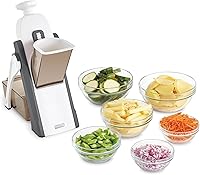
If you are also choosing a vegetable slicer, match the glove and hand guard to the tool.
What does an ANSI cut level measure?
An ANSI cut level describes a glove’s resistance to a controlled cutting test. It helps you compare cut protection, but it does not predict exactly how the glove will perform in every kitchen accident.
ANSI/ISEA 105 uses an A1 to A9 scale for cut resistance. A higher A number means the material resisted more force in the test.
Product titles may use older wording such as “Level 5,” so look for the actual ANSI/ISEA rating when comparing gloves.
The test is performed on glove material under set conditions. A real knife can behave differently based on its edge, angle, pressure, movement and the surface beneath the food.
The rating also says nothing by itself about dexterity, grip, fit, comfort or whether the glove is suitable for contact with food. Check each of those factors separately.
Are ANSI level 2, level 3 and level 4 gloves different?
Yes. A higher ANSI cut level indicates greater resistance in the standard test, but the number alone does not decide which glove is right for your prep.
| Rating term | How to read it | Kitchen decision |
|---|---|---|
| Level 2 | A lower rating than levels 3 and 4 in systems that use those labels | Consider for lower-risk, controlled cutting, after confirming the standard |
| Level 3 | A middle rating in systems using these levels | Compare for regular prep where you still need finger control |
| Level 4 | A higher rating than levels 2 and 3 in those systems | Consider when the task calls for more cut resistance, while checking grip and fit |
| ANSI A1–A9 | The ANSI/ISEA 105 cut scale | Compare the A number directly within this standard |
These level numbers are not interchangeable across standards. Some products use “level 4” under EN 388, while others use ANSI/ISEA 105 A ratings; the same number does not mean the same test result.
When a product calls itself “Level 5,” confirm whether it also names ANSI A5. That explicit standard helps you understand what the claim refers to.
What does cut level 4 mean under ANSI?
ANSI level 4 is not the standard’s current label for cut resistance. ANSI/ISEA 105 uses A1 through A9, so a “cut level 4” claim needs the named standard before you can interpret it.
A glove described as level 4 may refer to another rating system, such as EN 388, or use informal product wording. Check the packaging or manufacturer specifications for “ANSI/ISEA 105” and an A-level rating.
Do not assume that ANSI A4 and EN 388 level 4 are equivalent. If the standard is missing, treat the number as incomplete information and compare a clearly identified rating instead.
How should you match glove protection to kitchen prep?
Choose a glove by the task’s cut risk and the control it requires. For slicer-cleaning options, see gloves for meat slicer cleaning.
A higher rating can add resistance, but it must still let you grip food and guide the knife safely.
For occasional, controlled slicing, focus on fit and a secure grip as well as the stated rating. For repeated chopping or slicing, compare gloves with a clearly named ANSI cut level and check whether the palm coating suits wet or greasy food.
A mandoline needs extra care because its exposed blade can catch fingers quickly. Use the food holder or hand guard, keep the slicer stable, and stop before the remaining piece becomes too small to hold securely.
Our guide to best cut resistant gloves for mandoline covers that tool-specific choice.
| Prep task | What to prioritize |
|---|---|
| Peeling or light trimming | A snug fit and enough finger control for the small tool |
| Routine knife slicing | A clear cut rating, steady grip and good fit |
| Repetitive slicing | More cut resistance, with enough dexterity to keep control |
| Mandoline use | A hand guard first, plus a suitable glove and stable setup |
| Handling a sharp or unfamiliar blade | Slow, controlled movement and a glove with a clearly stated standard |
Gloves can reduce some risk, but they do not make it safe to cut toward your hand. Keep the blade path clear, use a stable board, and replace a glove if it is damaged or no longer fits securely.
How much does glove fit matter?
Fit matters because a loose glove can bunch near the blade, while a glove that is too tight can limit movement or become uncomfortable. Choose the size that lets you bend your fingers and maintain a firm grip.
A glove should stay in place as you hold food and move a knife. Check that the fingertips are not overly long and that the palm coating does not make the handle slippery.
If you need a particular size, compare best cut resistant gloves large, best cut resistant gloves medium or best cut resistant gloves XL. For smaller hands, see best cut resistant gloves for women or best cut resistant gloves for kids, and check the maker’s sizing guidance before choosing.
What other glove features should you compare?
Compare grip, dexterity, material and care instructions alongside the cut level. These details affect whether you can handle food and tools with control.
A coated palm can help with grip, especially when the glove or handle may get wet. Check that the glove remains comfortable to bend and that the coating does not interfere with the task.
Thin gloves may offer more finger feel, while thicker or more protective designs can feel less flexible. The right balance depends on your knife work.
See best cut resistant gloves thin and best cut resistant gloves with grip.
Materials vary, including HPPE and aramid fibers. The fiber name alone does not tell you the cut rating, so compare the labeled standard.
For material-specific options, explore best cut resistant gloves Kevlar and best cut resistant gloves HPPE.
Also check care directions and whether a glove is made for food handling. “Cut resistant” describes a type of protection, not automatic food-contact suitability.
If you need water protection, compare best cut resistant gloves waterproof and confirm the product’s care guidance.
Which gloves illustrate the rating and task trade-offs?
These examples show why you should separate a stated cut rating from other glove features. The DEX FIT gloves name ANSI A5, while the Grill Armor option is described as a heat glove with cut resistance but has no ANSI cut level in the provided product details.
Grill Armor describes this glove for oven, grill and baking use. It has individual fingers and a textured silicone surface, but the available details do not provide an ANSI cut level.
Do not treat its heat rating as a cut rating.
This DEX FIT option names ANSI A5 and describes a snug, stretchy fit. Its maker also says the water-based nitrile coating passed an FDA food-contact coating test.
That claim applies to the coating, not automatically to every part of the glove.
This medium option shares the A5 rating and listed materials with the large version. Compare the sizing guidance and choose the glove that fits your hand; the same rating does not make a poorly fitting glove a good choice.
For a broader comparison of cooking options, see best cut resistant gloves for cooking. If you want the basic definition first, read what are cut resistant gloves and how do cut resistant gloves work.
What should you check before buying?
Check the named standard, exact rating, fit and intended use before choosing a cut resistant glove. That short check helps you avoid treating a vague level number as a complete safety claim.
- Look for ANSI/ISEA 105 and an A1 to A9 rating if you want an ANSI comparison.
- Confirm whether a “level 4” claim refers to ANSI, EN 388 or another system.
- Choose a size that stays snug without limiting finger movement.
- Check the palm coating for grip with your typical food and knife handle.
- Confirm food-contact suitability and care directions for kitchen use.
- Use the mandoline guard and safe cutting technique even when wearing a glove.
Fit options can extend beyond standard sizes. Compare best cut resistant gloves XL and best cut resistant gloves XXL if you need more room, and check the sizing chart rather than assuming that two brands size alike.
If warmth or moisture is part of your task, read the intended use carefully. A glove designed for hot cookware is not necessarily the best choice for precision knife prep, and a cut-resistant glove is not automatically waterproof.
How do you choose an ANSI cut level for kitchen prep?
Choose an ANSI cut level by matching a clearly stated A rating to the task, then checking fit and grip. For a “level 4” glove, identify which standard uses that label before comparing it with ANSI A ratings.
Pick a lower level only when the work is controlled and the glove still gives you good handling. For repeated slicing or mandoline work, compare higher cut resistance and use the tool guard every time.
The DEX FIT examples here state ANSI A5; the Grill Armor example is aimed at heat handling and does not provide an ANSI cut level. For more options and sizing comparisons, use our best cut resistant gloves for cooking guide.
Sources: ANSI/ISEA 105 overview and OSHA hand protection guidance.
Frequently asked questions
What does ANSI cut level 4 mean?
ANSI cut level 4 is a rating within the ANSI/ISEA 105 cut resistance scale. It indicates a glove resisted a defined amount of cutting force in the standard test, but it does not mean the glove is cut-proof.
Check the exact ANSI level and intended use, then keep your hand clear of the blade path.
Are level 2 cut resistant gloves enough for kitchen prep?
Level 2 gloves may suit lower-risk prep with a sharp knife when you can keep the blade controlled and your fingers out of its path. For repeated slicing or a mandoline, compare a higher cut level and prioritize fit and grip.
A glove is an added layer, not a substitute for careful technique.
Are level 3 cut resistant gloves good for knives?
Level 3 gloves can be a middle ground for routine knife prep, depending on the blade, task and glove fit. Compare the actual ANSI/ISEA 105 rating because product names may use different scales.
For high-force cutting or a mandoline, choose protection suited to that risk and use the tool's hand guard.
Is ANSI cut level 4 the same as EN 388 level 4?
No. ANSI/ISEA 105 and EN 388 are different standards with different test methods and rating labels.
A level 4 under one system does not automatically equal level 4 under the other.
Check which standard a glove names and compare its rating only within that system.
Can cut resistant gloves stop a knife?
Cut resistant gloves can reduce the chance or severity of some cuts, but they cannot guarantee that a knife will not penetrate or injure your hand. Their performance depends on the glove rating, blade, force, fit and condition.
Keep fingers away from the cutting edge and use guards on slicers.